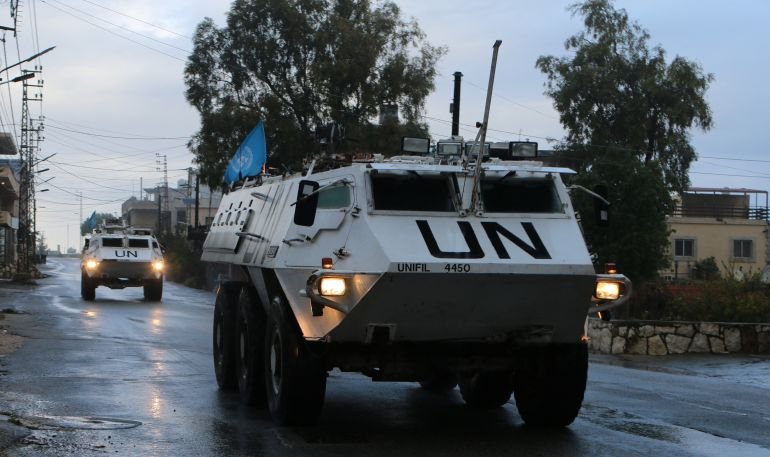
Everything you need to know about UNIFIL and the renewal of its mandate until the end of 2026.
The United Nations Security Council voted on Thursday to extend the UN peacekeeping mission in southern Lebanon, known as UNIFIL, until the end of 2026 and then to begin an “orderly and safe drawdown and withdrawal” over the course of 2027.
The winding down of UNIFIL has been pushed heavily by Israel and the United States, who accuse the group of providing political cover for Hezbollah since the 2006 war and failing to work to disarm Hezbollah, despite that not being the UN body’s stated mission.
Meanwhile, Israel continues to occupy at least five points on Lebanese territory following its invasion of south Lebanon last October. A ceasefire agreement reached in November stipulated that Israeli troops should withdraw from south Lebanon, but that has not yet happened.
So what does the end of the United Nations Interim Force in Lebanon (UNIFIL) mean for the border area between Lebanon and Israel? Here’s what you need to know.
What happens now?
UNIFIL will stay in south Lebanon until December 31, 2026.
After that, it will have a year to withdraw its troops and hand over control of the area to the Lebanese Army.
The development seems to be in Israel’s favour, considering Israel’s disproportionate advantage in military power, technology, and US support. Israel regularly hits Lebanon with military attacks, and even before October 2023, when Hezbollah entered the war with Israel, Israel’s air force regularly violated Lebanon’s airspace with surveillance flyovers.
With UNIFIL gone, there will be no international body to monitor these violations.
In a statement in advance of the vote, UNIFIL spokesperson Andrea Tenenti questioned how UN Security Council Resolution 1701, adopted at the end of the 2006 war to stop hostilities between Israel and Hezbollah, could be implemented with Israeli forces still in Lebanon.
“The commitment of the Lebanese government is there, but how can they be deployed everywhere in the south if the [Israeli military] are still present in the south?” he asked.
“So these are the things that are very difficult to comprehend.”

What is UNIFIL?
Founded in 1978, the United Nations Interim Force in Lebanon (UNIFIL) was created to oversee the withdrawal of Israeli troops after Israel invaded southern Lebanon earlier that year. Israel would reinvade in 1982 and occupy south Lebanon until 2000, when Israeli forces were expelled by Hezbollah.
UNIFIL is a peacekeeping mission of more than 10,000 peacekeepers from 47 countries, with the highest number of them coming from Indonesia and Italy.
It monitors the entire border region and reports violations of UN Resolution 1701.
Its headquarters are in Naqoura, a coastal town that Israel has focused its attacks on. media found earlier this year that Israel destroyed most of the town after the ceasefire between Israel and Lebanon in November 2024, not during fighting.
UNIFIL’s operations take place across 1,060sq km (409 square miles) of the south, where it has 50 positions on Lebanese territory.
Can UNIFIL use force?
Only in self-defence or to protect civilians under attack.
As a peacekeeping force, UNIFIL does not typically fire on either Israel or Hezbollah.
In recent cases where its vehicles have been attacked, UNIFIL used nonlethal force to defend itself.
How do the Israelis feel about UNIFIL?
They’re not fans.
Israel has attacked UNIFIL peacekeepers in the past, and during the war last year, UNIFIL accused Israel of deliberate and direct attacks on its peacekeepers.
Unlike in Gaza, where the only voices to report on Israeli attacks or killings of civilians are Palestinian voices, UNIFIL is a body with an international mandate and legitimacy that reports on Israeli attacks and violations in southern Lebanon.
For its part, the US sees UNIFIL as a waste of money that doesn’t directly confront Hezbollah’s influence in south Lebanon.
Under President Donald Trump, the US has increasingly adopted Israel’s position on UNIFIL.
“This will be the last time the United States will support an extension of UNIFIL,” said Dorothy Shea, acting US ambassador to the UN. “The United States notes that the first ‘i’ in UNIFIL stands for ‘interim’. The time has come for UNIFIL’s mission to end.”
What’s wrong with Hezbollah?
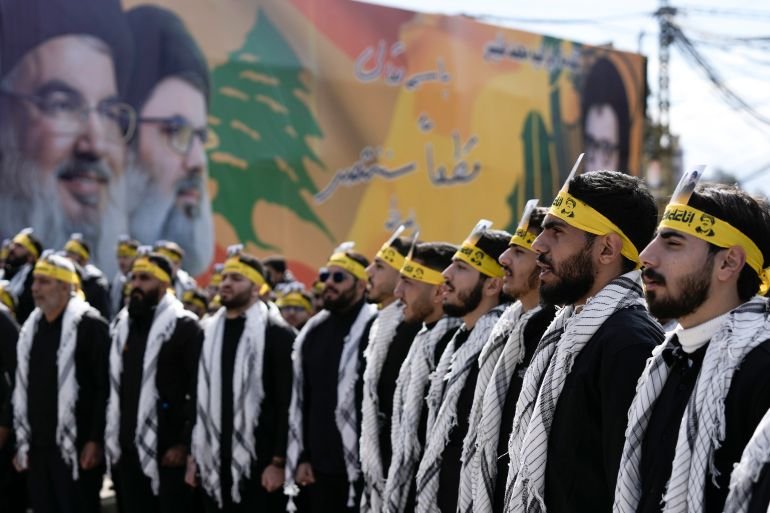
Israel and the US view Hezbollah as a “terrorist” organisation.
Hezbollah was formed in the 1980s as a response to Israel’s occupation of Lebanon and eventually drove the occupiers out of south Lebanon. The two parties fought a war to a stalemate in 2006, though most of the casualties and destruction were incurred by Lebanon.
Between 2006 and last year, Israel viewed Hezbollah as a primary threat, and its weapons as a deterrence to military action. Since November’s ceasefire, Israel’s military has attacked southern Lebanon, and occasionally struck closer to Beirut, without restraint, despite an agreement that hostilities would cease.
Israel claims it is attacking Hezbollah targets, though civilians were regularly killed during the war last year and continue to die in Israeli strikes.
What about the Lebanese?
The current Lebanese government supported UNIFIL’s renewal.
Prime Minister Nawaf Salam welcomed the vote to renew UNIFIL’s mandate, saying it “reiterates the call for Israel to withdraw its forces from the five sites it continues to occupy, and affirms the necessity of extending state authority over all its territory”.
But the Lebanese government aside, there is a wider spectrum of views on UNIFIL in south Lebanon.
While some Lebanese locals support the peacekeepers’ presence, many have been vocally critical of them.
In May, civilians wielding axes and rods attacked a UN vehicle in south Lebanon. Many southerners who cannot return to their homes in south Lebanon, either because their villages have been razed to the ground by Israel or because there is still a threat of Israeli attacks, have taken out their frustration against UNIFIL troops. Others reportedly view them with suspicion.
Viral videos have shown confrontations between Lebanese civilians and UNIFIL troops. In one, a local smacks a Finnish UNIFIL peacekeeper across the face after an argument.