
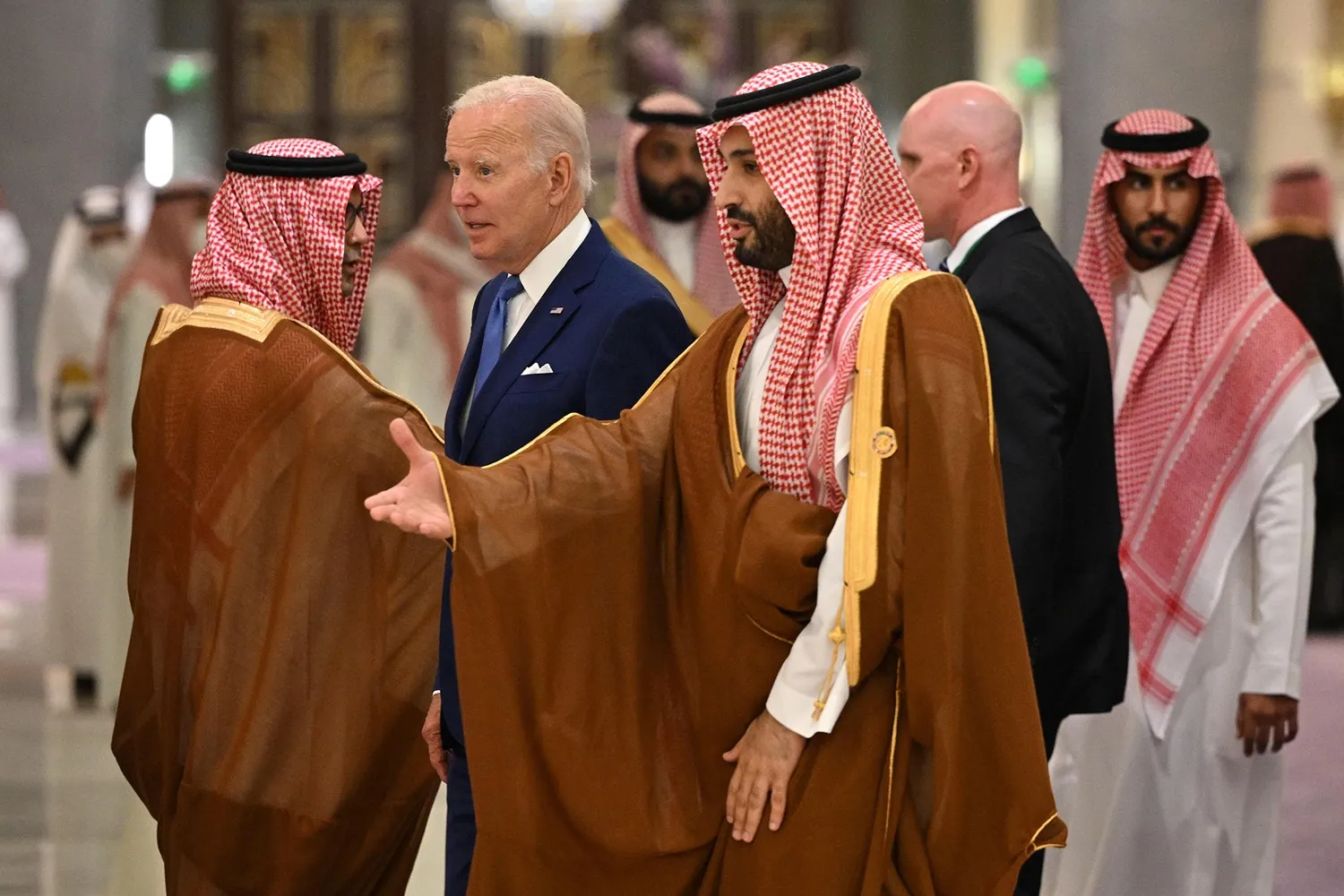
As Crown Prince Mohammed bin Salman prepares for a pivotal US visit, the Chamber of Commerce signals a transformed partnership, moving beyond traditional sectors to anchor a new era of cooperation in technology, AI, and advanced manufacturing.
RIYADH: The United States and Saudi Arabia are building a “future-built” economic alliance, with bilateral relations at a peak of strength and poised for a new chapter of innovation-driven growth, a senior US business leader has announced.
Steve Lutes, Vice President for Middle East Affairs at the US Chamber of Commerce, stated that the upcoming visit of Crown Prince Mohammed bin Salman will serve as a catalyst to accelerate this strategic shift. He described the current state of US-Saudi business ties as being in a “position of strength,” underpinned by deep and growing commercial links.
“We have very strong commercial and economic ties,” Lutes told Arab News. “They’re deep and they’re growing with our strategic partner, the Kingdom of Saudi Arabia.”
Vision 2030: A Catalyst for a New Partnership
The transformation of the relationship is being powered by Saudi Arabia’s ambitious Vision 2030, which has redirected US corporate interest from its traditional energy and defense focus toward the Kingdom’s burgeoning digital and technological landscape.
Lutes highlighted that collaborations in artificial intelligence, such as the recent deal between HUMAIN and Qualcomm, represent the new core of the bilateral relationship. “Deals like that are going to only accelerate that trend,” he said, pointing to a future where knowledge-based sectors lead economic cooperation.
This shift is already visible on the ground, with major US companies establishing a firm foothold in the Kingdom’s new economy:
- Tech Infrastructure: Google Cloud, Oracle, and Microsoft are building data center regions to support Saudi Arabia’s digital transformation.
- Advanced Manufacturing: Lucid Motors is scaling up its EV production facility in King Abdullah Economic City.
- Clean Energy: US firms are key partners in landmark projects like the NEOM Green Hydrogen initiative.
A Foundation for Long-Term Collaboration
Lutes emphasized that this evolved partnership is built on a foundation of strong policy alignment and consultative regulation from Saudi ministries. This supportive environment, combined with strategic US expertise, creates a powerful synergy.
Looking ahead, Lutes revealed that the visit will focus on shaping the economic relationship for the next decade, with a joint vision extending to 2035. This forward-looking approach also encompasses Saudi Arabia’s hosting of global mega-events like Expo 2030 and the 2034 FIFA World Cup, which present vast opportunities for US companies in everything from smart infrastructure to the experience economy.
The message is clear: the US-Saudi economic partnership has successfully diversified and is now firmly focused on building the industries of the future together.
