The Virgin Mary procession in La Goulette unites diverse communities, reviving the memory of a historic Sicilian past.
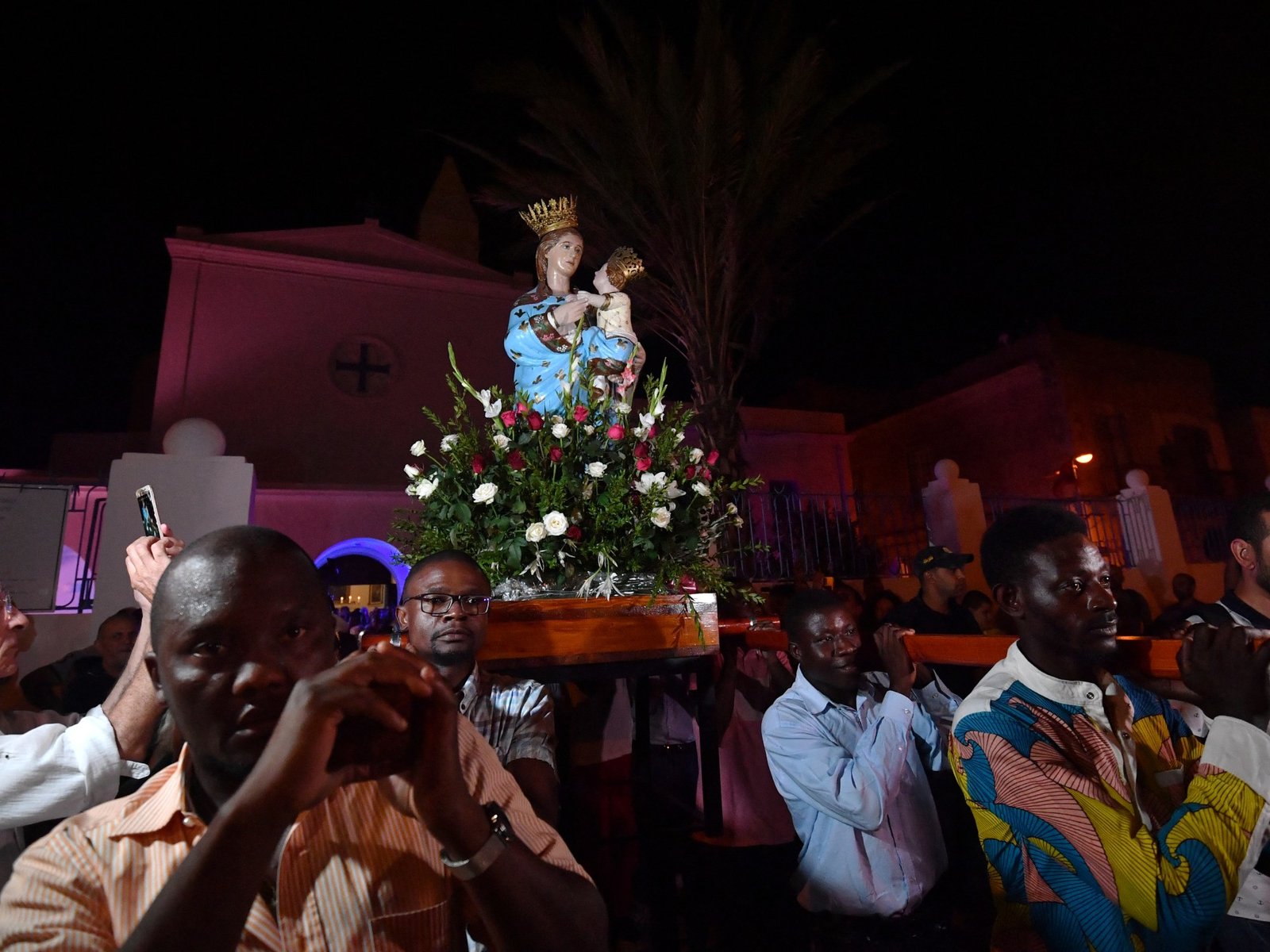
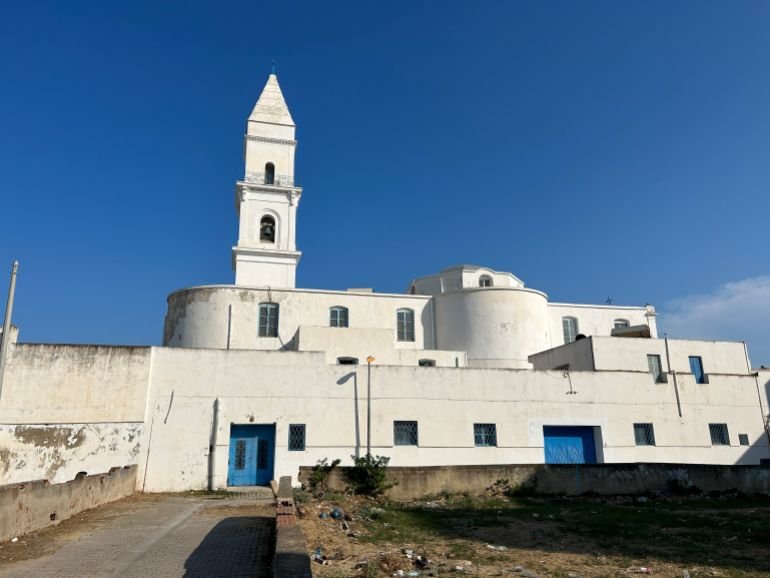
Tunis, Tunisia – Night had just about fallen in Halq al-Wadi, also known as La Goulette, a balmy coastal suburb of Tunis, when the Virgin Mary emerged from the local church, Saint-Augustin and Saint Fidele, into a packed square.
Carried on the shoulders of a dozen churchgoers, the statue of the Virgin was greeted with cheers, ululations and a passionately waved Tunisian flag.
Recommended Stories
list of 3 items
- list 1 of 3Trump hosts Saudi Arabia’s Mohammed bin Salman: Five key takeaways
- list 2 of 3Rights groups decry Tunisia’s ‘injustice’, crackdown on activists
- list 3 of 3Why does the UK want to copy Denmark’s stringent immigration policies?
end of list
Hundreds of people – Tunisians, Europeans, and sub-Saharan Africans – had gathered for the annual procession of Our Lady of Trapani.
Many of those participating in the procession, and the Catholic Mass that came beforehand, were from sub-Saharan Africa.
“It’s the Holy Virgin who has brought us all here today,” Isaac Lusafu, originally from the Democratic Republic of the Congo, told media. “Today the Virgin Mary has united us all”.
In a large, packed square just beyond the church gates, the statue moved in a circle as people prayed and sang hymns. It was all under the watchful eye of a mural of Claudia Cardinale, the renowned Italian actress born in La Goulette, a reminder of the distant past when the district was home to thousands of Europeans.
A melting pot
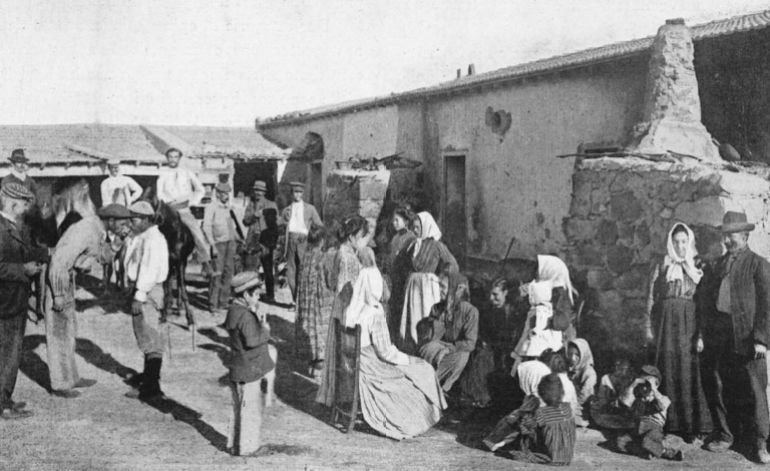
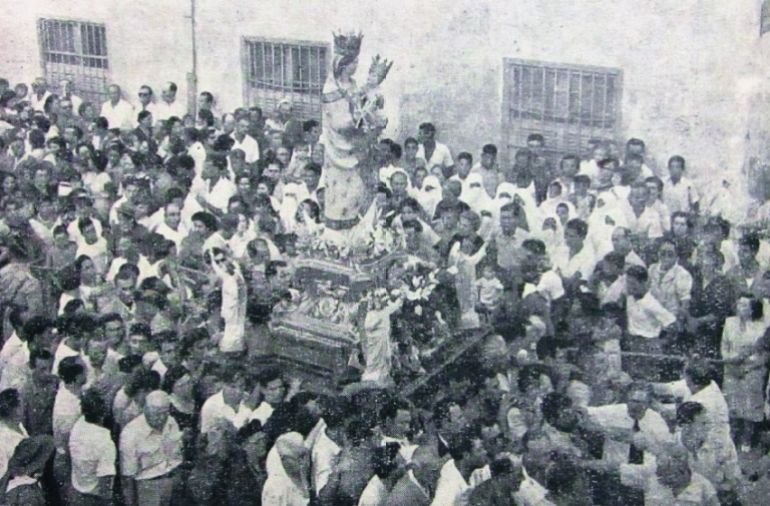
The Catholic feast of Our Lady of Trapani was brought to La Goulette in the late 1800s by Sicilian immigrants, in the days when the port town was a hub for poor southern European fishermen in search of a better life.
Immigration to Tunisia from Sicily peaked in the early 20th century. Nearly all of the fishermen, along with their families and descendants, have now returned to European shores, but the statue of the Virgin remained – and, every year on August 15, it is carried in procession out of the church.
“It’s a unique event,” Hatem Bourial, a Tunisian journalist and radio presenter, told media.
He went on to describe how, in the procession’s heyday in the early 20th century, native Tunisians, Muslims and Jews alike, would join Tunisian-Sicilian Catholics in carrying the statue of the Virgin Mary from the church down to the sea.
There, participants would ask Mary to bless the fishermen’s boats. Many residents would shout “Long live the Virgin of Trapani!”, Bourial said, while others threw their chechia, a traditional red cap worn in the Maghreb, in the air.
As well as its religious significance – for Catholics, August 15 marks the day that Mary was taken up into heaven – the feast also coincides with the Italian mid-August holiday of Ferragosto, which traditionally signals the high point of the summer.
Silvia Finzi, born in Tunis in the 1950s to Italian parents, described how, after the statue had been brought down to the sea, many of La Goulette’s residents would declare that the worst of the punishingly hot Tunisian summer was over.
“Once the Virgin had been taken down to the water, it was as if the sea had changed”, Finzi, a professor of Italian at the University of Tunis, told media.
“People would say ‘the sea has changed, the summer’s over’, and you wouldn’t need to go swimming to cool down any more”.
European exodus
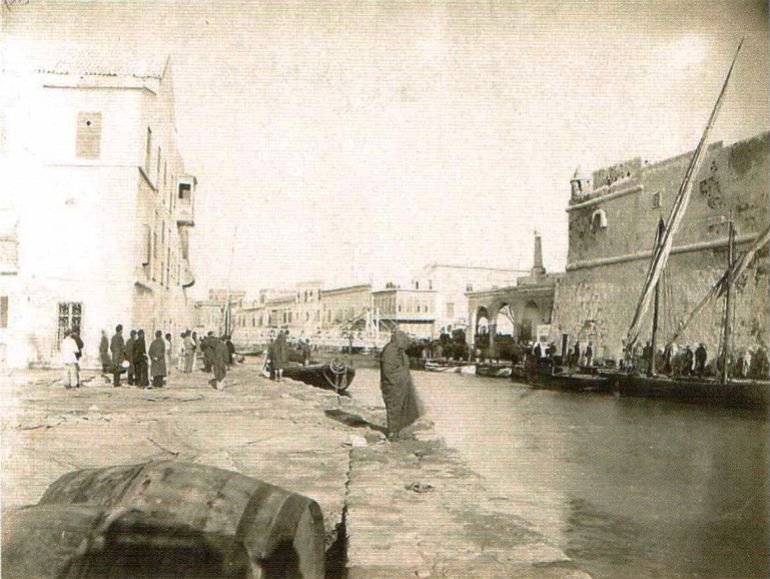
The first European immigrants began to arrive in La Goulette in the early 19th century. Their numbers rapidly increased after 1881, when Tunisia became a French protectorate. At its height in the early 1900s, the number of Italian immigrants – who were largely Sicilians – across the whole of Tunisia is estimated to have been more than 100,000.
In the decade after 1956, when Tunisia gained its independence from France, the vast majority of its European residents left the country, as the new government pivoted towards nationalism.
In 1964, the Vatican signed an agreement with Tunisia, transferring control of the majority of the country’s churches – now largely empty – to the government for use as public buildings. The agreement also put an end to all public Christian celebrations, including the procession in La Goulette.
For more than half a century, August 15 was marked only with a Mass inside the church building, and the statue of Our Lady of Trapani remained immobile in its niche. The date remained important for La Goulette’s much-reduced Catholic population, but it largely ceased to be an important event for the wider community.
Nostalgia
In 2017, the Catholic Church received permission to restart the procession, initially just inside the church compound. This year, when media visited, the procession left the church property but only travelled as far as the square outside.
Many attendees were young Tunisian Muslims, with little connection to La Goulette’s historic Sicilian population.
A major reason for this is undoubtedly the high status accorded to the Virgin Mary in Islam – an entire chapter of the Quran is dedicated to her.
Other participants seemed to be drawn by a feeling of nostalgia for La Goulette’s multiethnic, multireligious past.
“I love the procession”, Rania, 26, told media. “Lots of people have forgotten about it now, but European immigration is such an important part of Tunisia’s history”.
Rania, a student, told media of her love for the 1996 film, Un ete a La Goulette (A Summer in La Goulette).
Featuring dialogue in three languages, and evocative shots of sunlit courtyards and shimmering beaches, the film is an ode to La Goulette’s past.
Directed by the renowned Tunisian filmmaker Ferid Boughedir, it follows the lives of three teenage girls – Gigi, a Sicilian, Meriem, a Muslim, and Tina, a Jew – over the course of a summer in the 1960s.
The film ends, however, on a bleak note, with the outbreak of the 1967 War between Israel and several Arab states, and the subsequent departure of almost all of Tunisia’s remaining Jewish and European residents.
New migrations
As Tunisia’s European population declined, the country has seen an influx of new migrant communities from sub-Saharan Africa.
The majority of these new migrants, who number in the tens of thousands, hail from Francophone West Africa. Many come to Tunisia in search of work; others hope to find passage across the Mediterranean to Europe.
Many of the sub-Saharan migrants – who face widespread discrimination in Tunisia – are Christian, and as a result, they now make up the vast majority of Tunisia’s churchgoing population.
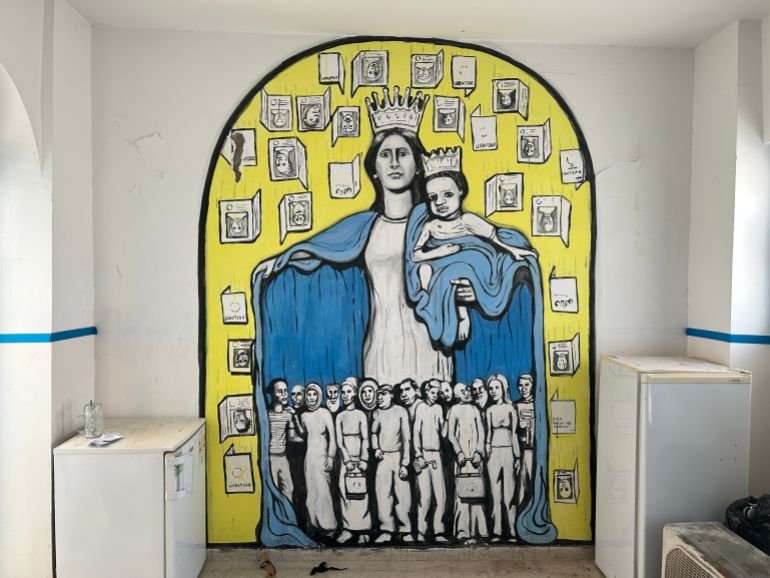
This fact is reflected in a mural in the church in La Goulette, inspired by the feast of Our Lady of Trapani. Painted in 2017, it depicts the Virgin Mary sheltering a group of people – Tunisians, Sicilians and sub-Saharan Africans – under her mantle.
The air around the Virgin in the mural is full of passports. The church’s priest, Father Narcisse, who hails from Chad, told media that these represent the documents that immigrants throw into the sea while making the journey from North Africa to Europe in the hope of evading deportation.
The mural highlights the fact that the Madonna of Trapani, once considered the protector of Sicilian fishermen, is today called upon by immigrants of far more varied backgrounds.
“This celebration, in its original form, marked the deep bonds between the two shores of the Mediterranean,” Archbishop of Tunis Nicolas Lhernould told media. “Today, it brings together a more diverse group – Tunisians, Africans, Europeans; locals, migrants, and tourists.”
“Mary herself was a migrant,” Archbishop Lhernould said, referring to the New Testament story which narrates Mary’s flight, together with the child Jesus and her husband Joseph, from Palestine to Egypt.
From a Christian perspective, he suggested, “we are all migrants, just passing through, citizens of a kingdom which is not of this world”.
The spirit of La Goulette
La Goulette was once home to ‘Little Sicily’, an area characterised by its clusters of Italian-style apartment buildings. The vast majority of these structures – modest buildings built by the newly-arrived fishermen – have been torn down and replaced, and little more than the church remains to testify to the area’s once significant Sicilian presence.
As of 2019, there were only 800 Italians descended from the original immigrant community left in the whole of Tunisia.
“There are so few of us left”, said Rita Strazzera, who was born in Tunis to Sicilian parents. The Tunisian-Sicilian community meets very rarely, she explained, with some members coming together for the celebration on the 15th August, and holding occasional meetings in a small bookshop opposite the church.
Still, the spirit of Little Sicily has not entirely vanished. Traces of the old La Goulette linger – in memory, in film, and, Strazzera told media, in other, more surprising ways as well.
“Every year, on All Saints’ Day, I go to the graveyard”, said Strazzera, referring to the annual celebration when Catholics remember their deceased loved ones.
“And there are Tunisians there, Muslims, people who maybe had a Sicilian parent, or a Sicilian grandparent, and have come to visit their graves, because they know it’s what Catholics do.”
“There have been lots of mixed marriages”, Strazzera added, “and so, every year, there are more of them visiting the graves. When I see them, it’s like a reminder that Little Sicily is still with us.”