
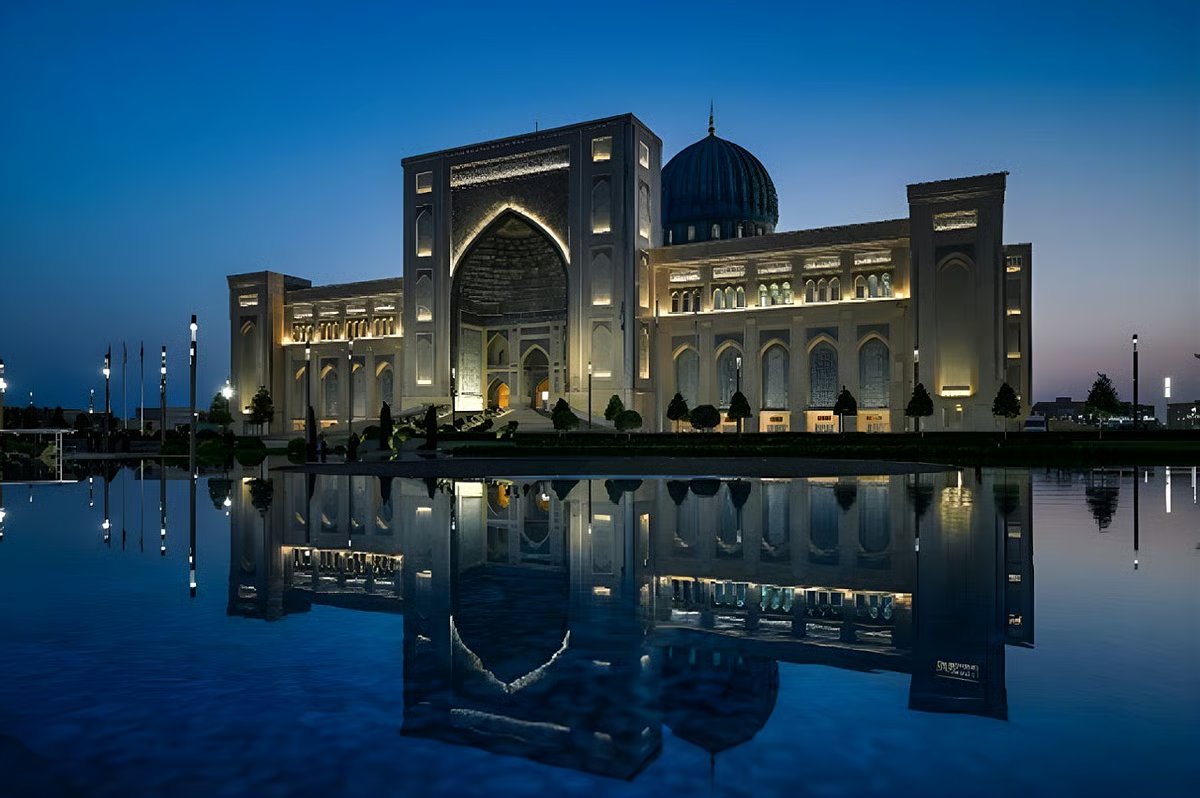
Tashkent’s newly unveiled Center for Islamic Civilization seeks to promote a modern narrative of Islamic heritage as a catalyst for knowledge, peace and cross-cultural exchange.
TASHKENT — Uzbekistan has inaugurated a major international institution devoted to the study and celebration of Islamic civilization, positioning itself as a bridge between historical legacy and contemporary dialogue.
The Center for Islamic Civilization, situated in Tashkent’s historic Hast-Imam district, emerges from a vision articulated by President Shavkat Mirziyoyev before the United Nations, in which he framed Islam as a civilization “of knowledge, culture, and creation” dedicated to peace and humanistic values.
The initiative has garnered global recognition, with UNESCO Director-General Khaled El-Anany hailing the center as “a light for the entire world” and a symbol of cultural diversity and openness during a recent visit.
Architecturally striking, the complex is crowned by a 65-meter dome and four portals representing the unity of Uzbekistan’s regions. Its spiritual and scholarly core is the Hall of the Holy Qur’an, home to the UNESCO-registered 7th-century Mushaf of Uthman manuscript.
Designed as an active intellectual hub rather than a static museum, the center guides visitors through a chronological journey from pre-Islamic times to the modern era. It also hosts a 200,000-volume library, calligraphy and craft schools, a conservation laboratory, and the first Central Asian branch of the “1001 Inventions” educational museum.
A significant aspect of the center’s mission is cultural restitution. Through concerted diplomatic and scholarly efforts, more than 1,000 manuscripts and artifacts have been repatriated from international auctions and collections. The World Society for the Study of Uzbekistan’s Cultural Legacy contributed approximately a thousand additional pieces.
The center serves as a base for several international organizations, including UNESCO, ICESCO, and IRCICA, and features a modern conference hall for global gatherings.
Dr. Firdavs Abdukhalikov, the center’s director, underscored its transformative goal: “to turn this great heritage into the powerful energy of an enlightened future,” reflecting Uzbekistan’s ambition to shape a contemporary understanding of Islamic civilization centered on enlightenment and intercultural harmony.
