
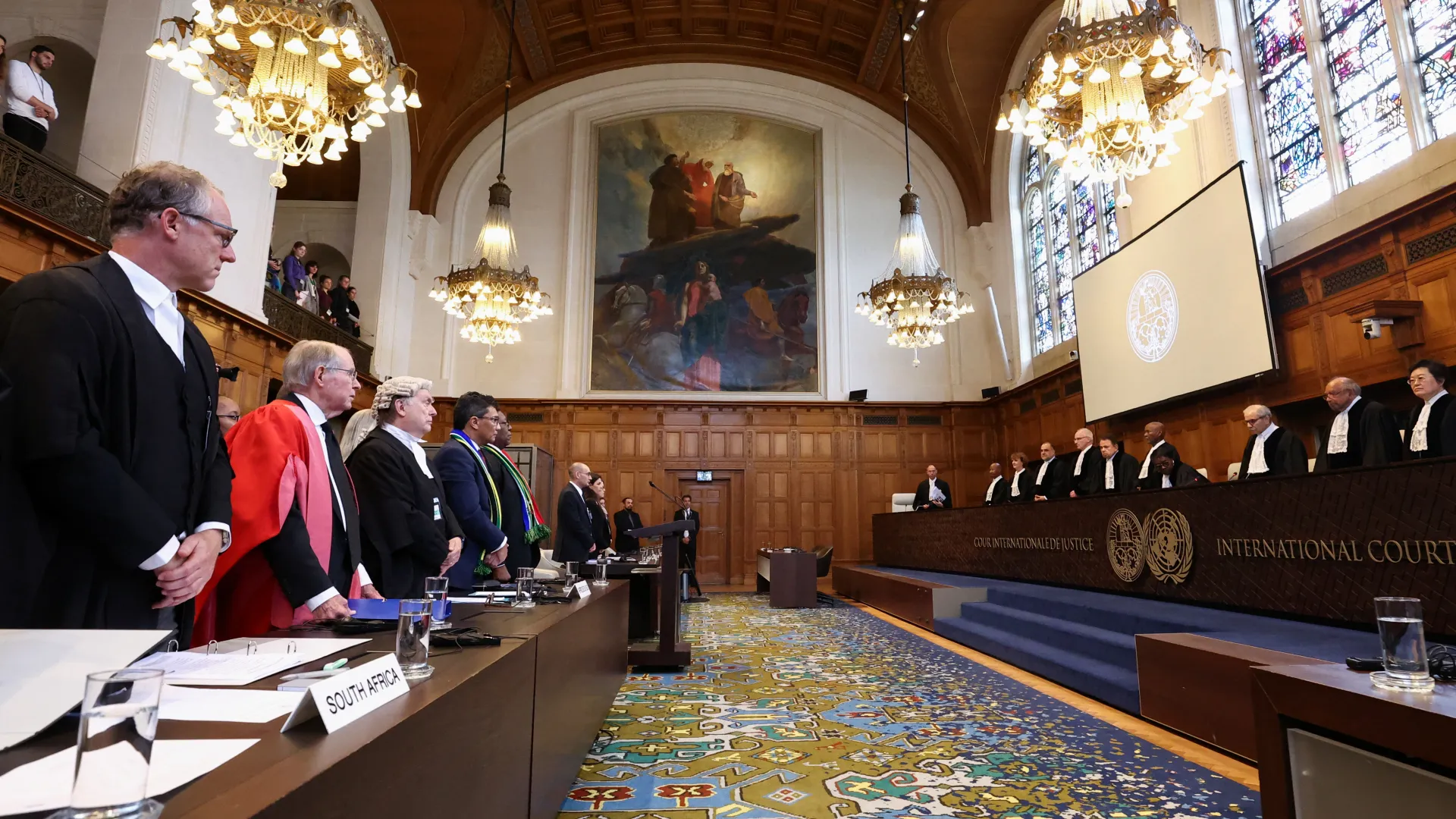
AU Commission Chairman Mahmoud Ali Youssouf delivers blistering address on Palestine, overshadowing summit’s official theme of water sanitation amid continental crises.
ADDIS ABABA – The chairman of the African Union Commission, Mahmoud Ali Youssouf, delivered a powerful rebuke of the war in Gaza on Saturday, declaring that the “extermination” of the Palestinian people must end as he opened the 39th Ordinary Session of the AU.
Addressing heads of state and government from the organization’s 55 member nations in the Ethiopian capital, Youssouf placed the ongoing Middle East conflict at the moral center of his inaugural address.
“In the Middle East, Palestine and the suffering of its people also challenge our consciences. The extermination of this people must stop,” Youssouf stated, marking his strongest public commentary on the issue since taking the helm of the pan-African body a year ago.
A Continent in Crisis
The AU chief used his platform to draw a parallel between the suffering in Gaza and the multiple, devastating conflicts unfolding across the African continent. He highlighted a belt of instability stretching from the Sahel region through East Africa.
“From Sudan to the Sahel, to eastern Democratic Republic of Congo, in Somalia and elsewhere, our people continue to pay the heavy price of instability,” Youssouf told the assembled leaders.
His remarks underscore the immense security challenges facing the union, including protracted civil wars, violent extremism, and humanitarian crises that have displaced millions.
Beyond Conflict: A Focus on Water
Despite the heavy focus on global and continental conflicts, the official theme of this year’s two-day summit is water sanitation. The theme aims to direct the attention of Africa’s leadership toward critical infrastructure gaps and public health challenges related to access to clean water.
The gathering in Addis Ababa provides a crucial platform for the continent’s leaders to navigate these overlapping crises, balancing urgent calls for international solidarity with the pressing need for internal stability and sustainable development.
