
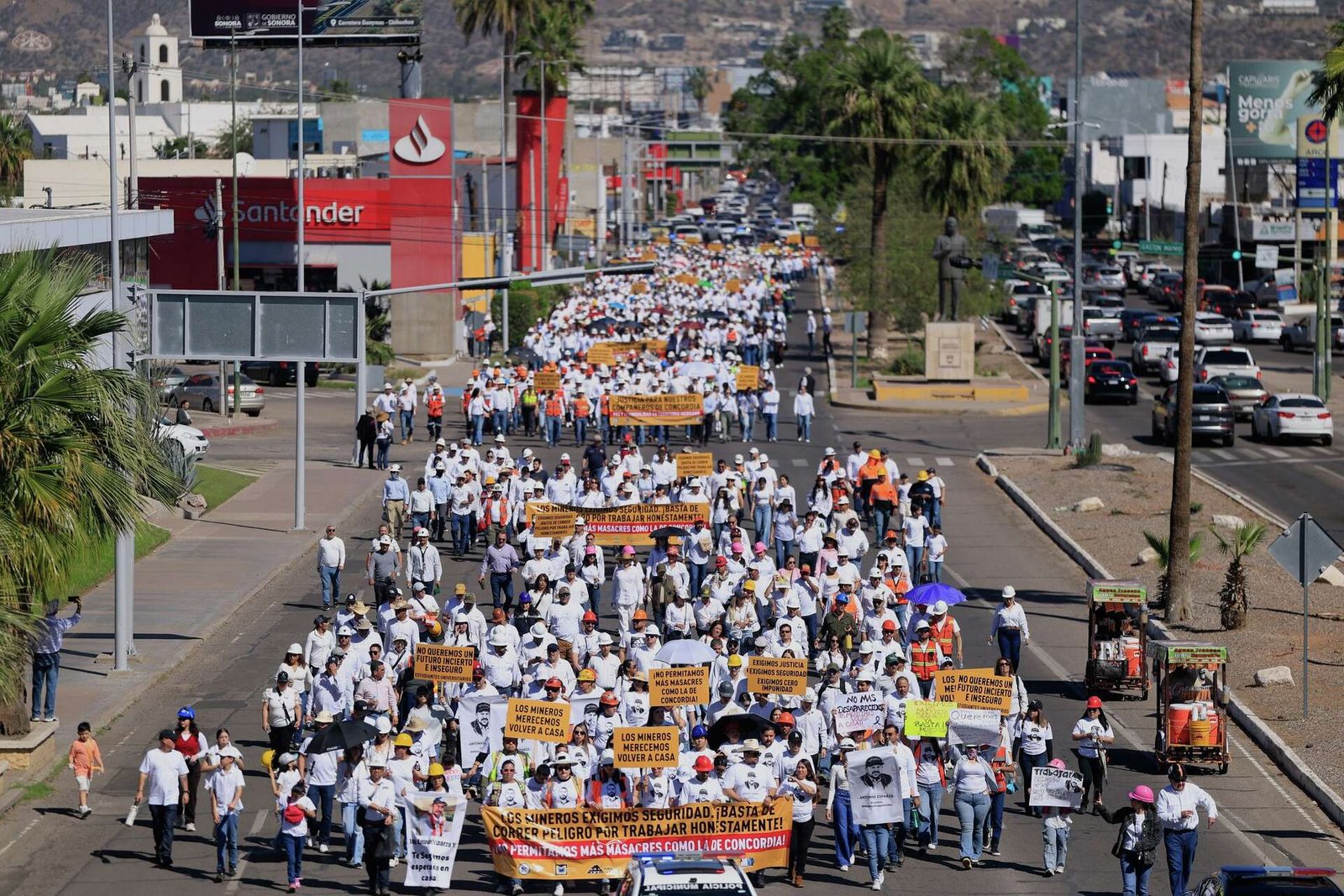
The discovery of five abducted miners dead near Panuco highlights the government’s struggle to contain a brutal cartel war, as local communities plead for protection and answers.
CONCORDIA, Mexico – The bodies of five Canadian-mining employees, discovered in shallow graves in the mountains of Sinaloa, have delivered a devastating blow to President Claudia Sheinbaum’s narrative of a pacified Mexico, exposing the limits of federal power in the face of a relentless cartel war.
The 10 workers from Vizsla Silver Corp. were abducted from their worksite near the town of Panuco in late January. While five of the bodies have been identified, the remaining five are still undergoing forensic analysis. The mass killing has transformed a remote corner of the coastal mountains into a symbol of state failure.
“This is not just a crime; it is a message,” said security analyst David Saucedo. “What these kinds of episodes do is demolish the federal government’s narrative that insists that little by little they are getting control of the situation.”
The massacre comes at a critical juncture for Sheinbaum, who took office in October 2024 vowing to take a tougher stance against the cartels. She has overseen high-profile captures, drug seizures, and deployed 10,000 National Guard troops to the northern border to appease US demands to curb fentanyl trafficking. In January, she pointed to a decline in national homicide rates as proof her strategy was working.
But in the mountains above Mazatlan, statistics mean little.
A Town Abandoned
The villages dotting the winding roads near Panuco now resemble ghost towns. Most residents have fled, caught in the crossfire of an internal war between the Sinaloa Cartel’s two dominant factions: the “Chapitos,” loyal to the sons of Joaquín “El Chapo” Guzmán, and the remnants of the faction loyal to Ismael “El Mayo” Zambada, whose abduction by the Chapitos in mid-2024 sparked the current bloodshed.
Fermín Labrador, a 68-year-old from the village of Chirimoyos, said those who didn’t flee were “invited” to leave by armed groups. Labrador now walks eight kilometers through the mountains to reach his job at a highway toll booth after the local bus driver disappeared in December.
“We’ve practically been abandoned,” said Roque Vargas, a human rights activist for displaced people. While the recent arrival of Security Secretary Omar García Harfuch and a wave of troops has scattered cartel lookouts temporarily, Vargas fears the peace is fleeting—and that residents now face the added risk of being mistaken for cartel members by security forces.
The Cartel’s Reach
García Harfuch has stated that the arrested suspects belong to the Chapitos faction and claimed they mistook the miners for members of the rival Zambada group. How such a confusion occurred—given the workers were abducted from their employer’s site—remains unexplained.
Mines have long been lucrative targets for organized crime in Mexico, serving as sources of extortion revenue or direct theft of precious metals. While the government insists it has no reports that Vizsla Silver was being extorted, the Vancouver-based company had already paused operations in April 2024 due to security concerns. It resumed after a month but now faces its darkest hour.
President Sheinbaum has promised to engage with all mining companies operating in Mexico “to offer the support they require.” For the families of the slain workers, that support comes too late.
The Search for the Missing
In the foothills near El Verde, Marisela Carrizales stands vigil beside banners displaying photographs of the disappeared. She is one of thousands of Mexicans who have joined search collectives to do the work the state cannot.
“I’m here waiting for answers,” she said. She has been looking for her son, Alejandro, for five and a half years. She arrived with more than 20 other family members to monitor authorities as they excavated clandestine graves in the area. “We have information that there are a lot more graves here. We have to come to look for them.”
Prosecutors have confirmed finding 10 bodies in one location near El Verde—five identified as the miners—and additional remains in four other grave sites nearby. But the searches are far from over.
A Wider Crisis
The mine workers are not the only ones missing. In October, a Mexican tourist was abducted from a bar in Mazatlan. In January, a businessman vanished. Earlier in February, six tourists were taken from a high-end part of the resort city. While a woman and a girl were later found alive, the men remain missing.
As the government bolsters security in Mazatlan ahead of carnival celebrations, the rural communities bear the scars of abandonment. Teachers, doctors, and public transportation no longer reach many villages.
For Labrador, borrowing a friend’s motorcycle is a luxury. When he can’t, he walks through the mountains, past empty towns and silent roads, wondering if the man who once drove the local bus will ever be found.
