
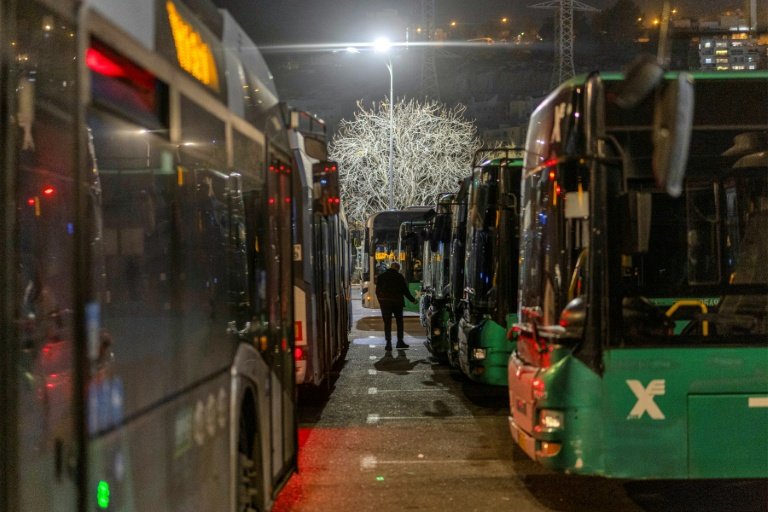
Drivers report a 30% surge in attacks since the Gaza war began, alleging police inaction as a fatal incident thrusts the crisis into the national spotlight.
JERUSALEM – A tragic chain of events involving a Jerusalem bus driver has laid bare what advocates describe as a systemic failure to protect Arab drivers from racist attacks across Israel.
Fakhri Khatib, a Palestinian driver from East Jerusalem, was surrounded by an ultra-Orthodox Jewish crowd in early January. As protesters shouted “Arab, Arab!” and spat on him, Khatib called police for help. When none arrived, he drove off in fear—unaware that 14-year-old Yosef Eisenthal was holding onto his bumper. The teenager was killed, and Khatib now faces negligent homicide charges.
His case, while extreme, has become a symbol of a wider crisis. According to the Koach LaOvdim union, which represents around 5,000 of Israel’s 20,000 bus drivers, physical assaults against drivers surged by 30 percent last year. In Jerusalem alone, the union recorded 100 cases requiring medical evacuation. Verbal attacks, they say, are too numerous to count.
A Surge in Violence
Drivers say the violence has intensified since the start of the Gaza war in October 2023 and has persisted despite the ceasefire. The victims are predominantly Palestinians from annexed East Jerusalem and Arab citizens of Israel—a community that makes up about one-fifth of the population and forms the backbone of public transit in mixed cities.
“People began running toward me and shouting at me, ‘Arab, Arab!'” Khatib recalled. “They were cursing at me and spitting on me. I became very afraid.”
Football matches, particularly those of Beitar Jerusalem—a club with a fan base known for anti-Arab chants—have become regular flashpoints. In response, the grassroots group Standing Together has organized “protective presence” teams on buses, a tactic usually deployed in the West Bank.
“We can see that it escalates sometimes toward breaking windows or hurting the bus drivers,” activist Elyashiv Newman told AFP outside Jerusalem’s Teddy Stadium.
Allegations of Police Inaction
Drivers and union leaders accuse authorities of failing to act. Mohamed Hresh, an Arab-Israeli driver and union leader, said most cases are dropped despite video evidence.
“What hurts us is not only the racism, but the police handling of this matter,” he said.
One driver, speaking anonymously, blamed far-right National Security Minister Itamar Ben Gvir for inflaming tensions: “We have no one to back us, only God.”
Israeli police did not respond to AFP requests for comment.
A ‘Red Line’ Crossed
In early February, Transport Minister Miri Regev launched a pilot security unit deploying rapid-response motorcycle teams in several cities, acknowledging that violence on public transport was “crossing a red line.”
Micha Vaknin, a Jewish driver and union leader, welcomed the move but stressed that true change requires unity. “We will have to stay together,” he said, “not be torn apart.”
For now, Arab drivers say they remain exposed—moving the public while the public, and the state, turn away.
