
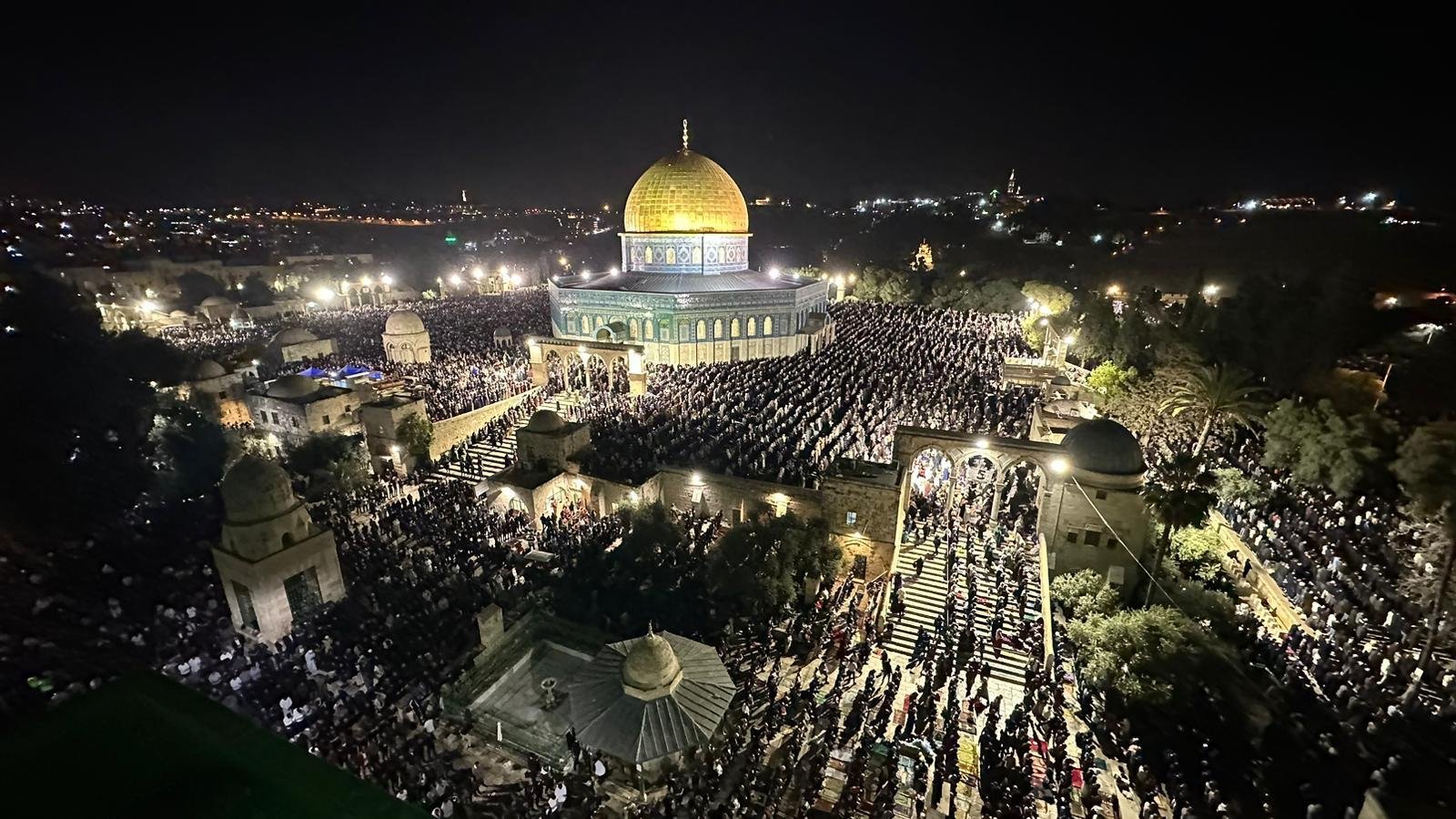
Worshippers gather under heavy military presence as hundreds of Jerusalemites barred from holy site
LONDON — In a powerful display of faith amid political turmoil, approximately 50,000 Palestinian worshippers converged at Al-Aqsa Mosque in occupied East Jerusalem on Sunday evening to perform the Isha and Taraweeh prayers, marking the first nights of the holy month of Ramadan.
The mass gathering unfolded despite stringent Israeli security measures, including military checkpoints and rigorous identity checks at the mosque’s gates, the Jerusalem Governorate reported. Worshippers navigated these obstacles to reach Islam’s third holiest site, underscoring the mosque’s enduring spiritual significance.
Access denied
While tens of thousands successfully entered the compound, many others were turned away. More than 300 Jerusalemites have received direct Israeli orders prohibiting their entry to Al-Aqsa throughout Ramadan, according to the Wafa news agency.
Israeli forces have imposed age-based restrictions on access: children under 12, men over 55, and women over 50 are barred from entering the mosque. The measures have created long queues at checkpoints, including Qalandiya and Bethlehem crossings, where thousands have lined up daily since Ramadan began Wednesday, hoping to reach Jerusalem for prayers.
Prayers under pressure
The first Ramadan prayers at Al-Aqsa come against a backdrop of escalating violence across the occupied West Bank. Palestinian communities are observing the holy month amid intensified Israeli military raids, ongoing arrests, and attacks by settlers—conditions that have defined the start of Ramadan for many.
Al-Aqsa Mosque, located in Jerusalem’s walled Old City, has long been a flashpoint in the Israeli-Palestinian conflict. The compound is also revered in Judaism as the Temple Mount, the holiest site in the Jewish faith. These competing religious claims frequently ignite tensions, particularly during religious holidays.
For the 50,000 who made the journey Sunday, the prayers offered spiritual connection despite political division. For those blocked from entering, the message was unmistakable: even worship has its limits under occupation.
