
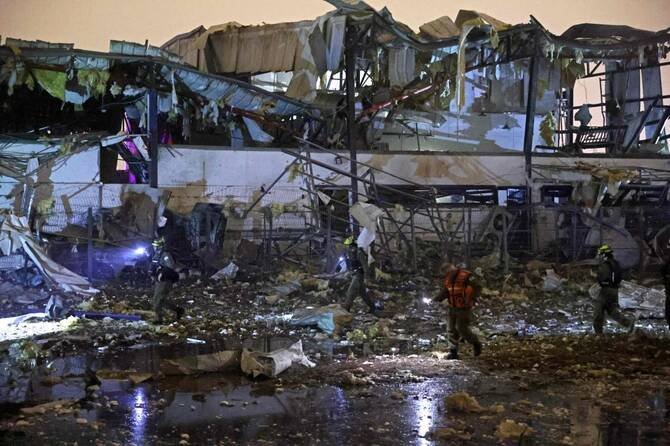
Cluster missile damages houses and cars as Israeli air defenses intercept most projectiles; Trump threatens Iranian bridges and power plants amid escalating war.
JERUSALEM – Iran fired a fresh salvo of missiles at Israel on Friday, triggering air defense systems across the country, the Israeli military confirmed. While most projectiles were intercepted, an unintercepted cluster missile caused damage to houses and cars, emergency services reported.
Israeli military radio added that a train station in Tel Aviv was damaged by shrapnel from the attack. No casualties have been reported so far.
The missile barrage comes more than a month after the outbreak of the war, which began with US-Israeli strikes on Iran. Tehran’s retaliation has since spread the conflict throughout the Middle East, convulsing the global economy and impacting millions of people worldwide.
Trump escalates rhetoric
The Iranian fire coincided with a series of aggressive posts by former US President Donald Trump on his Truth Social platform. Hours after claiming that Iran’s tallest bridge had been destroyed, Trump wrote: “The US military hasn’t even started destroying what’s left in Iran. Bridges next, then Electric Power Plants!”
Iranian Foreign Minister Abbas Araghchi responded online, stating: “Striking civilian structures, including unfinished bridges, will not compel Iranians to surrender.”
Economic targets and energy fears
Both sides have increasingly targeted economic and industrial sites, raising fears of wider disruption to global energy supplies. The Strait of Hormuz — a conduit for one-fifth of the world’s oil and liquefied natural gas — has come into sharp focus after Iran effectively closed it. Gulf nations are pushing for an international force to protect shipping there, but a UN vote scheduled for Friday was delayed.
Threats of further escalation
Trump has previously threatened to bomb Iran “back to the Stone Ages” and warned that US attacks would intensify if Tehran failed to reach a negotiated settlement. Iran, in response, has vowed to carry out “crushing” attacks against both the United States and Israel.
As the conflict deepens, civilian infrastructure on both sides appears increasingly vulnerable, with no clear path to de-escalation in sight.
