
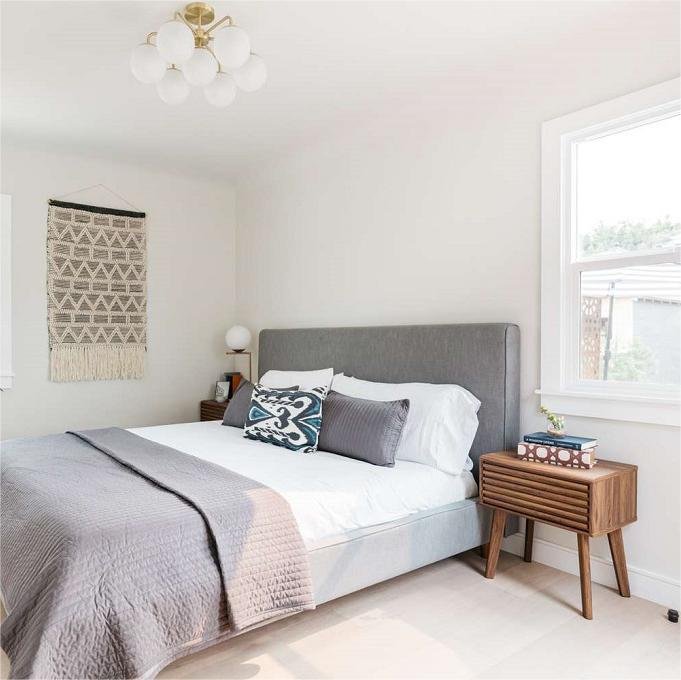
Forget statement furniture. The next frontier in luxury residential design is invisible: air-purifying walls, circadian lighting, and storage that disappears into architecture.
INTERNATIONAL – For decades, interior design has been driven by aesthetics. Colour palettes, statement furniture, curated objects, and visual identity have dominated residential architecture. Homes were styled to be seen, not measured.
But a quieter, more consequential shift is now underway. In high-performance residential design, the home is being reimagined not as a display of taste, but as a biological system.
Bio-optimised interiors and zero-object homes represent a decisive move away from decoration and toward performance. These environments are designed to actively support human health, cognition, and emotional regulation. Materials clean the air. Surfaces resist bacteria. Lighting adapts to circadian rhythms. Storage disappears into architecture itself.
The result is a form of minimalist living that is engineered rather than styled.
From visual minimalism to biological minimalism
Minimalism has long been associated with empty surfaces and neutral tones. But bio-optimised design goes further. It is not about owning fewer things for visual clarity – it is about reducing cognitive and physiological load.
Research in environmental psychology consistently shows that visual clutter increases cortisol levels, impairs working memory, and contributes to decision fatigue. Traditional minimalist interiors often addressed this superficially by removing objects from view while leaving the underlying architecture unchanged.
Zero-object homes invert this logic. Instead of arranging possessions carefully, they eliminate the need for visible storage altogether. Walls, ceilings, floors, and structural volumes absorb storage functions. Wardrobes vanish into wall planes. Kitchens fold into architectural cavities. Furniture becomes fixed infrastructure.
The absence of visible objects is not an aesthetic statement. It is a functional outcome of architectural planning.
Materials that work while you rest
At the core of bio-optimised interiors is a new understanding of materials. Finishes are no longer passive surfaces – they are active participants in indoor health.
Air-purifying materials are increasingly integrated into walls, ceilings, and flooring systems. Mineral-based plasters and advanced composites can absorb or neutralize volatile organic compounds, improving indoor air quality without relying solely on mechanical ventilation. In dense urban environments where outdoor air is often compromised, this passive purification becomes critical.
Anti-microbial surfaces address another invisible risk. Kitchens, bathrooms, and high-touch zones are now being specified with materials that inhibit bacterial growth at a molecular level. Unlike surface coatings that degrade over time, these properties are often embedded into the material itself, reducing maintenance and chemical cleaning requirements.
When materials perform biological functions, the boundary between architecture and healthcare begins to blur.
Mineral walls and sensory stability
Mineral-based wall systems are gaining traction not only for sustainability but for their sensory impact. Clay, lime, and stone-derived finishes regulate humidity naturally, stabilize indoor environments, and reduce mold growth. More importantly, they create tactile and acoustic softness that synthetic materials often lack.
Sound absorption remains an under-discussed component of bio-optimised interiors. Hard, reflective surfaces amplify noise and increase stress levels, particularly in open-plan homes. Mineral walls and integrated acoustic layers dampen sound, creating quieter interiors without visible panels or soft furnishings.
When air quality, humidity, acoustics, and temperature stabilize, occupants experience fewer micro-stressors throughout the day. The home becomes a low-friction environment for both body and mind.
Lighting as invisible infrastructure
Lighting is perhaps the most powerful – and most misused – element of residential design. Decorative lighting prioritizes visual drama, often at the expense of biological alignment. Bio-optimised interiors treat light as infrastructure.
Circadian-aware lighting systems adjust colour temperature and intensity throughout the day, supporting natural sleep-wake cycles. Cooler, brighter light during morning hours enhances alertness and focus. Warmer, dimmer tones in the evening signal the body to wind down, supporting melatonin production.
In zero-object homes, lighting also replaces decorative layers. Cove lighting, concealed luminaires, and architectural light planes create atmosphere without lamps, shades, or fixtures occupying visual space. Emotional tone is set through light behaviour rather than physical objects.
This approach reframes luxury. Instead of visible opulence, value is expressed through invisible intelligence.
The engineering of absence
Zero-object homes depend on an often-overlooked discipline: storage engineering. Achieving clutter-free living is not about discipline or minimal ownership. It is about providing precise, accessible storage exactly where it is needed.
Hidden compartments in walls, ceilings, and floors allow everyday objects to disappear instantly. Kitchens integrate appliances behind flush panels. Bedrooms absorb wardrobes into wall thickness. Entryways conceal shoes, bags, and utilities within structural volumes.
This demands early coordination between architects, engineers, and interior planners. Retrofitting zero-object principles is difficult and often ineffective. When done properly, storage becomes an extension of architecture rather than furniture.
The psychological benefit is immediate. When objects do not accumulate in visible space, mental bandwidth is preserved. Attention shifts outward to work, creativity, or rest, rather than inward to constant micro-decisions about tidying and organizing.
Technology that disappears
Smart home technology plays a role in bio-optimised interiors, but only when it is restrained. Zero-object homes reject visible screens, blinking devices, and layered controls. Instead, automation operates quietly in the background.
Environmental systems manage air quality, temperature, lighting, and sound without constant user input. Sensors respond to presence, time of day, and environmental conditions. The home adapts rather than demands attention.
The best systems are interoperable and future-proof. Proprietary ecosystems that require frequent upgrades undermine the very calm these homes are designed to deliver. In bio-optimised design, technology is a utility, not a feature.
Sustainability as a quiet by-product
Interestingly, sustainability in zero-object homes is often a by-product rather than the primary driver. Durable materials reduce replacement cycles. Integrated storage discourages overconsumption. Energy-efficient lighting and passive climate regulation lower operational footprints.
But unlike earlier green design movements, bio-optimised interiors do not foreground environmental virtue. They focus on human performance and wellbeing, with sustainability embedded quietly in the system. When healthy, calm living aligns with lower environmental impact, adoption becomes natural rather than ideological.
Who is driving the shift
The rise of bio-optimised interiors is being driven by a convergence of forces:
- Remote and hybrid work have collapsed the separation between professional and domestic environments.
- Urban density has increased exposure to noise and pollution.
- Wearable health technology has made individuals more aware of how environments affect sleep, stress, and focus.
Affluent urban buyers, particularly in global cities, are beginning to demand homes that function as recovery spaces rather than status displays. Developers and designers responding to this demand are redefining residential value.
In this context, the zero-object home is not an aesthetic trend. It is an architectural response to modern life.
Designing for the nervous system
At its core, bio-optimised design acknowledges a simple truth: humans are biological organisms operating in artificial environments. When those environments are poorly designed, the nervous system pays the price.
Zero-object homes aim to remove unnecessary stimuli – fewer visual interruptions, softer acoustics, cleaner air, predictable lighting, stable temperatures. These conditions support parasympathetic nervous system activation, the physiological state associated with rest, recovery, and long-term health.
This is not about retreating from technology or modernity. It is about designing spaces that quietly counterbalance them.
The future of domestic design
As cities grow denser and lives grow more complex, the demand for homes that actively support wellbeing will only increase. Bio-optimised interiors and zero-object homes offer a blueprint for that future.
They challenge long-held assumptions about luxury, decoration, and ownership. They shift value from what is seen to what is felt. They redefine the home not as a backdrop to life, but as an active participant in it.
In the coming years, the most advanced homes may not be the ones filled with objects, screens, or statements – but the ones that leave space for clarity, calm, and human focus.
