
The adopted resolution focuses on the humanitarian and public health consequences affecting civilian populations, the continuity of health services, the resilience of health systems
The UAE has welcomed the adoption of a resolution concerning the health repercussions of treacherous terrorist attacks targeting civilians and vital civilian infrastructure, including health facilities.
The resolution submitted by the member states of the Gulf Cooperation Council (GCC) and the Hashemite Kingdom of Jordan was adopted by the World Health Assembly (the highest decision-making body within the World Health Organisation) during its current session.
The adopted resolution focuses on the humanitarian and public health consequences affecting civilian populations, the continuity of health services, the resilience of health systems, and ensuring access to medicines, vaccines, safe water, and essential health products.
The resolution also included the strongest condemnation of the terrorist attacks perpetrated by the Islamic Republic of Iran against civilians and civilian objects, including vital and essential infrastructure in the GCC countries and Jordan, which resulted in civilian casualties, including children, and damage to health and medical infrastructure, desalination plants, energy facilities, airports, and seaports.
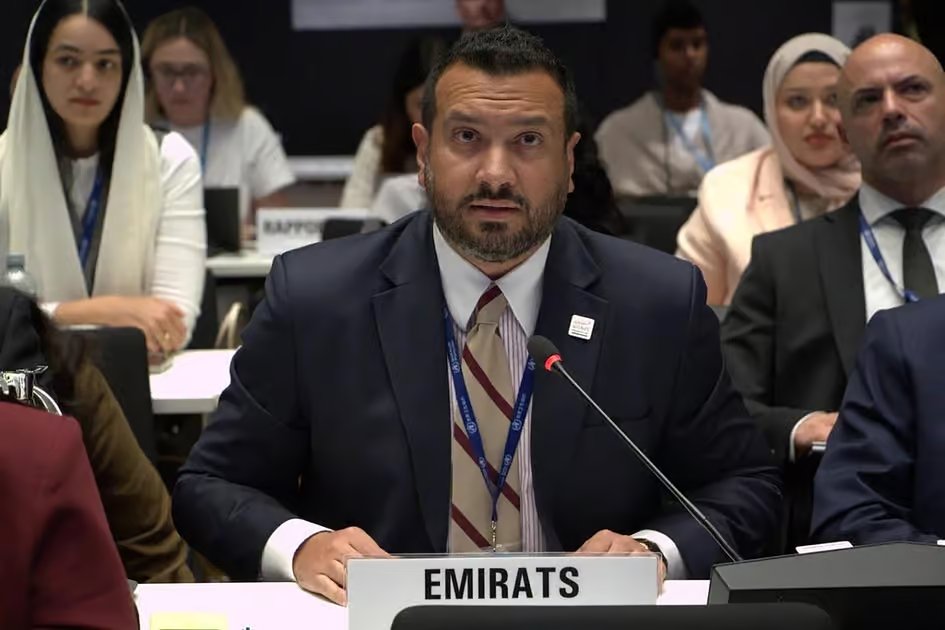
In a statement delivered to the General Assembly by Jamal Al Musharrakh, the UAE’s Permanent Representative to the United Nations and other international organisations in Geneva, the United Arab Emirates reaffirmed the principle that attacks against civilians, public health, and civilian infrastructure must not become commonplace or acceptable.
He stated that “the protection of civilians and civilian infrastructure, including health facilities and essential supply routes, is a fundamental responsibility under international law and a prerequisite for safeguarding public health at both the regional and global levels.”
The statement asserted that the more than 3,000 missile and drone attacks carried out by Iran and its affiliated militias against countries not involved in the conflict, including those targeting civilians and civilian objects and resulting in civilian casualties, have created grave risks to public health across the region.
The statement also highlighted the terrorist attack by a drone launched from Iraqi territory that targeted the Barakah Peaceful Nuclear Energy Plant, striking a generator outside the plant’s perimeter, describing it as a direct violation of international law.
The statement also noted that disruptions affecting the Strait of Hormuz have jeopardized vital supply lines — the routes necessary for providing essential medical supplies, medicines, and vaccines to ensure the functioning of health systems — as well as disrupting food and fuel supply chains.
The statement indicated that the adopted resolution proposes a practical response through mechanisms for assessing and reporting on the impact of such attacks and threats on affected countries, including their impact on mental health, psychosocial support, and global health.
The UAE explained that the resolution addresses the broader repercussions of disruptions to global supply chains and energy routes on the affordability and accessibility of health products, particularly in developing countries.
The UAE expressed its appreciation to the member states for their support in adopting the resolution, which reflects a shared international commitment to protecting civilians, health systems and vital civilian infrastructure.
