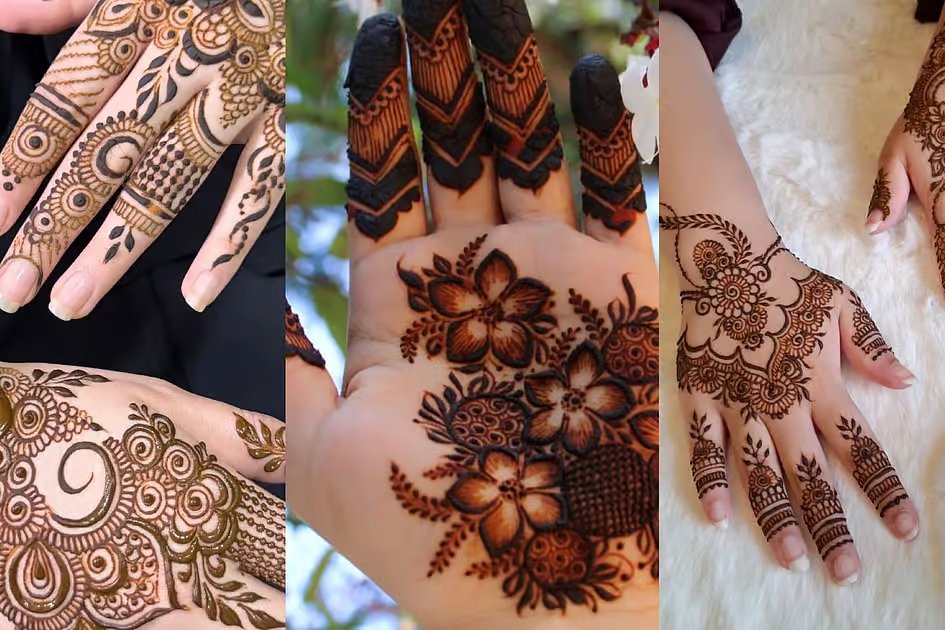
Youngsters are increasingly preferring modern and elegant patterns like wrist-length designs with finer detailing and jewellery-style motifs, say henna artists
With Eid Al Adha just around the corner, UAE henna artists are seeing a distinctive shift in the kind of designs and patterns that customers want. Gone are the days when only heavy, elbow-length Arabic floral patterns ruled. This year, artists are reporting a decisive shift toward sleek, minimalistic designs, and an intriguing new player called ‘Hengua’.
Fathima Afsal, a Dubai-based henna artist, has watched trends evolve over multiple Eid seasons. “Most youngsters now prefer minimal and elegant patterns instead of very heavy traditional styles,” she says.
Wrist-length designs with finer detailing, jewellery-style motifs, and clean back-hand patterns are currently in high demand.
Yet tradition holds strong in certain circles. Muhsina Yusuf, a part-time freelance henna artist in Ras Al Khaimah, notes a generational divide. “My younger customers like modern, minimalistic designs that are sleek and neat. But when I go to Emirati families, they want the very traditional Khaleeji and Arabic designs.”

Enter Hengua
Perhaps the most unexpected trend this year is the rise of Hengua — a hybrid of henna and the blue-tinted jagua. Rihanna, a henna artist who has consciously limited her Eid appointments to premium clients, reveals she has just started experimenting with it.
“The blue-colored Jagua has been popular for a while. Hengua mixes henna and Jagua,” she explained. “I think by next year Eid, we will see a lot of demand.”
Additionally, Rihanna warned clients to choose salons and cones carefully after seeing numerous cases of hand burns. “People pick cones that give instant colour, and many of these have harmful chemicals,” she said. “Stick to organic henna, even if it’s slightly more expensive and time-consuming.” She has already sold over 1,000 of her homemade organic cones this year.
Busiest time
Fathima said that the demand for henna designers was the highest during the last three days before Eid. “Most clients now prefer home-service and group bookings with family and friends,” she said. “During the festive rush, I usually divide appointments into morning, afternoon, and evening slots, with each home generally having ten or more people getting henna done. On especially busy days, the work sometimes continues until dawn.”
Despite high demand, booking patterns have shifted. For Eid Al Fitr, Rihanna’s slots were fully booked 20 days in advance. However, for Eid Al Adha 2026, she had slots available till last week. “Since there is a long holiday, many people are travelling,” she said. “Also, many are waiting till the last minute to make plans.”
Celebration amidst everything
Muhsina, who has been booked “day and night” for the last few years, offers a poignant observation. Despite global turmoil, she says, “the war has had no impact on bookings. In fact, it has strengthened people’s resolve to celebrate and find happiness in small things and moments.”
Whether it’s a traditional Khaleeji pattern, a sleek minimalist wrist design, or an experimental Hengua motif, one thing is certain: for Eid, henna remains a marker of joy and identity for women.
- Eid Al Adha