Close Menu
    What's Hot

    Why Iran believes deal with US leaves it stronger than beforeIran has come out of the war's first chapter stronger than many expected, but its next challenge may be harder, the BBC Persian Service's Amir Azimi writes.2 hrs agoWorld

    June 18, 2026

    Bowen: US-Iran deal raises inescapable question of what the war was forWhile the human cost is clear, the Iranian regime has not just survived the war, it has been empowered.20 mins agoWorld

    June 18, 2026

    Weapons, money and ships: How is this Iran deal different from others?BBC Verify examines how the new deal between the US and Iran affects three key areas.56 mins agoMiddle East

    June 18, 2026
    Facebook X (Twitter) Instagram
    • Politics
    • Economy
    Facebook X (Twitter) Instagram
    Gulf News Week
    Subscribe
    Thursday, June 18
    • Home
    • Politics
      • Europe
      • Middle East
      • Russia
      • Social
      • Ukraine Conflict
      • US Politics
      • World
    • Region
      • Middle East News
    • World
    • Economy
      • Banking
      • Business
      • Markets
    • Real Estate
    • Science & Tech
      • AI & Tech
      • Climate
      • Computing
      • Science
      • Space Science
      • Tech
    • Sports

      Dominant PSG put Liverpool on the brink with 2-0 Champions League quarter-final first-leg win

      April 9, 2026

      Dubai Basketball U-18 Elite Crowned Basket Cup Sarajevo 2026 Champions in Historic Debut

      April 6, 2026

      Saudi boxing crowns 20 champions as Kingdom’s Elite Belt concludes in Riyadh

      April 4, 2026

      “He Signed for a Real Fight”: Pacquiao Contradicts Mayweather Over Rematch Status

      April 3, 2026

      Arsenal Hold Off Chelsea Fightback to Reach Women’s Champions League Semi-Finals

      April 2, 2026
    • Health
    • Travel
    • Contact
    Gulf News Week
    Home»Most Viewed News»Bowen: US-Iran deal raises inescapable question of what the war was forWhile the human cost is clear, the Iranian regime has not just survived the war, it has been empowered.20 mins agoWorld
    Most Viewed News

    Bowen: US-Iran deal raises inescapable question of what the war was forWhile the human cost is clear, the Iranian regime has not just survived the war, it has been empowered.20 mins agoWorld

    Gulf News WeekBy Gulf News WeekJune 18, 2026No Comments7 Mins Read
    Share Facebook Twitter Pinterest Copy Link LinkedIn Tumblr Email VKontakte Telegram
    Bowen: US-Iran deal raises inescapable question of what the war was forWhile the human cost is clear, the Iranian regime has not just survived the war, it has been empowered.20 mins agoWorld
    Share
    Facebook Twitter Pinterest Email Copy Link
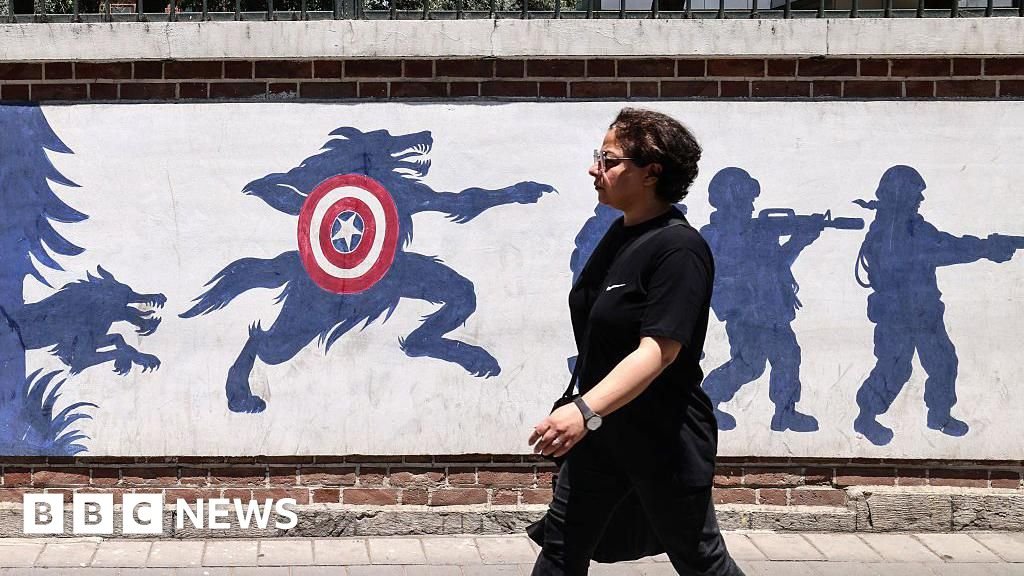
    AFP via Getty Images A woman wearing a black dress walks past an anti-US mural outside the former US embassy in Tehran on 15 June. AFP via Getty Images
    Iranian civilians have been living under the threat of strikes for months

    The memorandum of understanding signed by President Donald Trump and President Masoud Pezeshkian of Iran lays out the political, military and economic consequences of the ill-judged decision to attack Iran on 28 February.

    The human cost is already clear. Thousands have been killed, many of them civilians, in Iran and Lebanon.

    The US, and by extension Israel, have suffered a strategic defeat. The regime in Tehran faced its worst nightmare: a joint military operation to cripple or destroy it by the US, the world’s strongest power, and Israel, the Middle East’s superpower. The regime has not just survived. It has been empowered.

    Its strategy of blocking the Strait of Hormuz, and with it one fifth of the world’s supplies of oil and gas as well as other vital components in the global economy, has forced Trump to agree to a series of concessions that have infuriated and alarmed America’s Iran hawks and the Israeli government.

    In return for reopening the Strait, the MOU’s language says the US will lift its counter blockade of Iranian ports, waive sanctions allowing Iran to earn billions of dollars from exporting oil and start the process of returning billions more to Iran by unfreezing assets that it held abroad.

    That is before they get down to the hard business of negotiating a nuclear deal. It is the price of returning to the way they were on 27 February, the day before the US and Israel launched the war. On that day the Strait of Hormuz was open for shipping and American and Iranian negotiators were discussing a nuclear deal.

    The signing of the MOU means that the negotiators will go back to work and ships will be able to transit the Strait of Hormuz.

    Moment Trump signs Iran deal at Palace of Versailles

    Joe Biden’s Secretary of State, Antony Blinken, posted on X “the only ‘achievement’ of the ceasefire is the likely reopening of the Strait of Hormuz – which was open before the war started. And we will apparently pay Iran to do so.”

    The question of what exactly the war was for is inescapable and will not go away. It amounts to Trump’s worst foreign policy blunder so far.

    It might also spell the end of Israeli Prime Minister Benjamin Netanyahu’s long political career. He faces elections in October, and a reckoning from Israeli voters for his part in security failures, the worst in Israel’s history, that meant its vaunted military and intelligence services failed to spot the Hamas plan to invade Israel from Gaza on 7 October 2023. Netanyahu’s hardline military policies and dismissal of diplomacy were designed at least in part to restore his reputation as Israel’s Mr Security.

    Tehran was always aware of the potential power of closing the Strait of Hormuz. So was the US military, its diplomats and spies.

    But the former Supreme Leader of Iran, Ali Khamanei, a cautious, elderly man, chose not to take the risk of using the Strait as a weapon.

    After Israel killed him, and his closest advisers, in the first bombing sorties of the war, his successors believed, correctly, that they were in an existential struggle and did not hesitate to close the Strait.

    Weapons, money and ships: How is this Iran deal different from others?

    US-Iran deal leaves core sticking points unresolved – and a $300bn question

    Iran says deal shows it did not bow to ‘threat or pressure’ as Trump hits out at critics

    They have discovered the power of controlling a global economic chokehold. It is a far more usable weapon, and much cheaper, than the network of allies and proxies it spent decades and billions building in the Middle East.

    Except for the Assad regime in Syria, which collapsed at the end of 2024, Iran’s so-called axis of resistance survives, just about. But it has been so damaged by Israel that whether it can “resist” is a moot point.

    Iran has also poured money into a nuclear programme that it continues to deny was aimed at building a weapon but undoubtedly gave Tehran an option and a threat. But it provoked a war that despite the regime’s survival has done huge damage to Iran.

    Closing the Strait, in contrast, was easy and had a rapid and devastating impact, spreading the pain to the Arab oil states and much of the rest of the world.

    The power of the US and Israeli air forces scored a series of tactical victories. But they were not enough to avoid a strategic defeat. That was because the US-Israel strategy of regime change was based on a series of lazy and misplaced assumptions.

    They assumed killing the supreme leader would cause a collapse of the regime. But over nearly half a century the Islamic Republic’s institutions have been engineered to resist attempts to destroy them.

    It was not like Venezuela, a corrupt Latin American dictatorship, that crumpled when its leader was abducted and put on trial in the US. The Iranian regime is undoubtedly corrupt and highly repressive – its men killed thousands of protesters in the streets of Iran in January – but it is also based on ideology, religious conviction, and a conception of national security, martyrdom and survival that grew out of the devastating war with Saddam Hussein’s Iraq in the 1980s.

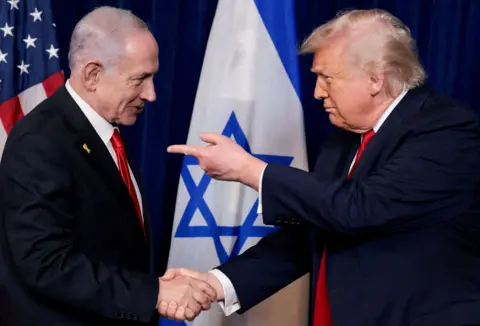
    Reuters Benjamin Netanyahu and Donald Trump shake hands while standing in front of US and Israeli flags. Both men are wearing dark blue suits with red ties, while Trump is pointing at Netanyahu.Reuters
    Trump and Netanyahu’s relationship has come under strain as a result of Israel’s military actions in Lebanon

    When they went to war President Trump said the regime in Tehran would fall. He told the Iranian people to prepare for a once-in-a-generation chance to take back their country. Not long after that he called for its unconditional surrender.

    Netanyahu, who had tried and failed repeatedly to persuade Trump’s predecessors in the White House to go to war against Iran, used biblical language to sum up the enormity of what he believed was about to happen: “This coalition of forces allows us to do what I have yearned to do for 40 years: smite the terror regime hip and thigh.”

    Neither man has delivered.

    The memorandum of understanding is not a final deal. It is an agreement to talk about the biggest issue between them – Iran’s nuclear programme. But it is front-loaded with key inducements for Iran. If the talks progress, the US has said it will lift sanctions.

    It is all dependent on the success of 60 days of talks on a nuclear deal – that can be extended and probably will be, as the issues are complex. Neither trusts the other. Much can go wrong. Hardliners in Washington, Tehran and Israel do not want the deal to work.

    Iran might overplay its hand, taking maximal positions in the forthcoming negotiation and potentially jeopardising economic gains that could rescue its broken economy.

    But this agreement is way better than a war that has killed thousands and threatened a global economic recession.

    If a nuclear deal is made, to the satisfaction of the US and Iran, and if both sides keep their promises, the Middle East could be transformed. That is a big if, at the other end of a long and difficult negotiation.

    What’s in the US-Iran agreement?

    Bowen: Iran deal ends Trump’s war that revealed limit of US dominance

    How could the US-Iran deal affect oil prices and the cost of food?

    Iran war
    Iran
    United States
    Middle East
    Israel
    Donald Trump
    Benjamin Netanyahu
    Share. Facebook Twitter Pinterest LinkedIn Tumblr Email Telegram Copy Link
    Gulf News Week

    Related Posts

    Most Viewed News

    Why Iran believes deal with US leaves it stronger than beforeIran has come out of the war's first chapter stronger than many expected, but its next challenge may be harder, the BBC Persian Service's Amir Azimi writes.2 hrs agoWorld

    June 18, 2026
    Most Viewed News

    Weapons, money and ships: How is this Iran deal different from others?BBC Verify examines how the new deal between the US and Iran affects three key areas.56 mins agoMiddle East

    June 18, 2026
    Most Viewed News

    Hegseth announces US review of Europe forces, says some allies will failThe US defence secretary's move follows a US decision to scale back its commitments to a high readiness force within the alliance.41 mins agoUS & Canada

    June 18, 2026
    Most Viewed News

    Lawyer in high-profile Ugandan treason case charged with related offenceUganda's military chief had boasted of "the hurt and pain" he would inflict on Erias Lukwago, who was arrested earlier this week.4 hrs agoAfrica

    June 18, 2026
    Most Viewed News

    First shadow fleet vessel enters English Channel since Smyrtos boardingForwarder, a Russian-flagged ship which left port in Primorsk last week, entered the Channel on Wednesday evening.15 mins agoEurope

    June 18, 2026
    Most Viewed News

    Suspected gang leader shot dead in flower bouquet ambush at airportThe gunmen concealed their weapons behind flowers and stuffed toys while waiting for the victim outside Guayaquil airport.2 hrs agoLatin America

    June 18, 2026
    Add A Comment
    Leave A Reply Cancel Reply

    Editors Picks

    Why Iran believes deal with US leaves it stronger than beforeIran has come out of the war's first chapter stronger than many expected, but its next challenge may be harder, the BBC Persian Service's Amir Azimi writes.2 hrs agoWorld

    June 18, 2026

    Bowen: US-Iran deal raises inescapable question of what the war was forWhile the human cost is clear, the Iranian regime has not just survived the war, it has been empowered.20 mins agoWorld

    June 18, 2026

    Weapons, money and ships: How is this Iran deal different from others?BBC Verify examines how the new deal between the US and Iran affects three key areas.56 mins agoMiddle East

    June 18, 2026

    Hegseth announces US review of Europe forces, says some allies will failThe US defence secretary's move follows a US decision to scale back its commitments to a high readiness force within the alliance.41 mins agoUS & Canada

    June 18, 2026
    Latest Posts

    Why Iran believes deal with US leaves it stronger than beforeIran has come out of the war's first chapter stronger than many expected, but its next challenge may be harder, the BBC Persian Service's Amir Azimi writes.2 hrs agoWorld

    June 18, 2026

    Weapons, money and ships: How is this Iran deal different from others?BBC Verify examines how the new deal between the US and Iran affects three key areas.56 mins agoMiddle East

    June 18, 2026

    Hegseth announces US review of Europe forces, says some allies will failThe US defence secretary's move follows a US decision to scale back its commitments to a high readiness force within the alliance.41 mins agoUS & Canada

    June 18, 2026

    Subscribe to News

    Get the latest sports news from NewsSite about world, sports and politics.

    Advertisement
    Demo
    Gulf News Week

    Your source for the serious news. This demo is crafted specifically to exhibit the use of the theme as a news site. Visit our main page for more demos.

    We're social. Connect with us:

    Facebook X (Twitter) Instagram Pinterest YouTube
    Latest Posts

    Why Iran believes deal with US leaves it stronger than beforeIran has come out of the war's first chapter stronger than many expected, but its next challenge may be harder, the BBC Persian Service's Amir Azimi writes.2 hrs agoWorld

    June 18, 2026

    Bowen: US-Iran deal raises inescapable question of what the war was forWhile the human cost is clear, the Iranian regime has not just survived the war, it has been empowered.20 mins agoWorld

    June 18, 2026

    Weapons, money and ships: How is this Iran deal different from others?BBC Verify examines how the new deal between the US and Iran affects three key areas.56 mins agoMiddle East

    June 18, 2026

    Subscribe to Updates

    Get the latest creative news from FooBar about art, design and business.

    © 2026 Gulf News Week. Designed by HAM Digital Media.
    • Home
    • Politics
    • Economy
    • Sports

    Type above and press Enter to search. Press Esc to cancel.