Close Menu
    What's Hot

    'He hid the a la carte menu': Who should pay on the first date?Some insist on splitting the bill, others say the asker should pay, while many still see a man paying as romantic.9 mins agoBusiness

    June 19, 2026

    Mexico become first country to qualify for World Cup last 32Mexico continued their winning start to the World Cup to become the first country to qualify for the last 32.

    June 19, 2026

    India's rapidly expanding cash transfers need to be cheaper and smarter Cash transfers are a major welfare tool but they come at a huge cost, raising concerns about their long-term efficacy.5 hrs agoAsia

    June 19, 2026
    Facebook X (Twitter) Instagram
    • Politics
    • Economy
    Facebook X (Twitter) Instagram
    Gulf News Week
    Subscribe
    Friday, June 19
    • Home
    • Politics
      • Europe
      • Middle East
      • Russia
      • Social
      • Ukraine Conflict
      • US Politics
      • World
    • Region
      • Middle East News
    • World
    • Economy
      • Banking
      • Business
      • Markets
    • Real Estate
    • Science & Tech
      • AI & Tech
      • Climate
      • Computing
      • Science
      • Space Science
      • Tech
    • Sports

      Dominant PSG put Liverpool on the brink with 2-0 Champions League quarter-final first-leg win

      April 9, 2026

      Dubai Basketball U-18 Elite Crowned Basket Cup Sarajevo 2026 Champions in Historic Debut

      April 6, 2026

      Saudi boxing crowns 20 champions as Kingdom’s Elite Belt concludes in Riyadh

      April 4, 2026

      “He Signed for a Real Fight”: Pacquiao Contradicts Mayweather Over Rematch Status

      April 3, 2026

      Arsenal Hold Off Chelsea Fightback to Reach Women’s Champions League Semi-Finals

      April 2, 2026
    • Health
    • Travel
    • Contact
    Gulf News Week
    Home»Most Viewed News»India's rapidly expanding cash transfers need to be cheaper and smarter Cash transfers are a major welfare tool but they come at a huge cost, raising concerns about their long-term efficacy.5 hrs agoAsia
    Most Viewed News

    India's rapidly expanding cash transfers need to be cheaper and smarter Cash transfers are a major welfare tool but they come at a huge cost, raising concerns about their long-term efficacy.5 hrs agoAsia

    Gulf News WeekBy Gulf News WeekJune 19, 2026No Comments6 Mins Read
    Share Facebook Twitter Pinterest Copy Link LinkedIn Tumblr Email VKontakte Telegram
    India's rapidly expanding cash transfers need to be cheaper and smarter Cash transfers are a major welfare tool but they come at a huge cost, raising concerns about their long-term efficacy.5 hrs agoAsia
    Share
    Facebook Twitter Pinterest Email Copy Link
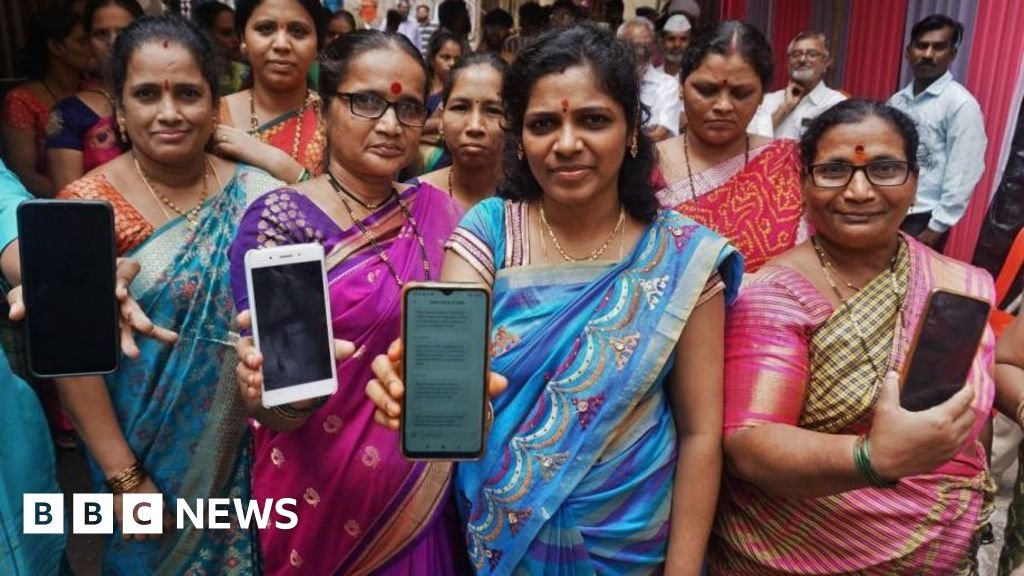
    Hindustan Times via Getty Images Women who were beneficiaries of a government cash transfer scheme showing their bank passbooks and the message of the scheme money received on their mobile phones in Maharashtra, India - 2024. Hindustan Times via Getty Images
    Seventeen of 28 Indian states and one federal territory provide monthly cash transfers

    The world’s fastest growing major economy is increasingly dependent on dole to keep its poorest people out of desperate poverty.

    Over the past decade, government cash transfers, particularly directed at women and farmers, have emerged as a major welfare tool for poverty eradication in India.

    Federal and state allocations for such schemes grew more than 20 times from under $2bn (£1.51bn) in 2015 to nearly $30bn, according to data from ProjectDEEP, an organisation that works on cash-based policies across the country.

    They now constitute just under 1% of India’s GDP and over 10% of its social sector spending, and this growth outpaces spending increases on flagship social schemes that guarantee food security and employment.

    Seventeen out of 28 Indian states and one federally-administered territory – Delhi – now provide monthly cash transfers compared with a mere four in 2019, according to Crisil Intelligence.

    Often derided as wasteful or a ploy to influence elections, direct transfers of cash could be emerging as a key tool to address two immediate economic challenges – weak household consumption and chronic unemployment, reports show.

    The transfers range from 1,000 rupees ($10.5; £7.7) to 2,500 rupees per month, depending on the state. But a median cash transfer of 1,500 rupees per month could be covering 74% of monthly expenditure in rural areas and 51% in urban areas for the bottom 20% of households, making them a “new buffer for India’s household consumption”, Crisil Intelligence said in a recent report.

    The money could particularly be a cushion at a time when “the economy sees inflation risks from high energy prices and the El Niño [weather phenomenon]”, according to Crisil.

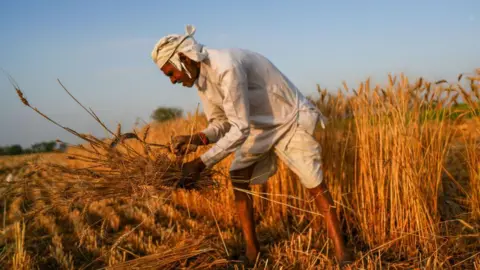
    Anadolu via Getty Images A farmer harvesting wheat crop at a farm on the outskirts of Bhopal, Madhya Pradesh, India. Anadolu via Getty Images
    Cash transfers are a cushion to high energy prices and the El Niño weather phenomenon that impacts agriculture

    While such transfers have so far mostly been directed towards women and farmers, a growing number of programmes are also focusing on unemployed youth.

    According to ProjectDEEP, nearly 10 state governments, including India’s poorest state Bihar, have begun to offer money to young jobless men and women seeking work.

    And most of these were launched in just the past three years.

    “Unemployment is a particularly big question in India, with the rise of AI and climate shocks making income streams more uncertain. These schemes are typically designed to create bridge income,” Pankhuri Shah, co-founder of ProjectDEEP, told the BBC.

    Despite being critical short-term buffers, there are growing anxieties about their growing fiscal cost.

    India’s economic survey, an annual document presented by the government ahead of the budget, called them a “key driver” of fiscal stress for the states, saying half of those implementing such programmes have a revenue deficit.

    According to Crisil, in fiscal 2026, gross market borrowing by states jumped 15.2% year on year – faster than that of the federal government. And of the states giving cash, 12 recorded double-digit growth in market borrowing.

    This not only raises concerns about fiscal sustainability, but also comes with hidden costs.

    “Much of the financing for these schemes comes from expenditure switching, and some from higher deficits,” Axis Research found in a 2025 study. Which means higher expenditure on cash transfers comes at the cost of lower spending by states in other areas.

    As a result, “the scope for expanding productive capital expenditure [or income-generating assets] becomes increasingly constrained, especially in an environment of limited revenues and elevated deficits”, the Economic Survey pointed out, calling for their regular reassessment.

    Shah admits that this is a big missing piece.

    Most schemes come without an end date and have been found to largely improve short-term stability rather than enable a sustained exit from poverty.

    “Impact assessment is virtually non-existent and that leads to big gaps in design,” she said.

    “For instance, if consumption support for the elderly is your goal and the pension transfer amount is only 200 rupees, that does not cut it from an impact perspective, something that needs to be re-looked at,” she added.

    The government also needs to assess whether cash can replace in-kind transfers, like poultry or baby kits and other subsidies on things such as energy or tractors, said Shah.

    This will reduce “both administrative costs and overlapping benefits to the same person” and make the system much more sustainable.

    There is already good precedent.

    Liquified petroleum gas (LPG), which was earlier being physically given, was transitioned from a subsidy to a direct cash transfer. And that saved the country $7-8bn, according to ProjectDEEP analysis.
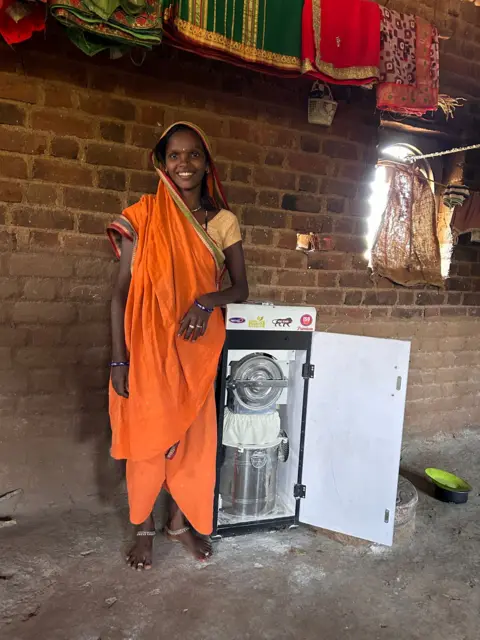
    ProjectDEEP Shobha a beneficiary of a lump sum crash transfer program pictured in Shelkui village in Maharashtra, standing with a flour grinder. She often had to travel long distances just to get wheat milled into flour. To overcome this challenge, she invested in a small flour mill of her own with the money and started a business. ProjectDEEP
    Shobha, from a village in Maharashtra, bought a flour grinder with lump-sum cash she received from ProjectDEEP

    Experiments by organisations like ProjectDEEP could offer some clues on how state transfers can become more productive.

    In June 2022, Shah and her partner Muzamil Baig distributed 65,000 rupees to some 50 households in drought-prone Krishanpur in western India’s Maharashtra state through the organisation.

    It was the start of a unique study to see the impact of lump-sum rather than monthly unconditional transfers to some of the poorest communities in the country.

    Over the last three years, they expanded the experiment to six other villages, putting over half a million dollars – raised from various corporate donors – directly into the accounts of some 3,500 families across the country.

    The results have been striking.

    Nearly 90% of the funds they deployed was spent by households to improve livelihoods, pay off bad debts and create income-earning assets.

    Shobha, a woman from an isolated village called Shelkui in Maharashtra, invested in a small flour mill with the money she got from ProjectDEEP.

    It has saved her time and money spent on getting grain milled into flour from a nearby town and also helped generate an additional source of income.

    The lump sum acted like “seed capital”, setting off an investment cycle rather than merely covering basic consumption expenditure.

    Comparative studies in Kenya also reflect a higher rate of return on every dollar spent for a lump-sum transfer rather than piecemeal monthly credits.

    As cash transfers become more politically entrenched and their costs rise, policymakers need to think more creatively about how such schemes are designed, said Shah. The goal should be to encourage investment and self-employment, rather than simply boost consumption.

    But implementing such an approach at scale could be challenging.

    “A lump sum is irreversible, so targeting must be near-perfect. A large amount concentrates the risk of capture and misuse. Also, the cost must be borne by the government within a single budget year,” Dr Vidya Mahambare, professor of economics at the Great Lakes Institute in Chennai, told the BBC.

    Ultimately, she argues, the state’s focus must remain on generating growth that creates enough jobs.

    “Cash can cushion consumption, but it cannot substitute for employment. And once families become dependent on transfers, they are very difficult to withdraw,” Mahambare added.

    It’s a challenge that Indian states – many of whom have found themselves locked into expensive welfare promises – know all too well.

    Follow BBC News India on Instagram, YouTube, X and Facebook.

    India
    Economics
    Cash

    Share. Facebook Twitter Pinterest LinkedIn Tumblr Email Telegram Copy Link
    Gulf News Week

    Related Posts

    Most Viewed News

    'He hid the a la carte menu': Who should pay on the first date?Some insist on splitting the bill, others say the asker should pay, while many still see a man paying as romantic.9 mins agoBusiness

    June 19, 2026
    Most Viewed News

    Mexico become first country to qualify for World Cup last 32Mexico continued their winning start to the World Cup to become the first country to qualify for the last 32.

    June 19, 2026
    Most Viewed News

    In Trump's shadow, Vance becomes face of Iran deal His fierce defence of the Iran plan amid mounting criticism comes as speculation intensifies about a possible 2028 presidential run.1 hr agoWorld

    June 19, 2026
    Most Viewed News

    US lifts naval blockade as Iran's supreme leader says Trump made deal 'out of desperation'Iran's supreme leader says he disagrees with the deal and Donald Trump signed it "out of desperation".56 mins agoWorld

    June 19, 2026
    Most Viewed News

    The pressure on the Church of England to ditch its slavery reparations planWill the Church's commitments still be delivered, or do shifting political winds mean there is no longer the will to do so?2 hrs agoBBC InDepth

    June 19, 2026
    Featured

    UAE social media ban: Doctors see children skipping sleep, meals to keep scrolling

    June 19, 2026
    Add A Comment
    Leave A Reply Cancel Reply

    Editors Picks

    'He hid the a la carte menu': Who should pay on the first date?Some insist on splitting the bill, others say the asker should pay, while many still see a man paying as romantic.9 mins agoBusiness

    June 19, 2026

    Mexico become first country to qualify for World Cup last 32Mexico continued their winning start to the World Cup to become the first country to qualify for the last 32.

    June 19, 2026

    India's rapidly expanding cash transfers need to be cheaper and smarter Cash transfers are a major welfare tool but they come at a huge cost, raising concerns about their long-term efficacy.5 hrs agoAsia

    June 19, 2026

    In Trump's shadow, Vance becomes face of Iran deal His fierce defence of the Iran plan amid mounting criticism comes as speculation intensifies about a possible 2028 presidential run.1 hr agoWorld

    June 19, 2026
    Latest Posts

    'He hid the a la carte menu': Who should pay on the first date?Some insist on splitting the bill, others say the asker should pay, while many still see a man paying as romantic.9 mins agoBusiness

    June 19, 2026

    Mexico become first country to qualify for World Cup last 32Mexico continued their winning start to the World Cup to become the first country to qualify for the last 32.

    June 19, 2026

    In Trump's shadow, Vance becomes face of Iran deal His fierce defence of the Iran plan amid mounting criticism comes as speculation intensifies about a possible 2028 presidential run.1 hr agoWorld

    June 19, 2026

    Subscribe to News

    Get the latest sports news from NewsSite about world, sports and politics.

    Advertisement
    Demo
    Gulf News Week

    Your source for the serious news. This demo is crafted specifically to exhibit the use of the theme as a news site. Visit our main page for more demos.

    We're social. Connect with us:

    Facebook X (Twitter) Instagram Pinterest YouTube
    Latest Posts

    'He hid the a la carte menu': Who should pay on the first date?Some insist on splitting the bill, others say the asker should pay, while many still see a man paying as romantic.9 mins agoBusiness

    June 19, 2026

    Mexico become first country to qualify for World Cup last 32Mexico continued their winning start to the World Cup to become the first country to qualify for the last 32.

    June 19, 2026

    India's rapidly expanding cash transfers need to be cheaper and smarter Cash transfers are a major welfare tool but they come at a huge cost, raising concerns about their long-term efficacy.5 hrs agoAsia

    June 19, 2026

    Subscribe to Updates

    Get the latest creative news from FooBar about art, design and business.

    © 2026 Gulf News Week. Designed by HAM Digital Media.
    • Home
    • Politics
    • Economy
    • Sports

    Type above and press Enter to search. Press Esc to cancel.