
 BBC
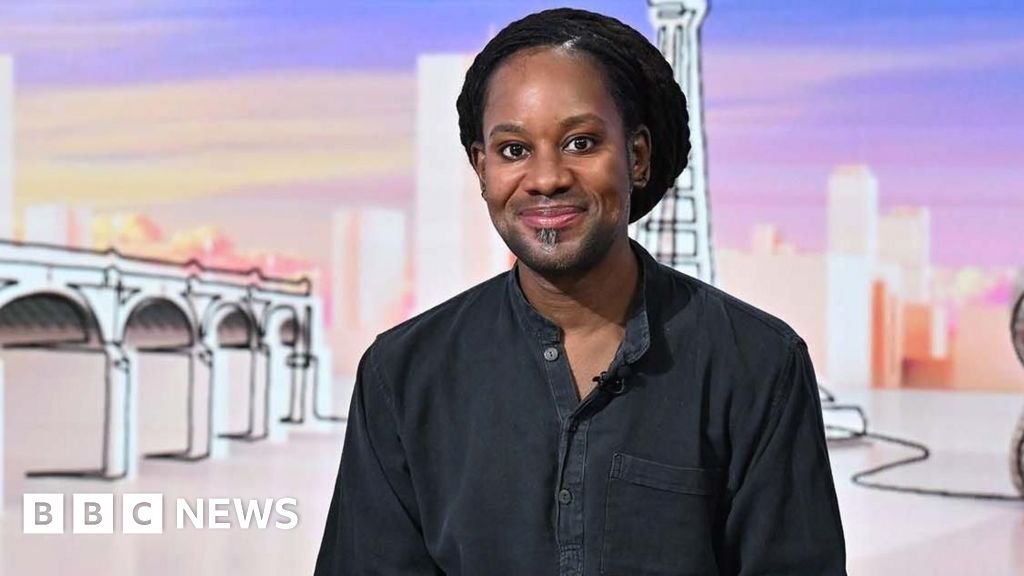
BBCCambridge University’s chancellor has criticised the “racist feeding frenzy” around Jason Arday, the professor who died after stepping down during a plagiarism row.
Arday – who became the university’s youngest black professor when appointed in 2023 – had faced weeks of media coverage over plagiarism allegations and questions about his achievements. He denied the claims.
Speaking publicly for the first time, Lord Chris Smith said academic integrity could be upheld while questioning Arday’s treatment.
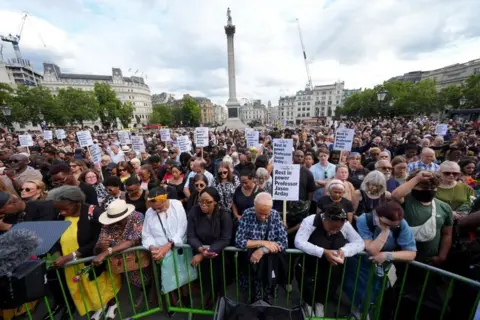
Thousands gathered on Monday for a vigil organised by Stand Up To Racism in Trafalgar Square, where Labour MP Diane Abbott said Arday had been subject to a “vicious and bitter media campaign”.
She said attacks by “people who didn’t believe a black man should be a Cambridge professor” started as soon as he was appointed by the university in 2023.
“This was a campaign against all of us,” she added.
It comes after more than 90,000 people – including Abbott and Jameela Jamil – signed a Good Law Project petition seeking an inquiry into media coverage of Arday. That petition says his death followed “two weeks of relentless harassment”.
In a statement following the professor’s death, Lord Smith said: “I do believe it is possible to hold to two principles at the same time: to believe in the importance of academic integrity, and where criticisms of plagiarism arise, about any academic, whoever they are, ensure that they are rigorously investigated.
“And also to refuse to join in a racist feeding frenzy over a particular academic.”
Lord Smith’s role at Cambridge is largely ceremonial, with the day-to-day running of the university falling to vice-chancellor Prof Deborah Prentice.
The peer is an ex-Labour MP and secretary of state for culture, media and sport as well as a former chairman of the Environment Agency.
Cambridge University initially said claims of plagiarism regarding Arday’s thesis and some journal publications had been investigated by Liverpool John Moores University (LJMU) and the journals in question.
LJMU – which awarded Arday his PhD in 2015 – concluded that he had not plagiarised work.
But last week, Cambridge announced an independent investigation into his appointment.
Arday, 41, was found dead at an address in Battersea, south London, on Friday. He had resigned as a Cambridge professor of sociology of education on 5 August.
But he stressed that his resignation should not “be mistaken for an acceptance of the narratives that have surrounded me”.

 PA Media
Downing Street declined to say “at this stage” whether Andy Burnham was considering an inquiry into Arday’s death, reiterating that it was “a moment for reflection”, and that it was right for “the usual processes” like an inquest, to conclude.
An investigation will be carried out to determine Arday’s cause of death, which could take several weeks, the London Inner South Coroner’s Court has said.
Once complete, and following any submissions from Arday’s family, the coroner will confirm if an inquest will take place.
Sir James Cleverly said he was angry about what happened to Arday, and the university establishment – not just Cambridge – should have “done the robust due diligence and checking that should happen with any senior academic appointment”.
Speaking to the BBC’s Today programme on Monday, the shadow housing secretary said he felt Arday was used as “bragging rights by some universities”, and that people spoke of his “age and his ethnicity rather than his talent”.
“I think it was part of the reason that he was lifted so high so quickly and then when the scrutiny did come – external to the universities – his reputation had so far to fall. I think it was unfair on him and I think it’s been a terrible, terrible situation.”
Sir James – who was Britain’s first black home secretary and foreign secretary – said much of the coverage surrounding Arday was “quite possibly” motivated by racism, but that the questions over plagiarism were legitimate, regardless of motivation.
Meanwhile, when housing minister Matthew Pennycook, was questioned over whether the press behaved poorly, he echoed comments by the prime minister that it was not the time to “rush to judgement on this”.
“I do think the events leading up to his death raised questions about duty of care and the nature of modern media scrutiny, but I don’t think the time is now to get into a debate about those, I certainly don’t intend to sit here and opine on them myself,” he said.
Pennycook added that it was a time to reflect and “think compassionately about how we got to this situation, which is a desperately, desperately sad one”.
The chair of the NHS Confederation, who signed the letter calling for a public inquiry, said focus should be turned on the press, rather than social media, because “self regulation totally failed” in the case of Arday.
Lord Victor Adebowale told the BBC’s Radio 4 World At One programme: “People were warned in advance this pursuit risked his life and the warnings were ignored.
“It is true we live in a world of social media where people say what they like and can pursue people as much as they want. In this case I’m pointing at the press. They failed.”
The row first erupted after another academic – self-defined “race realist” Nathan Cofnas, who was sacked from his Cambridge role in 2024 – said he found numerous instances of plagiarism in the professor’s work.
Cofnas’s post had been terminated amid a backlash to his view that under a true meritocracy black people would “disappear from almost all high-profile positions outside of sports and entertainment”.
Cambridge had celebrated Arday’s appointment as a young black professor, one of a tiny and visible minority in academia. Only 1% of professors in UK universities are black, making each appointment hugely significant.
On Sunday, more than 200 people attended a vigil at Cambridge that was organised by Arday’s postdoctoral students.
