
 Getty Images
Jeffrey Deaver, a 58-year-old retired timber cutter in the state of Washington, has taken kratom for four years to help with severe chronic hip and knee pain.
He discovered the herbal product when he couldn’t find relief from doctors and while waiting for surgeries. Scared at first, he “started small”, but then took more until his pain went away.
“It was like a miracle,” Deaver said. “I could sleep. I could function.
“I just don’t know what I’d do without it.”
This week, investigators found packaged kratom in the possession of two deceased University of Mississippi students. Although their deaths were not attributed to kratom, officials are now issuing warnings about its consumption.
For years, anti-kratom advocates have pushed for bans, and in some countries, like the UK, it’s illegal. But Kratom is not regulated by the US Food and Drug Administration and is legal in some states, including Mississippi.
Here’s what we know about it:
What is kratom?
Kratom is a tree that is native to Southeast Asia in countries like Thailand, Malaysia and Indonesia.
It’s been used for centuries for its stimulant properties, grounded and consumed similar to tea.
As its popularity spread around the globe, it entered the US market as a supplement around 2016.
“That’s really where the problems began,” said Dr Shane Speights, dean of the New York Institute of Technology College of Osteopathic Medicine at Arkansas State University.
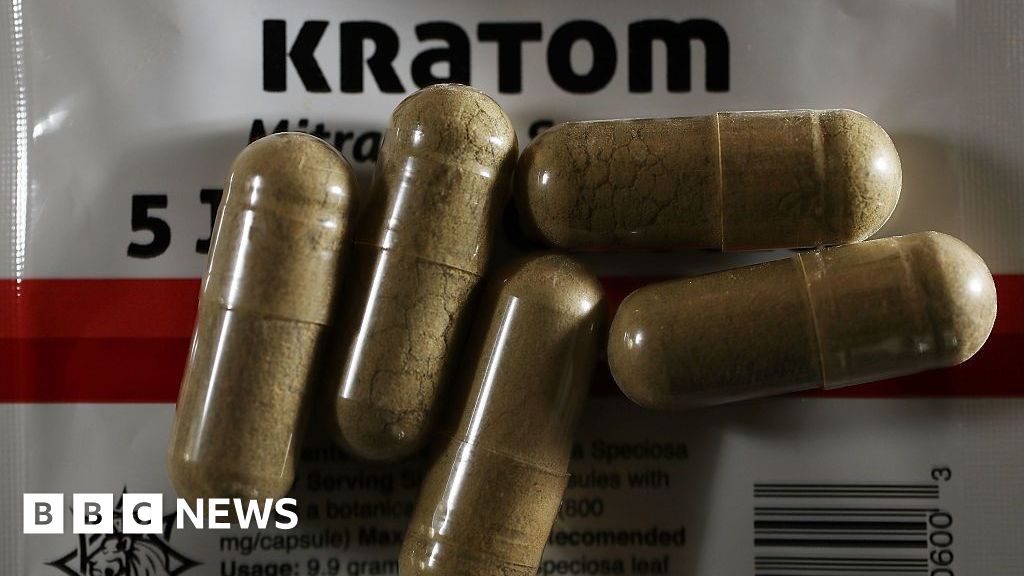
In the US kratom is mostly sold in highly concentrated forms either via pill, powder or liquid, Speights said.
It’s also widely available – found everywhere from convenience stores and petrol stations to vape shops.
Also, because of the supplement classification, kratom products are not federally regulated.
“There’s no way to know exactly what you’re getting,” Speight said. “You could go and create something in your basement, market it as a supplement, and nobody’s really going to check and see what’s in it.”
What is kratom used for?
Kratom is often marketed as a safe, natural herbal supplement that helps with pain management, anxiety and depression.
In lower doses, its stimulant properties create a “caffeine-kind of buzz”, Speights explained.
Because of its opioid-like effects, it has also been used with the goal of curbing addictions to actual opioids like fentanyl.
Those properties stem from the way the plant’s compounds – like 7-Hydroxymitragynine – activate various hormones, including dopamine.
What are the effects and how dangerous is it?
“It’s almost like taking a narcotic,” Speights said. “At higher doses, it can create more euphoria and give you more of a general high.”
Hallucinations are possible, too.
The higher doses also pose greater risk for adverse side effects.
That includes central nervous system (CNS) depression – which is “where the deaths come in,” Speights said.
CNS can result in cardiovascular collapse and loss of breathing.
Withdrawal symptoms and addiction are also risks, said Jana Wu, director of clinical integration at the addiction treatment centre Mountainside.
“It affects marriages, relationships,” she said. “I’ve seen people lose jobs, spend thousands of dollars a month on it.”
Because it’s easy to develop a high tolerance to the herb, users may need to take an increasing amount to achieve the same effect over time.
“I’ve worked with people that were taking like up to 20 pills a day,” Wu said.
Experts told the BBC that the biggest dangers come from the fact that kratom is not federally regulated.
“Is there a safe dose?” Speights said. “My answer is going to be no because – I’m going to go back to this – we don’t know what’s in it.”
Is kratom legal?
Kratom is banned in 11 states: Alabama, Arkansas, Connecticut, Indiana, Kansas, Louisiana, Massachusetts, North Dakota, Tennessee, Vermont and Wisconsin.
Massachusetts was the last state to make it illegal, issuing a temporary emergency order in August.
Ten years earlier, the US Drug Enforcement Agency (DEA) had moved to classify kratom as a Schedule 1, the most dangerous level for drugs, calling it “an imminent hazard to public safety”.
But the effort failed a few months later, after the justice department said it received “numerous comments from members of the public challenging” the attempt.
That leaves state to take action, like Arizona, which recently sued a company selling kratom beverage products.
Groups opposed to kratom want states to do moare, saying “gas-station drugs are poisoning our communities”.
Pro-kratom groups like the American Kratom Association are pushing for bans against synthetics “posing as natural kratom”.
Internationally, kratom is banned in the UK. In Europe, the laws vary by country.
In Malaysia, where the kratom tree is native, consumption and sale are banned under the Poisons Act of 1952.
