
 John Fairhall/BBC
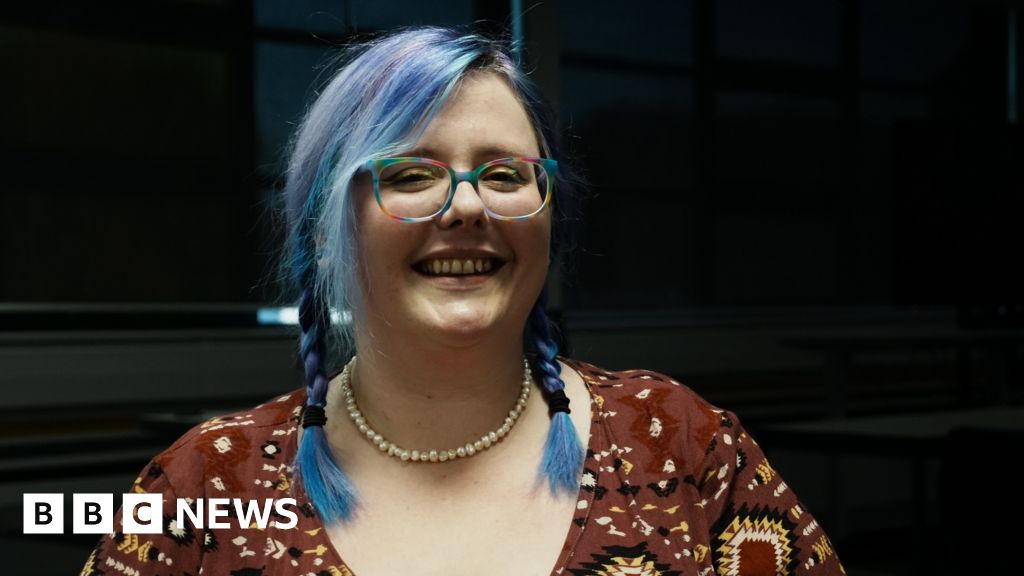
In 2019, Jarvs Tasker was forced to give up her teaching career due to chronic illness when she was just 28.
Fast forward seven years, and she earns double her former annual salary, running Jarvs Indie Insights, which provides communication and marketing within the gaming industry.
She visited the University of Suffolk’s e-sport building in Ipswich to celebrate independent game developers and studios on Wednesday.
“I can comfortably say it probably would have taken me about 20 years in teaching to earn what I make now,” she said.
“Managing a community is very similar to managing a class of kids, so there’s a lot of crossover skills there, but actually, video games is one of those industries where a lot of people come into it later on in life.”
Tasker, who lives in Exeter, believed young people might not know the “many pathways” available in the industry.
“The video games community is very strong, and they will champion people that love what they do, but they’ll also notice if you’re in it just for the money,” she continued.
“Passion is the most important thing.”
Asked about the impact of AI, she said she believed the industry was doing a “really great job” at rejecting it, because players hated it.
“I think as an industry we should be really proud of the fact that we’re still championing human creativity and that the audience is also on board with that,” she added.

 John Fairhall/BBC
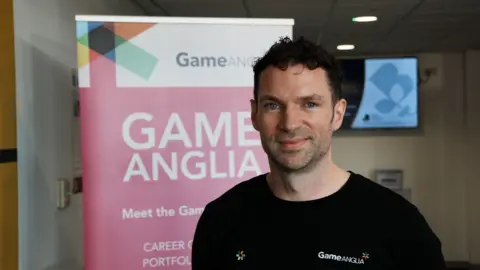
Tasker had been in Suffolk as part of an event hosted by Game Anglia to showcase the growing independent gaming industry in the East of England.
Mark Backler from Game Anglia said the industry was now one of the biggest in the UK, and while he agreed it was competitive, it was “more possible than ever to develop and release your own independent games”.
“It’s like being a content creator – it’s tricky to be one of the standout ones, but it is doable,” he said.
He added it was difficult to tell how AI would change things, but a lot of players were against its use.
 John Fairhall/BBC
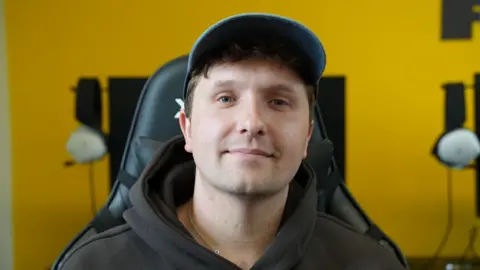
Sam Read-Graves is a developer at Read Graves and works specifically in the East.
At the event, he said the gaming industry had “grown massively in the past 10 years”.
“Because of schemes like Game Anglia across Suffolk, Essex, Cambridgeshire, Norfolk, there are really great clusters of a lot of students and a lot of developers, and I like to think that this has started to bring in studios who could make the big games.
“When it comes to those games like Call of Duty or FIFA, those at the minute aren’t going to come out of the East of England because we don’t have big studios.
“But when it comes to independent developers, there’s no reason those games can’t financially be as big.”
 John Fairhall/BBC
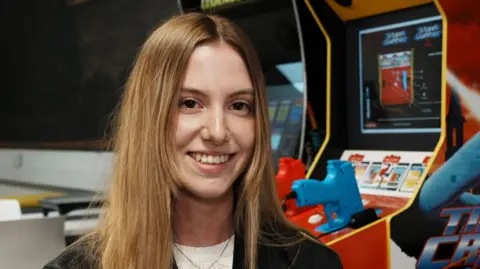
Abbygale Dunn, 22, is the founder and director of Astral Forge, an independent game development company based in Essex.
She said there was “so much space for women” in the industry today.
“It’s obviously daunting. When I studied, there were only about three women in my course,” she said.
“Everyone is so kind; it’s really not as bad as it seems, especially nowadays.
“As a programmer myself, which is more rare for women to be in, I’ve never felt out of place.”
 John Fairhall/BBC
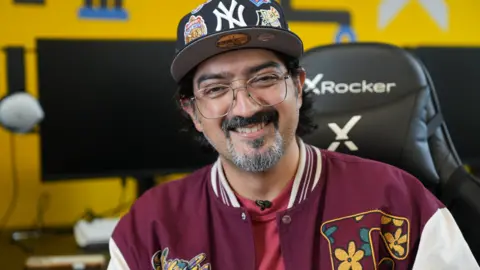
Omar Khalil is game scout lead at Entity and said there was “no shortage of talent in the UK”, but it was challenging to create the next big game.
“There are so many games out there right now, and it’s not like there aren’t enough good games; it’s how do you get visibility on those games?” he explained.
“I think that’s the biggest challenge.”
Additional reporting by Alice Cunningham.
Do you have a story suggestion for Suffolk? Contact us below.
Follow Suffolk news on BBC Sounds, Facebook, Instagram and X.
