
Pentagon says its intelligence assessments show that Iran’s nuclear sites were destroyed in ‘bold’ US attacks.
Washington, DC – The Pentagon has announced that United States military strikes against Iran set back the country’s nuclear programme by one to two years, an assessment that follows President Donald Trump’s claims that the programme was “obliterated”.
Defense Department spokesperson Sean Parnell said on Wednesday that the three Iranian nuclear facilities targeted by Washington were destroyed, echoing the president’s remarks. He praised the strikes as a “bold operation”.
“We have degraded their programme by one to two years at least,” Parnell told reporters. “Intel assessments inside the department assess that.”
Since the US sent a group of B-2 stealth bombers to Iran on June 21, Trump has consistently lashed out at any suggestions that the attacks did not wreck the country’s nuclear facilities.
He has maintained that Iran’s nuclear programme has been “obliterated like nobody’s ever seen before”.
An initial US intelligence assessment, leaked to several media outlets last month, said the strikes failed to destroy key components of Iran’s nuclear programme and only delayed its work by months.
For its part, Tehran has been coy about providing details about the state of its nuclear sites.
Some Iranian officials have said that the facilities sustained significant damage from US and Israeli attacks. But Supreme Leader Ali Khamenei said last week that Trump had “exaggerated” the impact of the strikes.
There has been no independent assessment of the aftermath of the US attacks, which came as part of a 12-day war between Israel and Iran. Visual analyses via satellite images cannot fully capture the scope of the damage at the underground sites, especially the country’s largest enrichment facility, Fordow.
Another persistent mystery is the location and state of the stockpiles containing Iran’s highly enriched uranium.
Iran’s nuclear agency and regulators in neighbouring states have said they did not detect a spike in radioactivity after the bombings, as might be expected from such strikes.
But Rafael Grossi, the head of the United Nations nuclear watchdog, the International Atomic Energy Agency (IAEA), did not rule out that the containers holding the uranium may have been damaged in the attacks.
“We don’t know where this material could be or if part of it could have been under the attack during those 12 days,” Grossi told CBS News last week.
“So some could have been destroyed as part of the attack, but some could have been moved.”
Satellite images showed trucks moving out of Fordow before the US strikes.
Grossi also said that Iran could be enriching uranium again in a “matter of months”. Enrichment is the process of enhancing the purity of radioactive uranium atoms to produce nuclear fuel.
The facilities targeted in the US strikes had been under constant IAEA surveillance. But now, Iran’s nuclear programme is in the dark, away from the scrutiny of international inspectors.
After the war, the Iranian parliament passed a law suspending cooperation with the IAEA, citing the agency’s failure to condemn the US and Israeli attacks on the country’s nuclear facilities.
The Geneva Conventions prohibit attacks on “installations containing dangerous forces, namely dams, dykes and nuclear electrical generating stations”.
Before the war started on June 13, Tehran claimed to have obtained Israeli documents that show that the IAEA was passing off information to Israel about Iran’s nuclear programme – allegations that the agency denied.
Earlier on Wednesday, the US State Department called on Iran to allow the IAEA access to its nuclear programme.
“It is … unacceptable that Iran chose to suspend cooperation with the IAEA at a time when it has a window of opportunity to reverse course and choose a path of peace and prosperity,” State Department spokeswoman Tammy Bruce said in a statement.
Israel launched a massive attack against Iran on June 13 without direct provocation, claiming that it was preemptively targeting Iran’s push towards a nuclear weapon.
Tehran denies seeking a nuclear bomb. Israel, meanwhile, is widely believed to have an undeclared nuclear arsenal.
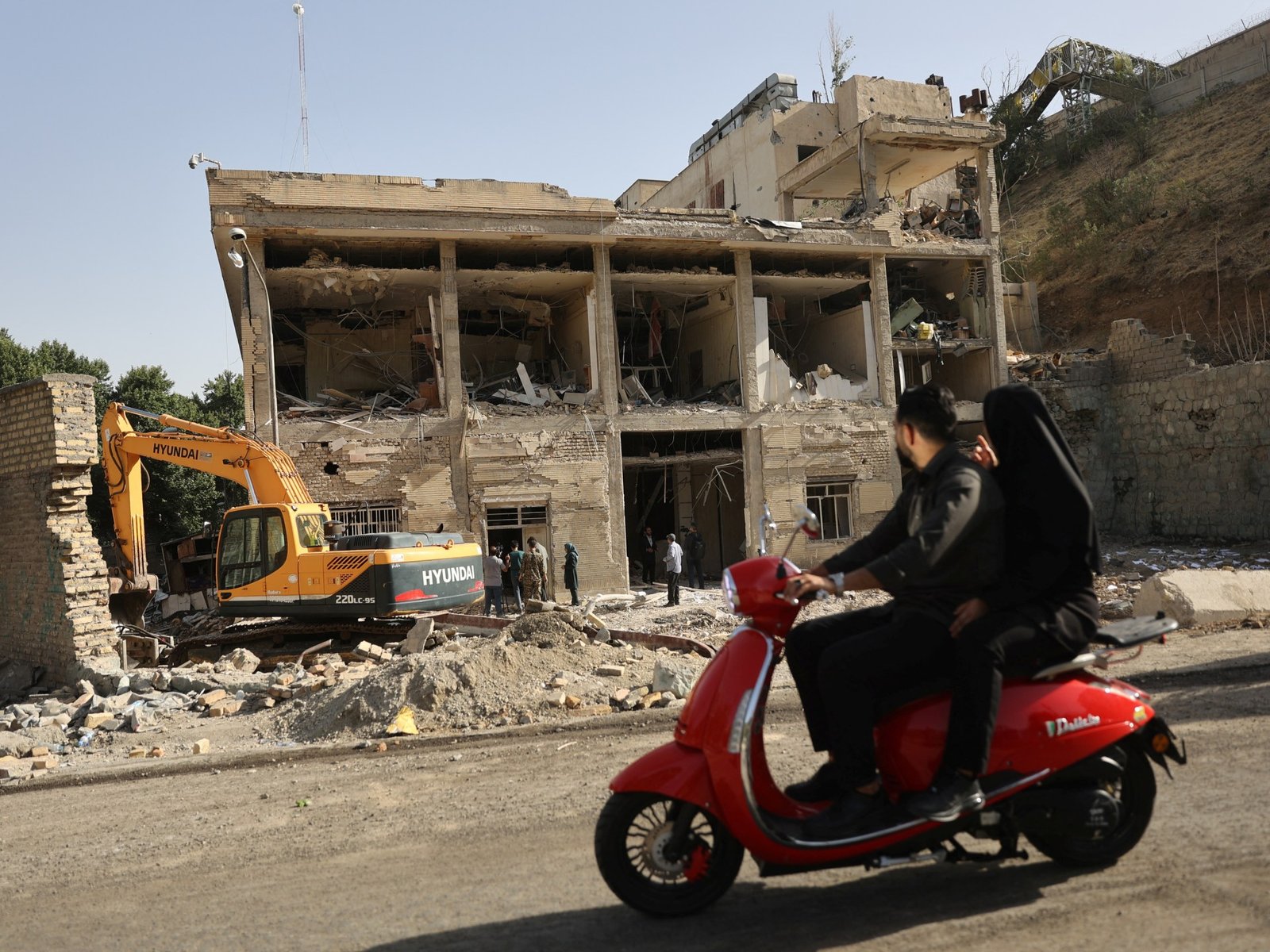
Israeli air strikes during the conflict killed hundreds of Iranian civilians, including nuclear scientists and their family members, as well as top military officials.
Iran responded with barrages of missiles that left widespread destruction and killed 29 people in Israel.
Ten days into the war, the US joined the Israeli campaign and bombed Iran’s nuclear facilities. Tehran, in turn, launched a missile strike against a US air base in Qatar, an attack that resulted in no casualties.
Hours later, Trump announced a ceasefire between Israel and Iran. Officials in both countries have described the outcome of the war as a “historic victory”.
Israel has similarly claimed that Iran’s nuclear programme was destroyed. But Iran has insisted it foiled Israel’s goals by maintaining the stability of its government as well as its nuclear and missile programmes.
