
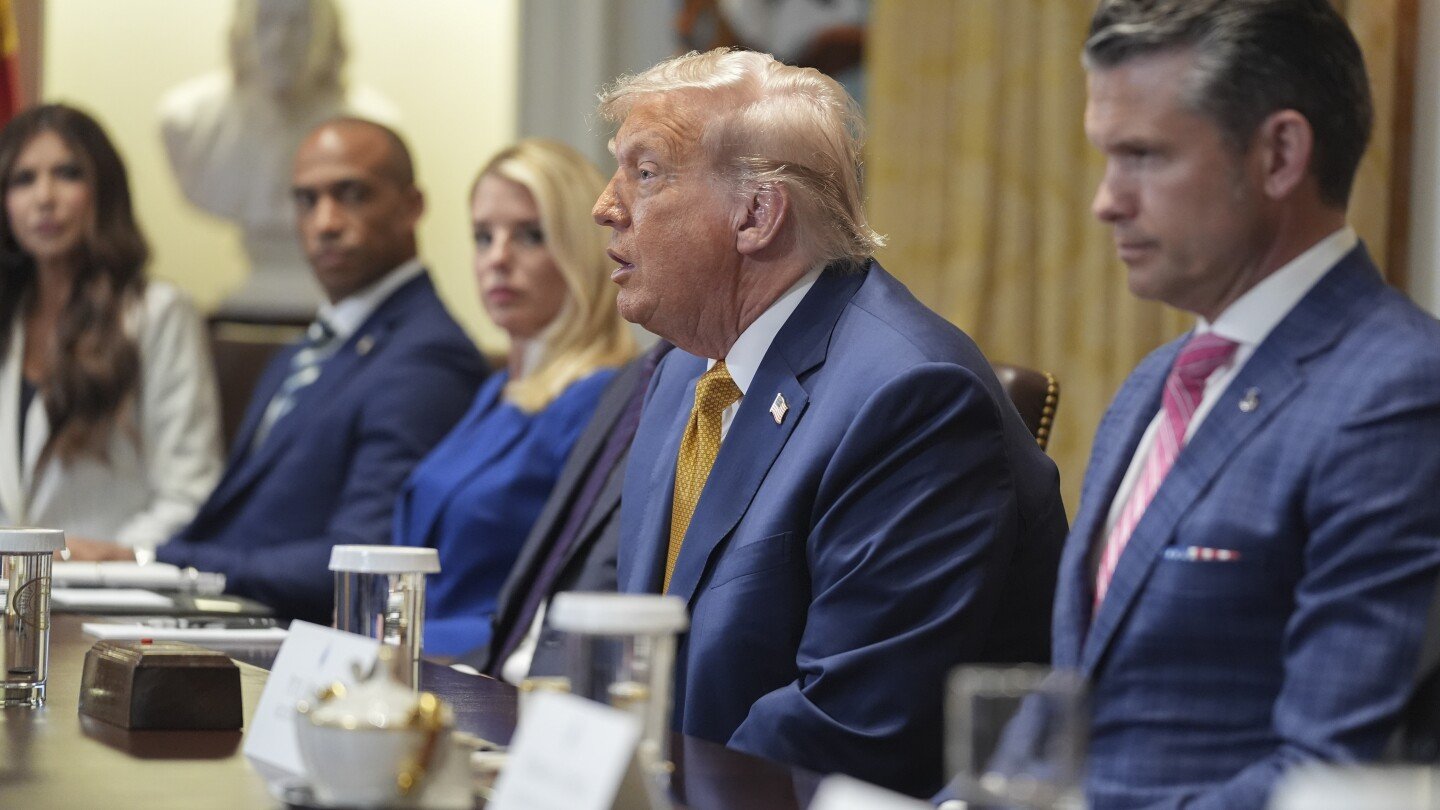
President Donald Trump expressed his disdain for wind power during a meeting with his Cabinet recently, calling it an expensive form of energy that “smart” countries don’t use.
His comments on Tuesday contained false and misleading information about the use of wind power in the United States and around the world, and came on the heels of an executive order he signed Monday that would end subsidies around “green” energy.
Here’s a look at the facts.
CLAIM: “Wind is a very expensive form of energy.”
THE FACTS: Onshore wind is one of the cheapest sources of electricity generation, with new wind farms expected to produce electricity around $30 per megawatt hour. This compares to a new natural gas plant, around $65 per megawatt hour, or a new advanced nuclear reactor, which runs over $80, according to estimates from the Energy Information Administration. Onshore wind farms cost less to build and operate than natural gas plants on average in most regions of the United States, even without tax credits. Though natural gas plants are available to produce electricity at any time of the day, unlike wind. Offshore wind is among the sources of new power generation that will cost the most to build and operate, at $88 per megawatt hour, according to the EIA.
While electricity rates have risen nationwide over the past decade, states that have added a significant amount of onshore wind power, such as Iowa, Kansas, Oklahoma and New Mexico, have kept rates from rising as fast as other states, said Brendan Pierpont, director of electricity modeling at the nonpartisan think tank Energy Innovation. For example, the share of electricity generated from wind in Iowa increased from 15% in 2010 to nearly 60% of the state’s electricity generation in 2023, while the state’s electricity rates grew at a rate slower than that of 42 other states, his research found.
Wind power can be expensive if it’s built where winds are weaker, but the United States is adding it in places with strong wind resources, he added.
“Wind should be seen as part of an overall portfolio of electricity system resources and is an important part of keeping costs down,” he said Wednesday.
Trump has committed to increasing U.S. energy production, particularly fossil fuels. He signed an executive order Monday aimed at phasing out tax credits for wind and solar facilities.
CLAIM: Wind turbines are “almost exclusively” made in China, but President Xi Jinping told Trump they have “very, very few.”
THE FACTS: China is the world’s largest manufacturer of wind turbines, producing more than half of the supply. It is also installing them in China at a record pace. In total, China has 1.3 terawatts of utility-scale wind and solar capacity in development, which could generate more electricity than neighboring Japan consumed in all of 2023, according to a report from the Global Energy Monitor released Wednesday. The report highlighted China’s offshore wind development, calling China the undisputed leader in the offshore wind sector, though it also said coal and gas are still on the rise across China.
“The whole narrative that we’re led to believe in the West is that China is building coal plants and that it’s doing nothing for its carbon footprint,” Tom Harper, partner at the global consultant Baringa, said Tuesday. “So the surprising thing is China is building a portfolio of zero-carbon resources that are designed to not perfectly complement each other, but to work alongside each other to reduce reliance on fossil fuels.”
CLAIM: “If you look at smart countries, they don’t use it.”
THE FACTS: At least 136 countries around the world use wind power to generate electricity, according to the EIA, with many countries growing the amount they produce. The top five markets for wind power in 2024 were China, the U.S., Brazil, India and Germany, while Uzbekistan, Egypt and Saudi Arabia represent the next wave of wind energy growth, according to the Global Wind Energy Council.
Council CEO Ben Backwell said 2024 marked yet another record year for wind energy growth, with the “industry increasingly pushing into new regions.”
