
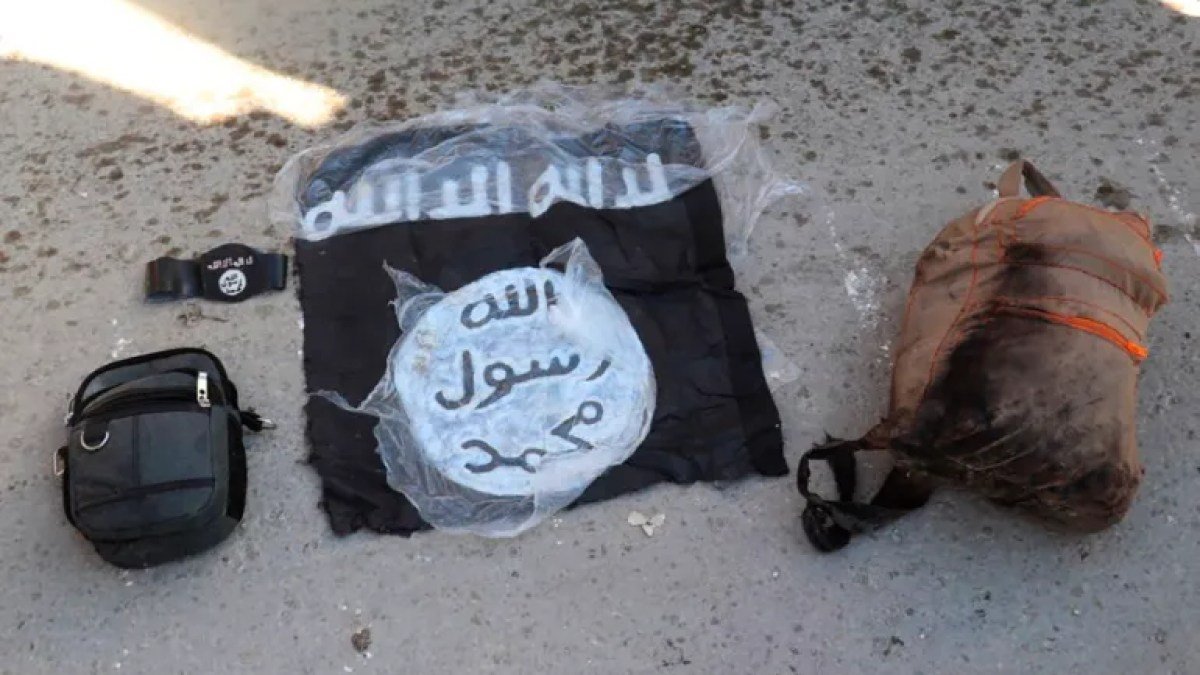
ISIL attacks dropped after the fall of the Assad regime. But the group will likely attempt to destabilise Syria’s new government.
On December 13, a joint US-Syrian patrol was ambushed by a member of Syria’s own security forces near Palmyra, a city in central Syria once controlled by the ISIL (ISIS) group.
Two US soldiers and an interpreter were shot dead, and four people were wounded, before Syrian forces killed the gunman.
Recommended Stories
list of 3 items
- list 1 of 3A father’s fight to find out what happened to his son who joined ISIS
- list 2 of 3Aleppo clashes expose hurdles in SDF’s integration into Syrian army
- list 3 of 3Explosion at mosque in Syria’s Homs kills at least eight
end of list
In the aftermath of the attack, US and Syrian officials linked the attacker to ISIL, which once controlled vast swaths of Syria and Iraq, and promised to retaliate.
The incident highlights the growing cooperation between the United States and Syria against ISIL, particularly after Damascus joined the US-backed coalition against the group in November.
While it is still unclear if the attacker was a member of ISIL or another group opposed to US-Syrian relations, analysts say that cooperation between the two countries is strong and growing stronger.
“The Syrian government is responding very robustly to fighting ISIL following US requests to do so, and it is worth noting that HTS [Hayat Tahrir al-Sham], before it was in government, had a long-term policy of fighting ISIL,” Rob Geist Pinfold, a scholar of international security at King’s College London, told media, referring to Syrian President Ahmed al-Sharaa’s former group.
“It [HTS] did it in Idlib, and cracked down on insurgents and cells, and this is more a continuation of that policy.”
Syria’s Minister of Interior spokesman, Noureddine al-Baba, told Syria’s Al-Ikhbariah TV that there was no direct chain of command to the gunman within Syria’s internal security forces, and that he was not part of the force tasked with escorting the US forces. Investigations are under way, he added, to determine whether he had direct ties to ISIL or adopted violent ideology.
ISIL attacks down
In May 2015, ISIL took over the city of Palmyra from the former Syrian government.
Famous for its Greco-Roman ruins, the city bounced back and forth between regime forces and ISIL until the group was expelled in 2017.
In May 2017, the US-led coalition also forced the group out of Raqqa, which ISIL had declared the capital of its so-called caliphate three years earlier.
Many surviving ISIL fighters were imprisoned in the al-Hol and Roj camps in northeast Syria, controlled by the US-backed Syrian Democratic Forces (SDF). Others escaped into the Syrian desert around Palmyra, from where they have occasionally launched attacks.
When the regime of former Syrian President Bashar al-Assad fell on December 8, 2024, analysts said ISIL fighters used the ensuing chaos to go into various cities across the country. In June, the group launched an attack on a church in Damascus that killed at least 25 people.
Samy Akil, a fellow at the Tahrir Institute, said recent estimates put ISIL’s manpower in Iraq and Syria at between 3,000 and 5,000 fighters.
But experts told media that the coordination between Damascus and Washington has improved over the last year, and pointed to the fact that Syria’s security forces have thwarted several ISIL attacks due to US-provided intelligence.
“Ahmed al-Sharaa’s new government is committed to fighting the group and, in contrast to the Assad era, al-Sharaa’s government gets regular tip-offs from US intelligence, and probably other forms of US support as well. That’s a pretty powerful combination,” Aron Lund, a research fellow at Century International, focusing on Syria, told media.
This collaboration has seen a decrease in ISIL attacks in Syria, according to a report by consulting firm Karam Shaar Advisory. ISIL launched an average of 63 attacks a month in 2024, while in 2025, that number dropped to 10, according to the report.
“Since HTS arrived in Damascus, collaboration [with the US] has become much easier,” Jerome Drevon, a senior analyst with the International Crisis Group, told media.
Structural flaws
After the fall of the Assad regime, there were questions over how security would be enforced. The few thousand HTS members who had previously only controlled Idlib in northwest Syria would not be enough to enforce security across the country.
Syria’s security forces undertook a serious recruitment drive, bringing in tens of thousands of new recruits to add to many of the existing former opposition battalions that were incorporated under the state’s new security apparatus.
With such a huge recruitment campaign, analysts said, vetting was a difficult task.
“The Palmyra attack points to structural flaws rather than a mere one-off event. Integration of former faction fighters and rapid new recruitment have produced uneven vetting and oversight, compounded by a permissive environment for radical views, allowing infiltration to persist,” Nanar Hawash, International Crisis Group’s senior Syria analyst, told media.
“Together, these factors blur early warning signs and create space for hidden threats, raising the risk of repeat attacks.”
Analysts said they expect Syrian security forces to improve the vetting process with time. Meanwhile, another attack like December 13’s was possible and could dent the US’s faith that al-Sharaa’s government can provide security in Syria.
“It could happen again due to the sheer numbers [of new recruits], but over time, the government will improve its game and be more thorough to prevent that from happening again, because it will have consequences,” Drevon said.
“We should be careful over generalising based on one attack, which can be a one-off. But if it happens again, it might change the perception of the Syrian government.”
What does ISIL want?
As for ISIL, analysts said the group’s priorities have changed since the fall of al-Assad.
“What we’re seeing now is ISIL is trying to test boundaries and conduct attacks knowing it cannot gain territorial control,” Akil said.
“It aims at destabilising and staying relevant.”
“ISIS cannot hold cities or topple governments. But it doesn’t need to. Its strength lies in destabilisation,” Hawach said. “The Palmyra attack showed that one operative with the right access can kill three US personnel and shake a bilateral relationship.”
Analysts said ISIL could destabilise Syria by targeting state security forces, religious minorities – like it did in the Damascus church attack in June – or any foreigner on Syrian soil, from US soldiers to humanitarian or United Nations workers. The group could also look to capitalise on tensions between the SDF and Damascus over disagreements on how to integrate the former into the state’s security apparatus.
The SDF also manages the al-Hol and Roj prison camps in northeast Syria, where many of ISIL’s most battle-hardened fighters and commanders are held. This could prove to be a key target for ISIL in Syria.
“ISIL thrives in those vacuums,” Hawach said.
“It’s a guerrilla insurgency, not a caliphate, but in a fragile state, that’s enough to cause serious damage.”
