
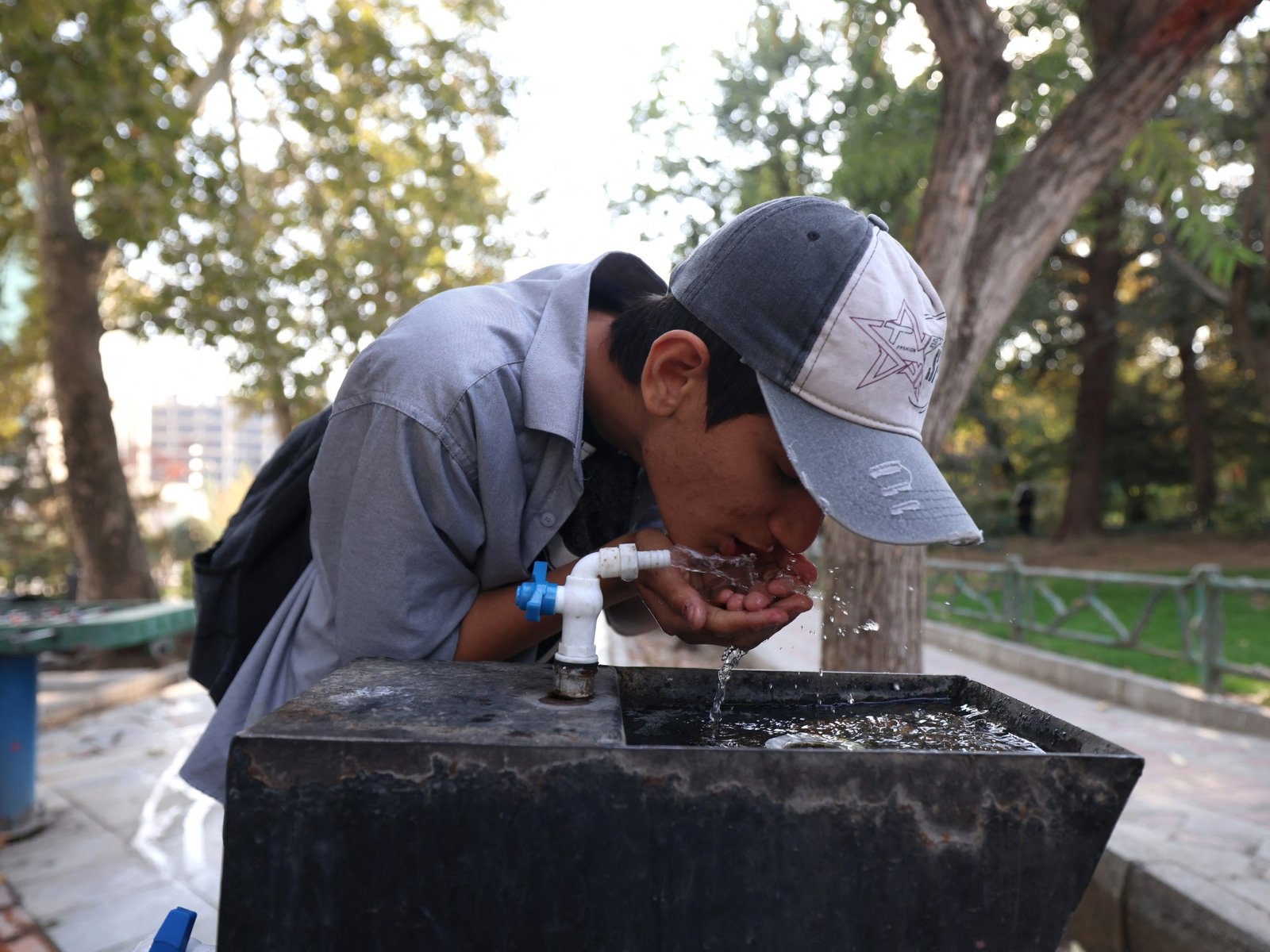
Iran spends 90 percent of its water on low-yield agriculture in a pursuit of self-sufficiency that exacerbates drought.
Tehran, Iran – Authorities are scrambling to provide drinking water across Iran, particularly in the capital, Tehran, as Iranians grapple with the effects of multiple ongoing crises.
If there is no rain by next month, water will have to be rationed in Tehran; in fact, the city of 10 million may even have to be evacuated, President Masoud Pezeshkian said in a speech on Friday.
Recommended Stories
list of 3 items
- list 1 of 3Iran dismisses US accusation of plot to kill Israeli ambassador in Mexico
- list 2 of 3Trump says he was ‘very much in charge’ of Israel’s June 13 attack on Iran
- list 3 of 3Iran ‘not in hurry’ to resume nuclear talks with US
end of list
While experts say evacuating the city is a last resort that will likely not come to pass, the president’s stark warning is indicative of the mammoth burden facing the country of more than 90 million, its ailing economy reeling under sanctions.
Dry spells everywhere
Iran is now grappling with its sixth consecutive year of drought, while heatwaves pushed temperatures above 50 degrees Celsius (122 degrees Fahrenheit) during the summer.
The past water year, ending in late September 2025, was one of the driest on record, with the current year shaping up to be worse, with Iran receiving only 2.3mm (0.09 inches) of precipitation by early November, down by 81 percent compared with the historical average of the same period, the Meteorological Organization said.
A whopping 19 dams – up from nine three weeks ago – are on the verge of drying out, filled to less than 5 percent capacity. Dozens of others are not faring much better, according to data from the Water Resources Management Company.
Most of the five major dams feeding Tehran from nearby mountain ranges, the Lar, Latyan, Karaj (Amir Kabir), Taleqan and Mamloo Dams, are at extremely low capacity, with an average of about 10 percent capacity.
A swimmer went viral last week with a video from the Karaj reservoir, showing that the water level was so low that he could walk in parts of it.
No improvement in sight
All eyes are on the skies as authorities are left with very limited options.
Farshid Vahedifard, professor of civil and environmental engineering at Tufts University, said the situation will deteriorate unless the country receives substantial rain and snowfall in critical regions.
“Otherwise, the human toll, both economic and social, will be severe,” he told media.
“Water scarcity is already fueling local tensions and protests, which could escalate into broader social conflict, especially as major economic hardships [rising inflation, unemployment, housing issues, and the high cost of living] further erode people’s capacity to cope.”
Energy Minister Abbas Aliabadi told reporters on Saturday that the state will imminently start rationing water, even fully shutting it off at night across the country if necessary.
Even before the announcement, people online and some media reported that water stopped at night in Tehran. Millions suffered the effects of unannounced water cut-offs during the summer, as well.
Aliabadi blamed some of the strain on infrastructure damage from the 12-day war with Israel in June and said high-consuming urban users will be penalised. He urged people to buy water storage tanks.
Authorities have long put the onus on people, urging them to consume less. But even if Iranians reduce usage by 20 percent, as authorities demand, household consumption is believed to be less than 8 percent of all use, nearly all the rest going to agriculture.
Local newspapers this week offered a mix of criticism and despair.
The moderate Etemad newspaper said “unqualified” managers in key positions are a root cause of the issue, while reformist daily Shargh wrote that the environment is being “sacrificed for the sake of politics”.
Radical reform implausible
Iran is far from the only country in the region, or the world, feeling the ramifications of a warming climate. But it is doing worse than most big countries in the region.
Kaveh Madani, director of the UN University Institute for Water, Environment and Health and a former deputy head of Iran’s Department of Environment, said that despite Iran not being a water-rich nation, a mix of bad management, lack of foresight and overreliance on technology created a perception of water availability.
“For example, Tehran is a dry place, but you keep bringing water to it, building dams, thinking you can always supply more water to it,” Madani said, adding that, as a result, Iran is now “water bankrupt” – among other things.
“We are not only seeing water bankruptcy … but also energy bankruptcy, natural gas bankruptcy … All of these are signals that tell us how limited resource growth is.
“But I think with the first rain or flood, people could forget about the situation,” he told media.
The first time Supreme Leader Ayatollah Ali Khamenei publicly called on Iranians to consume less water was almost 15 years ago.
But things have gotten chronically worse since, and no government, reformist, moderate or hardline, has managed to ward off water insecurity as Iran pursued development with little regard to sustainability.
Six years of drought can paralyse any nation, but this does not justify the current lack of water resilience, Madani said, adding that Iran could use this period of focus on water to implement meaningful change, which would require long-term policies that do not yield results in the short run.
“So it requires a real patriot to be willing to be crucified by the general public but bring a collective win for Iranians in the long term. I don’t think that person currently exists, and the things we see in Iran don’t make a radical reform plausible.”
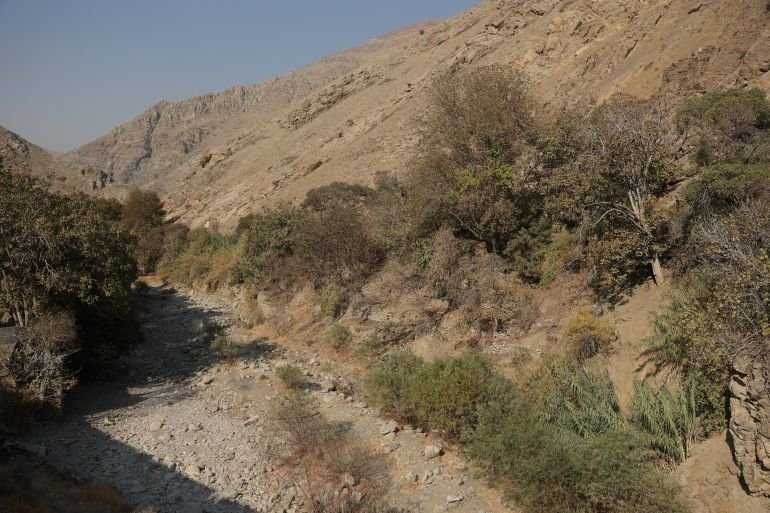
Self-sufficiency, at what cost?
Iranian law stipulates that 85 percent of domestic food be produced locally, Morad Kaviani, professor of geography and hydropolitics at Iran’s Kharazmi University, told state television last week.
However, he added, Iran does not have the water and soil capacities, and nearly 30 percent of agricultural produce is wasted due to a lack of infrastructure, outdated irrigation practices and misguided crop selection.
Modernisation and rapid industrial growth were straining water resources before the 1979 Islamic Revolution, and the agricultural self-sufficiency policy that came after made things worse.
More than 90 percent of Iran’s water supply is devoted to agriculture, which only accounted for about 12 percent of Iran’s GDP and about 14 percent of employment in the Iranian calendar year that ended in March 2025, according to the Statistical Center of Iran.
But people working in the relatively small sector are also suffering as water sources rapidly dry up.
Post-revolution governments, often through the construction arm of the Islamic Revolutionary Guard Corps (IRGC), built hundreds of dams and wells, over-interfering with rivers, while many reservoirs sat partially empty.
Authorities have been tapping groundwater reserves at unchecked rates, too, leading to widespread land sinking and ecosystem collapse in areas like Isfahan in central Iran and Sistan and Baluchestan to the southeast.
Tehran and many other cities have outgrown their supplies, forcing reliance on water transfers from distant aquifers via outdated infrastructure.
Iran is also unable to attract foreign investment to save its ailing infrastructure due to the devastating sanctions for years that have been in place for years.
Under the sanctions, Iran cannot diversify modes of employment in rural areas where most people engage in water-intensive agriculture, forcing continued water allocation to agriculture out of fear that threatening those farm jobs could cause protests and even create a national security risk, the UN university’s Madani said.
Decades of mismanagement
About a third of all water in Iran is wasted or spent without yielding returns, state media cited the Water and Wastewater Company of Iran as saying in late September.
That includes about 15 percent in physical losses, and more than 16 percent classified as illegal consumption, free public use, and meter error.
Vahedifard, the professor, pointed out that the government has launched short-term measures such as desalination and inter-basin transfers, but the water system is already in “an almost unrecoverable state” after decades of mismanagement and ignored warnings by experts.
“Planning must now focus on managing the reality of scarcity … shifting from supply-oriented engineering to resilience-based management, centred on groundwater recharge and aquifer restoration,” Vahedifard said, adding that Iran also needs infrastructure investment, transparent data sharing, integrated water–energy–agriculture planning, and genuine community participation.
He said different communities across Iran face different risk thresholds based on socioeconomic and environmental conditions, and there are deep disparities between urban and rural areas and central and peripheral provinces in terms of being prioritised in national water and infrastructure policies.
“Ultimately, equitable water management is not just about fairness,” he said. “It’s fundamental to Iran’s environmental stability and social cohesion.”
