
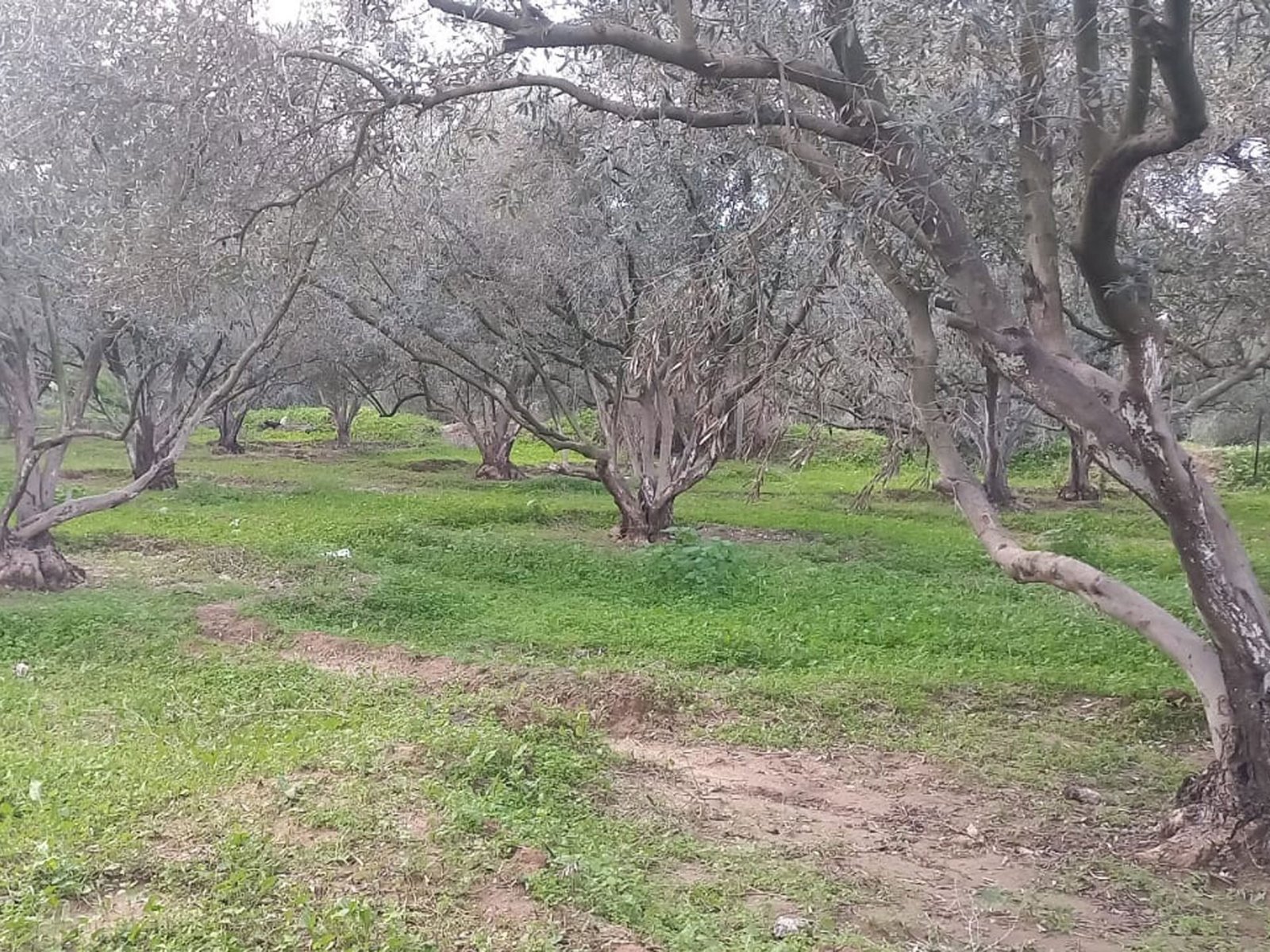
Israel destroyed or made inaccessible 98.5 percent of Gaza’s agricultural land. My family’s olive grove is part of it.
Last week, a ceasefire was announced after two years of genocide in Gaza. The bombs have stopped falling, but the devastation remains. The majority of homes, schools, hospitals, universities, factories, and commercial buildings have been reduced to rubble. From above, Gaza looks like a grey desert of rubble, its vibrant urban spaces reduced to ghost towns, its lush agricultural land and greenery wiped out.
The occupier’s aim was not only to render the Palestinians of Gaza homeless but also unable to provide for themselves. Uprooting the dispossessed and impoverished, those who have lost their connection to the land, is of course much easier.
This was the goal when Israeli tanks and bulldozers entered my family’s plot of land in the eastern part of Maghazi refugee camp and uprooted 55 olive trees, 10 palms and five fig trees.
This plot of land was offered to my refugee grandfather, Ali Alsaloul, by its original owner as a place to shelter in during the Nakba of 1948. Ali, his wife, Ghalia, and their children had just fled their village, al-Maghar, as Zionist forces advanced on it. Al-Maghar, like Gaza today, was reduced to rubble; the Zionists who perpetrated the crime completed the erasure by establishing a national park on its ruins – “Mrar Hills National Park”.
Ali was a farmer and so were his ancestors; his livelihood had always come from the land. So when he settled in the new location, he was quick to plant it with olive trees, palms, figs and prickly pears. He built his house there and raised my father, uncles and aunts. My grandfather eventually bought the land from its generous owner, by paying in installments over many years. Thus, my family came into the possession of 2,000 square metres (half an acre) of land.
Although my father and his siblings married and moved out of their family home, this plot of land remained a favourite place to go, especially for me.
It was just two kilometres away from our house in Maghazi refugee camp. I enjoyed doing the 30-minute walk, part of which went through a complete “jungle”: a stretch of green populated with clover, sycamore, jujube and olive trees, colourful birds, foxes, leashed and unleashed dogs and many beehives.
Every autumn, in October, when the olive picking season began, my cousins, friends and I would gather to collect the olives. It was an occasion that brought us closer together. We would get the olives pressed and get 500 litres (130 gallons) of olive oil from the harvest. The figs and dates were made into jams to have for breakfast or for suhoor during Ramadan.
The rest of the year, I would often meet my friends Ibrahim and Mohammed between the olive trees. We would light a small fire and make a kettle of tea to enjoy under the moonlight, while we talked.
When the war started in 2023, our land became a dangerous place to go. The farms and olive groves around it were often bombed. Our plot was also hit twice at the beginning of the war. As a result, we could not harvest the olives in 2023 and then again in 2024.
When the famine took hold of Gaza in the summer, we started sneaking into the plot to get some fruit and some firewood for cooking, since a kilo of that cost $2. We knew that Israeli tanks might storm in at any moment, but we took the risk anyway.
Seven families – we, friends and neighbours – benefited from the fruit and wood of that land.
One day in late August, a friend of mine called me with a terrible rumour he had heard: the Israeli tanks and bulldozers had advanced into the eastern part of Maghazi and levelled it all, uprooting trees and burying them. I gasped; our lifeline was gone.
Days later, the rumour was confirmed. The Israeli army had uprooted more than 600 trees in the area, mostly olive trees. Those who had fled from the area shared what they had seen. What was once a lush green stretch of land had been bulldozed into a yellow, lifeless desert.
Earlier in August, the Food and Agriculture Organization of the United Nations (FAO) reported that 98.5 percent of Gaza’s agricultural land had been damaged or made inaccessible. I guess the destruction of our plot shrank that 1.5 percent remaining land even further.
As Israel was completing the erasure of Palestinian agricultural land, it started allowing commercial but not aid trucks into Gaza. The markets were flooded with products with packaging covered in Hebrew.
Israel was starving us, destroying our ability to grow our own food, and then making us buy their products at exorbitant prices.
Ninety percent of people in Gaza are unemployed and can’t afford to buy an Israeli egg for $5 or a kilo of dates for $13. It was yet another genocidal strategy that forced the two million starving Palestinians in Gaza to choose between two horrible options: dying from hunger or paying to support the Israeli economy.
Now, aid is finally supposed to start coming into Gaza under the ceasefire agreement. This may be a relief to many starving Palestinians, but it is not a solution. Israel has rendered us fully dependent on aid, and it is the sole power that determines if, when and how much of it enters Gaza. Per the Integrated Food Security Phase Classification, 100 percent of Palestinians in Gaza experience some level of food insecurity.
Much of Gaza’s agricultural land remains out of reach, as Israel has withdrawn from just a part of the Gaza Strip. My family will have to wait for the implementation of the third phase of the ceasefire deal – if Israel agrees to implement it at all – to see the Israeli army withdraw to the buffer zone and regain access our land.
We have now lost our land twice. Once in 1948 and now again in 2025. Israel wants to repeat history and dispossess us again. It must not be allowed to convert more Palestinian land into buffer zones and national parks.
Getting back our land, rehabilitating and planting it is crucial not just for our survival, but also for maintaining our connection to the land. We must resist uprooting.
The views expressed in this article are the author’s own and do not necessarily reflect media’s editorial stance.
