
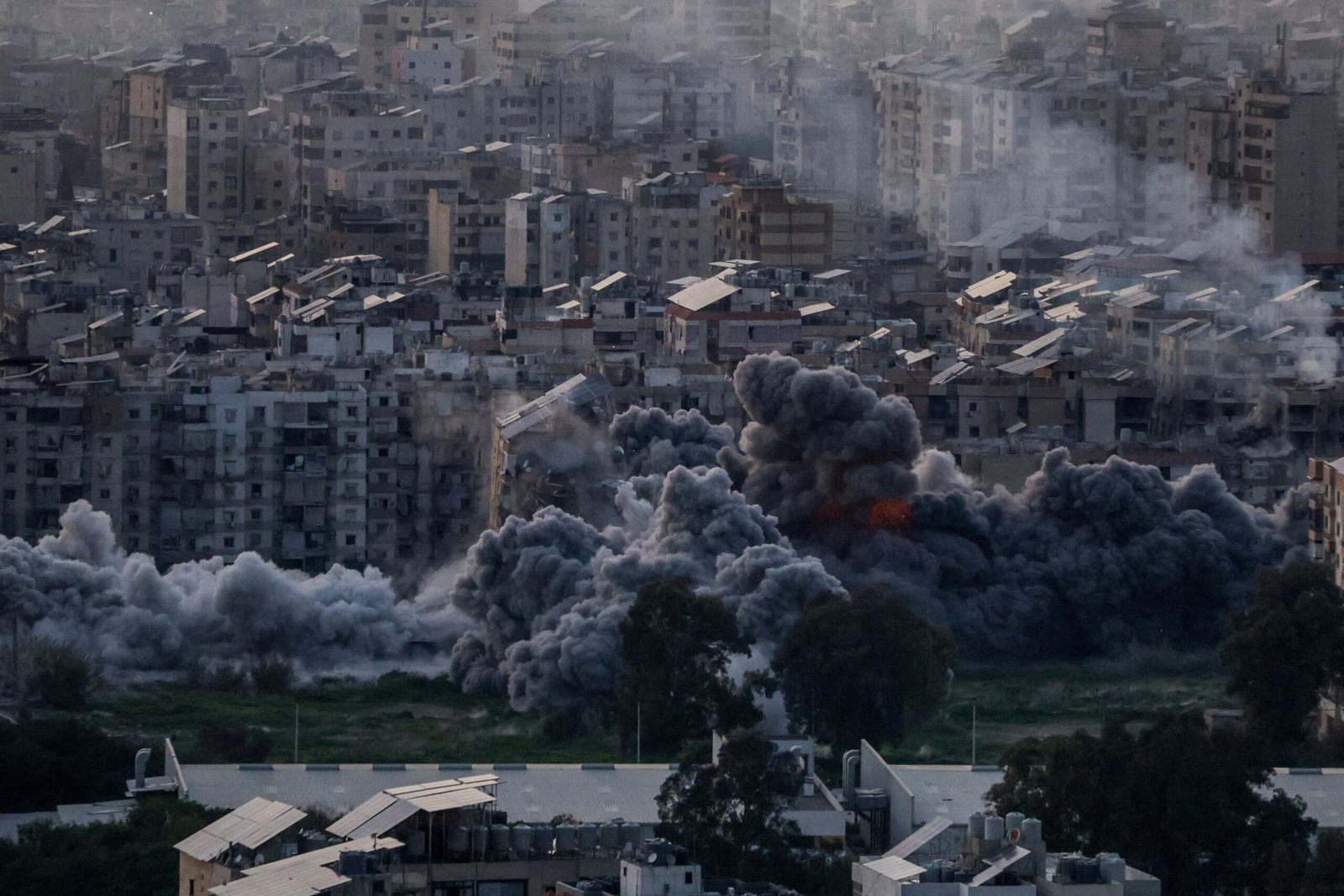
Dubai | March 7, 2026
The war involving the United States, Israel and Iran entered a dangerous new phase as Washington intensified its military campaign, Tehran expanded retaliatory strikes across the Gulf, and global energy markets reacted sharply to the growing threat to oil supplies.
In a dramatic escalation, US President Donald Trump said there would be “no deal” with Iran except unconditional surrender, raising the stakes in a conflict that has already spread from Iran and Israel to Gulf states hosting American forces.
The statement came as Israeli and US forces continued heavy bombardment of Iranian military infrastructure and leadership targets, while Iran launched waves of missile and drone strikes against Israel and US-aligned countries in the region.
War spreads across the Gulf
Iran’s retaliation has widened the conflict beyond Israel, with attacks reported against US assets and allied infrastructure across the Gulf.
Missile and drone strikes have targeted sites in several Gulf countries, including locations linked to US military deployments. Iran has also launched attacks against shipping and energy infrastructure in the wider region.
The UAE has intercepted numerous incoming projectiles during the conflict. According to official data, Iran launched hundreds of drones and missiles toward the UAE, causing casualties and property damage in some areas.
Neighbouring countries have also been drawn into the confrontation. Iran has fired missiles and drones toward Kuwait, while additional strikes have targeted infrastructure and shipping routes in Oman.
Oil shock grips global markets
Energy markets have been among the earliest casualties of the escalating war.
Crude prices surged above $90 per barrel, with analysts warning that prolonged disruption could push oil prices well above $100 if supplies from the Gulf remain constrained.
The conflict has sharply reduced tanker traffic through the Strait of Hormuz, a strategic chokepoint that normally handles around 20 million barrels of oil a day, or roughly one-fifth of global supply.
Shipping companies have begun avoiding the waterway due to security threats and soaring insurance costs, effectively choking one of the world’s most critical energy routes.
Fuel shipments from the Middle East to Asia have already plunged, creating shortages and pushing up prices for bunker fuel and other refined products.
Gulf economies and logistics under strain
The war is beginning to ripple through global supply chains.
Shipping giant Maersk has suspended key services connecting the Middle East with Asia and Europe, while humanitarian and commercial logistics networks across the region are facing mounting disruptions.
Energy infrastructure has also become a target. Iranian drones struck Saudi Arabia’s Ras Tanura refinery, the kingdom’s largest oil processing facility, forcing a halt to some operations and sending oil markets sharply higher.
Analysts warn that attacks on Gulf energy infrastructure could expand if the war drags on, potentially disrupting oil, gas and petrochemical exports across the region.
No clear diplomatic exit yet
Despite growing global concern, the conflict shows few signs of de-escalation.
Iran has rejected US demands for surrender and has vowed to continue retaliatory strikes, while Washington has signalled that further military operations are likely.
Meanwhile, international leaders and humanitarian agencies have warned that the conflict risks spiralling into a broader regional war if diplomacy fails to contain the escalation.
For the Gulf — home to critical energy infrastructure, global shipping lanes and major US military bases — the confrontation is rapidly evolving into the most serious security crisis the region has faced in decades
