
As such, it requires urgent action.
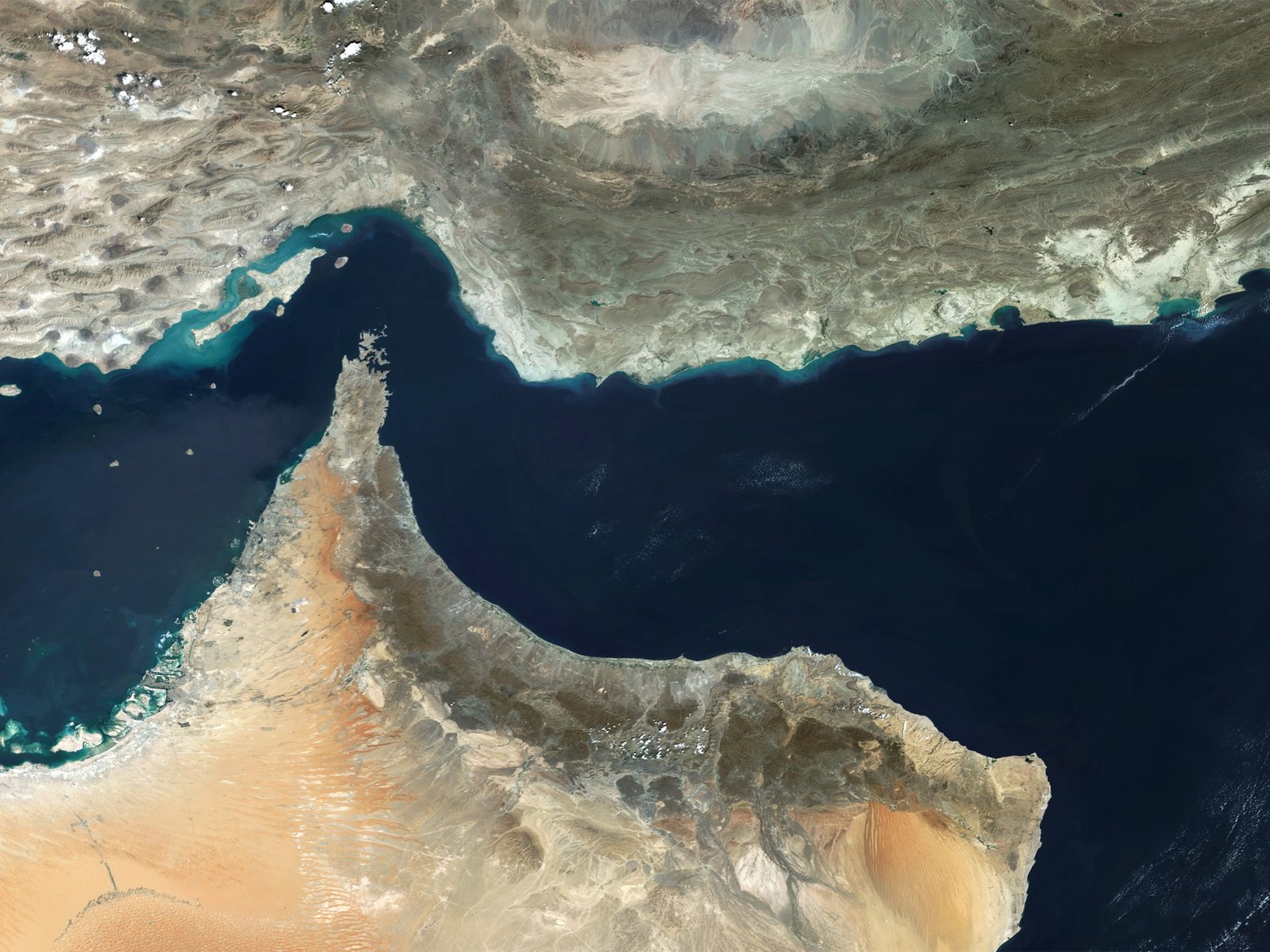
For more than two weeks now, maritime traffic through the Strait of Hormuz has been disrupted. Several vessels have been attacked, and many others have been stuck on the two ends of the strait, unwilling to take the risk of passing through.
This has had not just regional but global repercussions. The strait is the principal gateway for several Gulf Cooperation Council (GCC) states to global markets. About 20 percent of the world’s petroleum and nearly a fifth of global liquified natural gas (LNG) flows pass through it. For this reason, the Strait of Hormuz is one of the world’s most strategically significant maritime corridors.
What is happening at the strait is a wide-ranging crisis. It needs to be addressed not just with regional but global action.
The disruption of energy trade
After Iran began blocking the Strait of Hormuz, a number of energy companies, including Qatar Energy, Shell, Kuwait Petroleum Corporation, and Bapco invoked force majeure across GCC countries. This is unprecedented in the history of oil and gas production in the Gulf region.
Iraq, the world’s sixth-largest oil producer, has had to cut production of oil in the oil-rich region of Basra by 70 percent, from 3.3 million barrels per day (bpd) to 900,000bpd, as the majority of its exports pass through the strait. Its announcement of 170,000bpd exported through a pipeline to Turkiye will hardly make a difference.
In early March, Saudi Arabia, the world’s second biggest oil producer, had to shut the Ras Tanura refinery, its largest facility, which processes 550,000bpd. Riadh has been able to reroute other oil production through the East-West pipeline to Yanbu port on the Red Sea, bypassing the Strait of Hormuz. But even with this manoeuvre, it has had to cut supplies to Asia.
The UAE has also had to close down its largest refinery and reroute oil through pipelines, instead of exporting through the Gulf.
As a result of these disruptions, oil prices have soared to nearly $120 per barrel.
The LNG sector has also suffered tremendously. Qatar, the world’s second-largest LNG exporter, has had to shut down production. UAE’s gas production has experienced disruption, as well. Asian countries have been hit hard as a result.
Qatar and the UAE account for 30 percent of China’s LNG imports, 53 percent of India’s, 72 percent of Bangladesh’s and 14 percent of South Korea’s.
These disruptions have already caused price shocks on the global market. British wholesale gas prices have more than doubled, while the price of gas on the Dutch market has risen by 24 percent. Benchmark Asian LNG prices jumped almost 39 percent in early March.
Skyrocketing prices of energy will inevitably have a negative effect on households and industries across the world, leading to higher inflation.
A possible violation of international law
The legal regime governing navigation through international straits is set out in the United Nations Convention on the Law of the Sea (UNCLOS) of 1982. Under Article 38, ships and aircraft enjoy the right of transit passage through straits used for international navigation. Article 44 states that coastal states cannot hamper or suspend transit.
Although some regional states, including Iran, are not parties to UNCLOS, several of its core provisions reflect international law and are binding on all states. The customary nature of navigational freedoms through international straits predates UNCLOS and is affirmed in international jurisprudence.
In the Corfu Channel case between the United Kingdom and Albania (1949), the International Court of Justice held that states enjoy a right of innocent passage through straits used for international navigation between two parts of the high seas, even without a treaty regime. The court stated that such straits are essential routes of international maritime communication and must remain open to peaceful navigation.
Even in situations of armed conflict, the law of naval warfare recognises the importance of protecting neutral navigation through international waterways. The 1994 San Remo Manual on International Law Applicable to Armed Conflicts at Sea, which reflects widely accepted customary principles, stipulates that neutral vessels may continue to transit international straits used for international navigation.
In this context, Iran’s threat to obstruct navigation or target commercial vessels in the Strait of Hormuz could breach its international obligations and constitute a wrongful act. The Draft Articles on Responsibility of States for Internationally Wrongful Acts, adopted by the International Law Commission in 2001, provide that a breach of an international obligation attributable to a state engages its responsibility. Affected states may then seek cessation of the wrongful act, assurances of non-repetition, and reparation for economic losses caused by unlawful interference with navigation.
An urgent response
The international community should uphold its responsibility to protect navigation through the Strait of Hormuz, as disruptions affect domestic energy security and global market stability. Ensuring energy supply, maritime security, and freedom of navigation remain a shared responsibility.
Asian states, which are most affected by its closure, should take a firm stance. Countries like China, which enjoy close relations with Iran, should put pressure on it to abide by international law.
The GCC, for its part, has a lot it can do to minimise risk and offset costs. The Gulf states should accelerate efforts to diversify export routes. Options include building pipeline infrastructure within the GCC that can bypass the Strait of Hormuz by linking energy producers directly to the Arabian Sea and the Red Sea. This can provide a vital safety valve in times of crisis. Such investments would strengthen energy security for both the Gulf region and the global economy.
Without waiting for full de-escalation, GCC states should implement the Gulf Cooperation Council Vision for Regional Security adopted at the 158th session held in December 2023 in Doha. Priority should be given to protecting oil and gas fields to ensure global energy supply and regional economic security. The council should establish a dedicated force to protect energy infrastructure and deter threats to security and territorial integrity.
The Strait of Hormuz is more than a regional flashpoint. It is a central artery of global energy trade and a core part of the international maritime system. Any attempt to close or militarise the strait risks immediate energy supply shocks and wider economic disruption across global markets. International law requires that navigation through international straits remain open and uninterrupted.
Upholding this principle is essential for global energy security and for preserving the rules-based maritime order that supports international trade. In a period of rising geopolitical tensions, safeguarding the openness of the Strait of Hormuz is a global necessity.
The views expressed in this article are the author’s own and do not necessarily reflect media’s editorial stance.
