
President Aoun decries “blatant aggression” as Hezbollah lawmaker calls for boycott of multinational truce monitoring committee scheduled to meet next week.
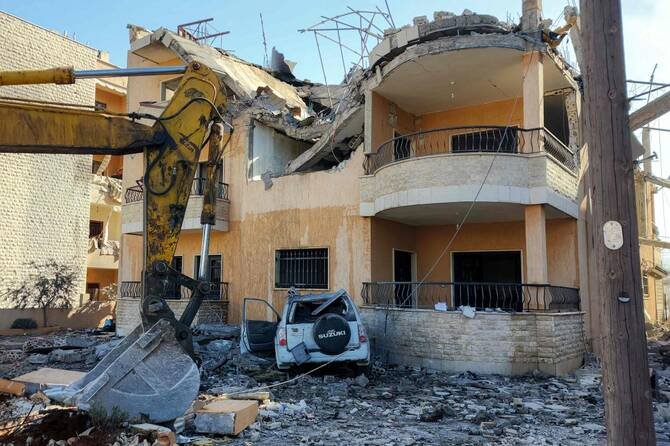
BEIRUT – Lebanon’s fragile ceasefire with Israel faced its most severe test yet on Saturday as political leaders condemned deadly Israeli airstrikes that killed 12 people, prompting calls from Hezbollah to suspend the very mechanism designed to uphold the truce.
President Joseph Aoun led the condemnation, describing Friday’s attacks on southern and eastern Lebanon as “a blatant act of aggression aimed at thwarting diplomatic efforts” by the United States and other international actors seeking to stabilize the region .
The health ministry reported that 10 of the 12 fatalities occurred in the eastern part of the country, near the Baalbek region. The Israeli military confirmed it conducted strikes, claiming it targeted “several terrorists of Hezbollah’s missile array in three different command centers.” Hezbollah later acknowledged that a commander was killed in the raids .
Ceasefire Under Strain
The violence represents the latest in a series of Israeli bombardments since the ceasefire was implemented in November 2024. While Israel typically states it is targeting Hezbollah infrastructure, it has occasionally struck positions belonging to the group’s Palestinian ally, Hamas.
The timing of the attack is particularly sensitive, as the multinational committee overseeing the truce—which includes the United States as one of five members—is scheduled to convene next week.
Hezbollah Responds
Hezbollah lawmaker Rami Abu Hamdan reacted furiously to the strikes, accusing Lebanese authorities of passivity. The group “will not accept the authorities acting as mere political analysts, dismissing these as Israeli strikes we have grown accustomed to before every meeting of the committee,” he said.
Abu Hamdan explicitly called on Beirut to “suspend the committee’s meetings until the enemy ceases its attacks,” a move that, if implemented, would effectively paralyze the primary diplomatic channel preventing wider escalation.
The Disarmament Dilemma
The incident underscores the inherent tensions within the November truce agreement. Lebanon’s government committed last year to disarming Hezbollah, and the army announced last month that it had completed the first phase of this plan in areas adjacent to the Israeli border.
However, Israel has consistently criticized these efforts as insufficient, accusing Hezbollah of using the ceasefire period to rearm. The group, while militarily weakened by the recent war, remains a formidable political force with significant representation in the Lebanese parliament.
As next week’s committee meeting approaches, all eyes will be on Beirut’s response to Hezbollah’s demands and whether diplomatic channels can prevent further deterioration along the Blue Line.
