
Dubai | Gulf Newsweek | March 6, 2026
As Iran grapples with the most severe crisis in its modern history amid the escalating war with the United States and Israel, attention is increasingly turning to the question of who will lead the Islamic Republic after the death of Supreme Leader Ayatollah Ali Khamenei.
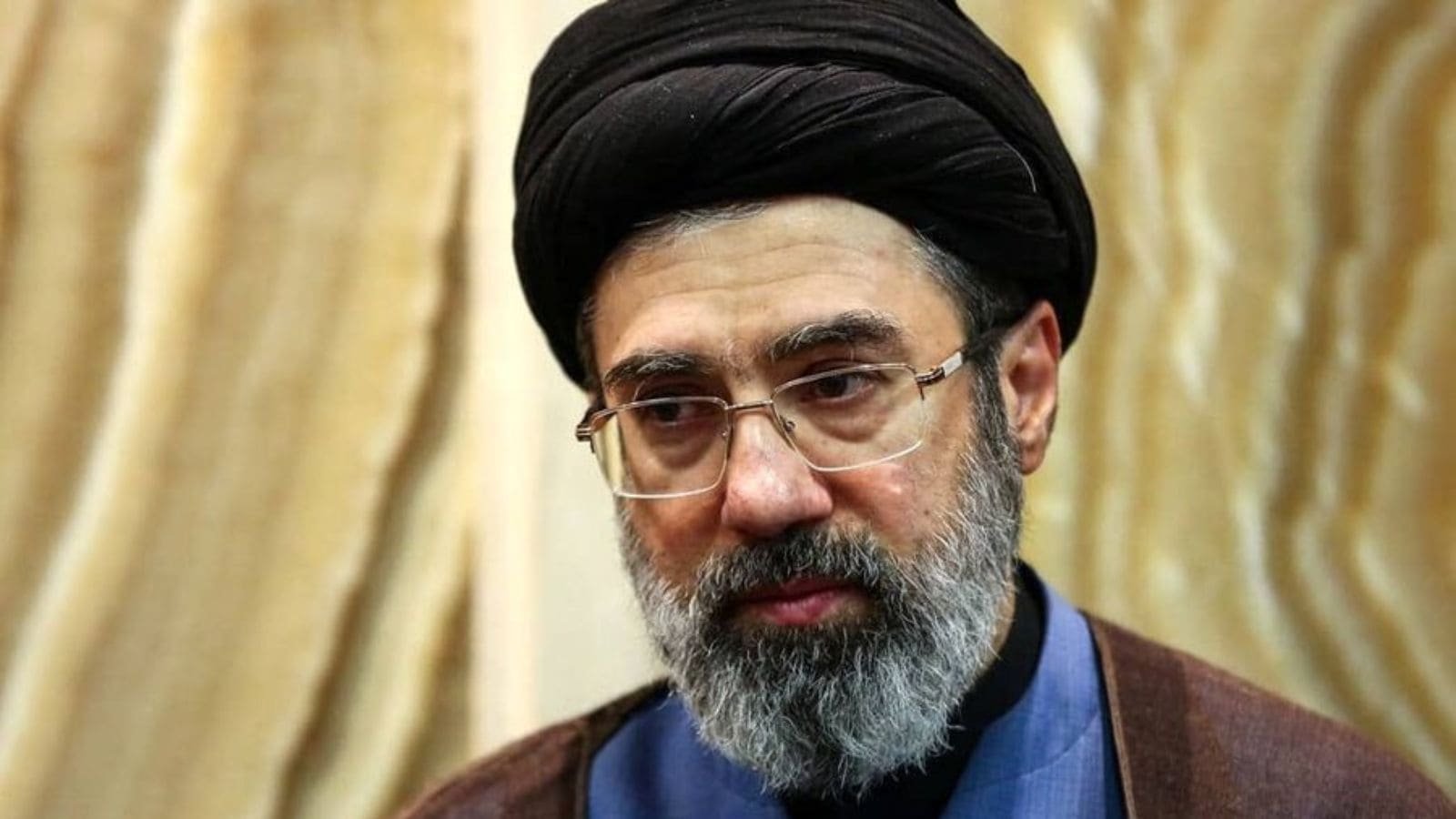
Among several potential contenders, Mojtaba Khamenei, the late leader’s influential second son, has emerged as the frontrunner in the race to become Iran’s next supreme leader — a development that could shape the country’s political direction and its relations with the West for years to come.
Although no official announcement has yet been made, senior clerical figures and political insiders indicate that the decision may be imminent, pending the completion of funeral ceremonies for the late leader and consultations among Iran’s powerful religious establishment.
Decision rests with Assembly of Experts
Under Iran’s constitution, the Assembly of Experts — an 88-member body of senior clerics elected by public vote every eight years — holds the authority to appoint, supervise and, if necessary, dismiss the supreme leader.
The assembly convenes in closed sessions to deliberate and vote on the successor when the position becomes vacant. A candidate must be recognised as a high-ranking Islamic scholar with political and religious authority capable of guiding the Islamic Republic.
Typically, the selection process involves intense consultations among senior clerics, the leadership of the Islamic Revolutionary Guard Corps (IRGC), and influential political factions within the Iranian system.
While the deliberations are secret, reports suggest that the assembly is currently weighing a shortlist of six candidates, with Mojtaba Khamenei widely viewed as the leading contender.
Ayatollah Seyed Ahmad Khatami, a member of the Assembly of Experts, said the body was “close to selecting a leader”, though he offered no details about the timing of the final decision.
Rise of Mojtaba Khamenei
Born in 1969, Mojtaba Khamenei studied Islamic theology after completing secondary school and briefly served during the Iran-Iraq war as a teenager.
Although he remained largely out of the public spotlight for many years, his influence inside Iran’s power structure steadily grew during the late 1990s and early 2000s as conservative factions reorganised following electoral defeats.
Over time, Mojtaba developed close ties with key security and political institutions, particularly the Revolutionary Guard, which plays a dominant role in Iran’s political and military landscape.
He was granted the clerical rank of ayatollah in 2022, an important religious qualification that strengthened speculation that he could eventually succeed his father.
Observers say Mojtaba has been deeply involved in several critical areas of Iran’s governance, including oversight of state media, internal security networks and the management of financial institutions linked to the supreme leader’s office.
His political allies reportedly include prominent figures such as Ahmad Vahidi, the newly appointed commander of the IRGC, and Mohammad Bagher Ghalibaf, the speaker of Iran’s parliament.
Hardline signal to the West
If Mojtaba Khamenei is chosen as supreme leader, analysts say the decision would signal continuity rather than change in Iran’s political direction.
Known for his strongly anti-Western views, he is widely regarded as a hardliner who supports maintaining the Islamic Republic’s current ideological stance and resisting pressure from Washington.
The prospect of his appointment has already drawn criticism from US officials. US Secretary of State Marco Rubio recently described Iran’s leadership as dominated by “religious fanatics”, while President Donald Trump warned that the worst-case scenario for Washington would be a successor who follows the same ideological path as the late leader.
Within Iran, the possibility of a hereditary transition has also stirred controversy among reformist politicians and activists who argue that the Islamic Republic was never intended to become dynastic.
Former prime minister Mir Hossein Mousavi previously criticised speculation about Mojtaba’s succession, calling it a “conspiracy” that undermines the principles of the revolution.
However, supporters of the system insist that the Assembly of Experts will ultimately choose the “most qualified” religious authority for the role.
Leadership transition amid war
The leadership transition comes at an exceptionally volatile moment for Iran.
The country is currently facing intense military pressure as US and Israeli forces carry out extensive strikes against Iranian military infrastructure, while Tehran has responded with missile and drone attacks across the region.
Against this backdrop, the appointment of a new supreme leader is expected to play a decisive role in shaping Iran’s response to the crisis and determining whether the country moves toward confrontation or diplomacy in the coming years.
For now, all eyes remain on the Assembly of Experts, whose decision will determine who becomes the most powerful political and religious figure in the Islamic Republic — and the person responsible for steering Iran through one of the most turbulent chapters in its history.
