Close Menu
    What's Hot

    Israel is trying to change Jerusalem’s religious identity

    April 13, 2026

    UAE banks step up resilience drive as sector assets top Dh5.3t

    April 12, 2026

    ADX lists AI and Shariah income ETFs in push to expand thematic investing

    April 12, 2026
    Facebook X (Twitter) Instagram
    • Politics
    • Economy
    Facebook X (Twitter) Instagram
    Gulf News Week
    Subscribe
    Monday, April 13
    • Home
    • Politics
      • Europe
      • Middle East
      • Russia
      • Social
      • Ukraine Conflict
      • US Politics
      • World
    • Region
      • Middle East News
    • World
    • Economy
      • Banking
      • Business
      • Markets
    • Real Estate
    • Science & Tech
      • AI & Tech
      • Climate
      • Computing
      • Science
      • Space Science
      • Tech
    • Sports

      Dominant PSG put Liverpool on the brink with 2-0 Champions League quarter-final first-leg win

      April 9, 2026

      Dubai Basketball U-18 Elite Crowned Basket Cup Sarajevo 2026 Champions in Historic Debut

      April 6, 2026

      Saudi boxing crowns 20 champions as Kingdom’s Elite Belt concludes in Riyadh

      April 4, 2026

      “He Signed for a Real Fight”: Pacquiao Contradicts Mayweather Over Rematch Status

      April 3, 2026

      Arsenal Hold Off Chelsea Fightback to Reach Women’s Champions League Semi-Finals

      April 2, 2026
    • Health
    • Travel
    • Contact
    Gulf News Week
    Home»Featured Science & Tech»Old Apollo rocks shed new light on the moon’s magnetic field long ago
    Featured Science & Tech

    Old Apollo rocks shed new light on the moon’s magnetic field long ago

    Gulf News WeekBy Gulf News WeekFebruary 26, 2026No Comments3 Mins Read
    Share Facebook Twitter Pinterest Copy Link LinkedIn Tumblr Email VKontakte Telegram
    Old Apollo rocks shed new light on the moon's magnetic field long ago
    Share
    Facebook Twitter Pinterest Email Copy Link

    Cnews agenciesE CANAVERAL, Fla. (news agencies) — Lunar rocks collected by Apollo astronauts more than half a century ago are providing a fresh take on the moon’s mysterious magnetic field, scientists reported Wednesday.

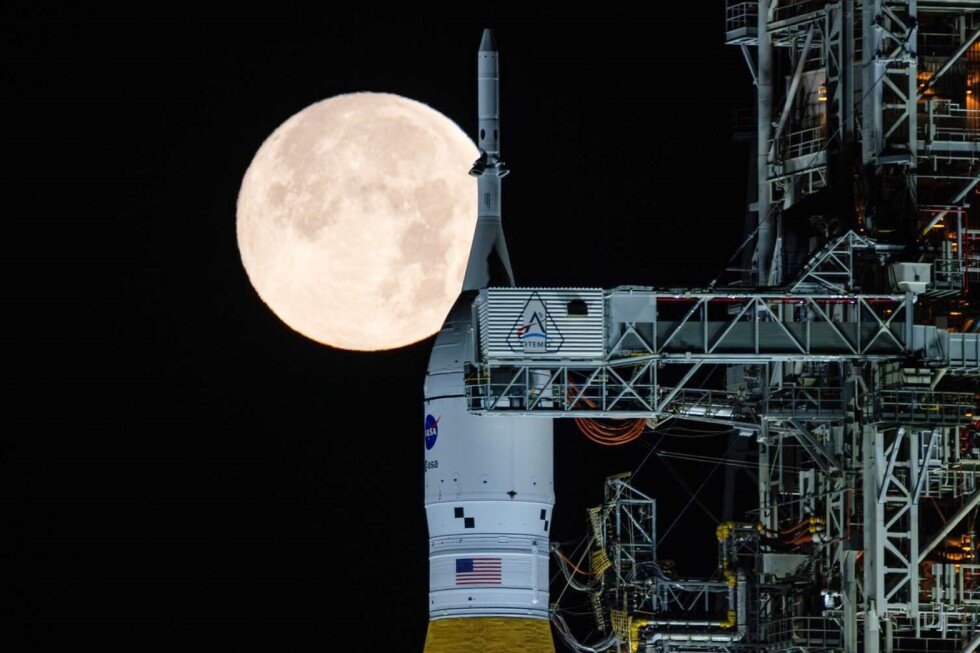
    Samples to be retrieved by future moonwalkers in NASA’s new Artemis program should yield even more clues. Four Artemis astronauts are expected to fly around the moon in a crucial test flight, blasting off as early as April from Kennedy Space Center after weeks of delays.

    The study by University of Oxford researchers in England suggests that while the moon’s magnetic field has been weak during most of its existence, it strengthened and even exceeded Earth’s magnetic activity during extremely brief periods 3 billion to 4 billion years ago. Their findings appear in the journal Nature Geoscience.

    Magnetic fields help to shield against dangerous cosmic rays and, in the case of Earth, the sun’s harsh radiation as well.

    The moon had “incredibly short spikes in high magnetic field strength” lasting no more than 5,000 years and possibly as short as a few decades, the result of melting titanium-rich rocks deep within the moon, said lead author Claire Nichols.

    Scientists previously theorized that the lunar magnetic field remained strong for long stretches based on their analysis of rocks fetched by Apollo moonwalkers from 1969 through 1972. With Artemis astronauts exploring the moon’s south polar region instead of the low-latitude lava plains of Apollo days, the new samples should shed even more light on the moon’s ancient magnetism.

    Nichols and her team pored over earlier measurements of the Apollo samples and found that high titanium levels corresponded with preserved traces of high magnetic activity. Rocks from the first and last moon landings — Apollo 11 and Apollo 17 — were loaded with titanium.

    “We have found a missing link,” Nichols said in an email. Magnetic field activity can be “intermittently really strong and may fluctuate far more than we have traditionally thought.”

    The researchers consider the Apollo samples not representative of what’s found on the moon because they came from similar locales where titanium abounded, after being shoved to the surface through volcanic eruptions. Future Artemis astronauts plan to study ancient rocks near the south pole where permanently shadowed craters are thought to contain water ice.

    Understanding the history of the moon’s magnetic shield “is critical for thinking about planetary habitability,” Nichols said.

    ___

    media Health and Science Department receives support from the Howard Hughes Medical Institute’s Department of Science Education and the Robert Wood Johnson Foundation. The news agencies is solely responsible for all content.

    Claire Nichols Domestic News England General news National Aeronautics and Space Administration Science Space exploration Technology U.S. news
    Share. Facebook Twitter Pinterest LinkedIn Tumblr Email Telegram Copy Link
    Gulf News Week

    Related Posts

    Tech

    Apple at 50: The Products That Redefined How We Use Technology

    April 1, 2026
    Featured Health

    FDA flags misleading claims for cancer drug by biotech billionaire Patrick Soon-Shiong

    March 24, 2026
    Featured Health

    As demand for GLP-1 pills and shots surges, healthy habits are still key

    March 23, 2026
    Featured Science & Tech

    Newly discovered photos show astronaut Neil Armstrong after the Gemini 8 emergency

    March 21, 2026
    Featured Health

    It’s not just vaccines — parents are refusing other routine preventive care for newborns

    March 21, 2026
    Featured Science & Tech

    NASA hauls its repaired moon rocket from the hangar back to the pad for an early April launch

    March 20, 2026
    Add A Comment

    Comments are closed.

    Editors Picks

    Israel is trying to change Jerusalem’s religious identity

    April 13, 2026

    UAE banks step up resilience drive as sector assets top Dh5.3t

    April 12, 2026

    ADX lists AI and Shariah income ETFs in push to expand thematic investing

    April 12, 2026

    Seven ways America can win the ceasefire and end the war

    April 12, 2026
    Latest Posts

    Apple at 50: The Products That Redefined How We Use Technology

    April 1, 2026

    FDA flags misleading claims for cancer drug by biotech billionaire Patrick Soon-Shiong

    March 24, 2026

    As demand for GLP-1 pills and shots surges, healthy habits are still key

    March 23, 2026

    Subscribe to News

    Get the latest sports news from NewsSite about world, sports and politics.

    Advertisement
    Demo
    Gulf News Week

    Your source for the serious news. This demo is crafted specifically to exhibit the use of the theme as a news site. Visit our main page for more demos.

    We're social. Connect with us:

    Facebook X (Twitter) Instagram Pinterest YouTube
    Latest Posts

    Israel is trying to change Jerusalem’s religious identity

    April 13, 2026

    UAE banks step up resilience drive as sector assets top Dh5.3t

    April 12, 2026

    ADX lists AI and Shariah income ETFs in push to expand thematic investing

    April 12, 2026

    Subscribe to Updates

    Get the latest creative news from FooBar about art, design and business.

    © 2026 Gulf News Week. Designed by HAM Digital Media.
    • Home
    • Politics
    • Economy
    • Sports

    Type above and press Enter to search. Press Esc to cancel.