
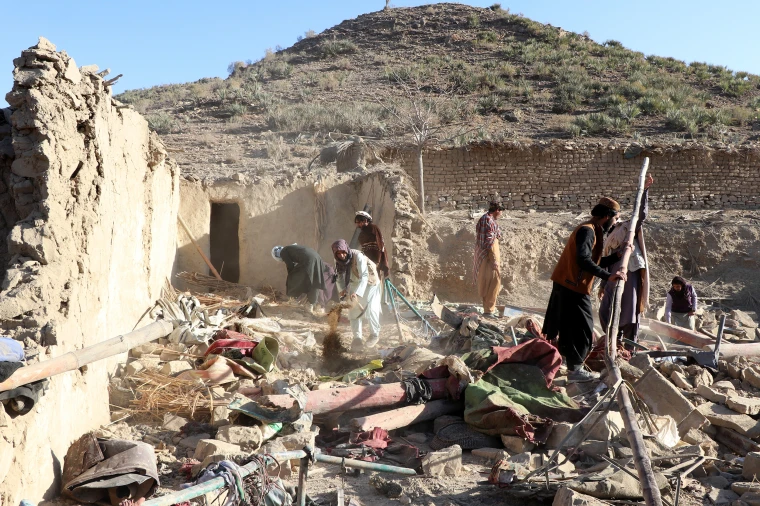
Islamabad says it targeted militant havens after suicide bombings; Kabul condemns ‘crime’ as 12 minors among dead in Nangarhar
SHARJAH — Pakistan launched multiple air strikes inside Afghan territory overnight Sunday, killing dozens of people—including at least 12 children—in the most significant military escalation between the neighbouring countries since border clashes left more than 70 dead last October.
Islamabad confirmed its forces struck seven sites along the border region in Nangarhar and Paktika provinces, targeting what it described as hideouts of the Pakistani Taliban (TTP), associated groups, and an Islamic State affiliate. The operation, the military said, came “in the aftermath of recent suicide bombing incidents in Pakistan.”
But on the Afghan side of the Durand Line, the scene was one of devastation and desperation.
‘Bulldozers searching for bodies’
An AFP journalist in Nangarhar’s Bihsud district witnessed residents operating a bulldozer to dig through rubble, searching for victims trapped beneath destroyed homes.
The human toll was staggering. According to an Afghan security source who spoke on condition of anonymity, 12 children and teenagers were among 17 people killed when a single house was targeted in Bihsud. Afghanistan’s Taliban-led government said the strikes “martyred and wounded dozens of people, including women and children,” though precise casualty figures remain unconfirmed.
“Pakistani generals try to compensate for their country’s security weaknesses through such crimes,” government spokesperson Zabihullah Mujahid posted on X, condemning the attack.
Retaliation for suicide bombings
Pakistan framed the strikes as self-defence following a wave of terrorist attacks on its soil. Two weeks ago, an Islamic State-claimed suicide bombing at a Shiite mosque in Islamabad killed at least 40 people and wounded more than 160—the deadliest attack in the capital since 2008. Another suicide bombing in northwest Pakistan on Saturday added urgency to Islamabad’s response.
A statement from Pakistan’s Ministry of Information and Broadcasting accused Afghanistan’s Taliban authorities of ignoring repeated appeals to act against militants using Afghan territory to launch cross-border attacks.
“Despite repeated urging by Islamabad, the Taliban authorities have failed to act,” the statement read.
Relations at breaking point
Since the Taliban’s return to power in Kabul in 2021, relations between the two neighbours have spiralled downward. October’s deadly border clashes—the worst in years—ended with a Qatar- and Turkey-brokered ceasefire, but subsequent talks in Doha and Istanbul have failed to produce a lasting agreement.
At the heart of the conflict lies a familiar accusation: Islamabad insists Kabul harbours TTP militants who orchestrate attacks on Pakistani soil. The Afghan government denies the allegations, maintaining it does not allow any group to use its territory against neighbours.
Sunday’s strikes threaten to shatter any remaining diplomatic progress. With children among the dead and both sides trading incendiary rhetoric, the prospect of de-escalation appears increasingly distant along one of the world’s most volatile border regions.
