
DR Issac PJ
Saudi Arabia has warned Iran that continued missile and drone strikes on Gulf states could trigger a military response, as tensions across the Middle East intensify and the conflict between Iran, the United States and Israel threatens to engulf the wider Gulf region.
Riyadh delivered the message to Tehran amid a surge of Iranian attacks across the Gulf over the past week, targeting locations in Saudi Arabia, the United Arab Emirates, Kuwait, Qatar and Bahrain, according to diplomatic sources cited by Reuters.
The warning underscores growing concern among Gulf governments that the conflict — which has already disrupted shipping through the Strait of Hormuz and sent global oil prices surging — could spiral into a broader regional war.
According to the report, Saudi officials conveyed the message shortly before Iranian President Masoud Pezeshkian delivered a televised address on Saturday in which he apologised to neighbouring Gulf states for the attacks. The apology appeared to be an attempt by Tehran to calm mounting anger across the region after several strikes reportedly hit civilian areas and energy infrastructure.
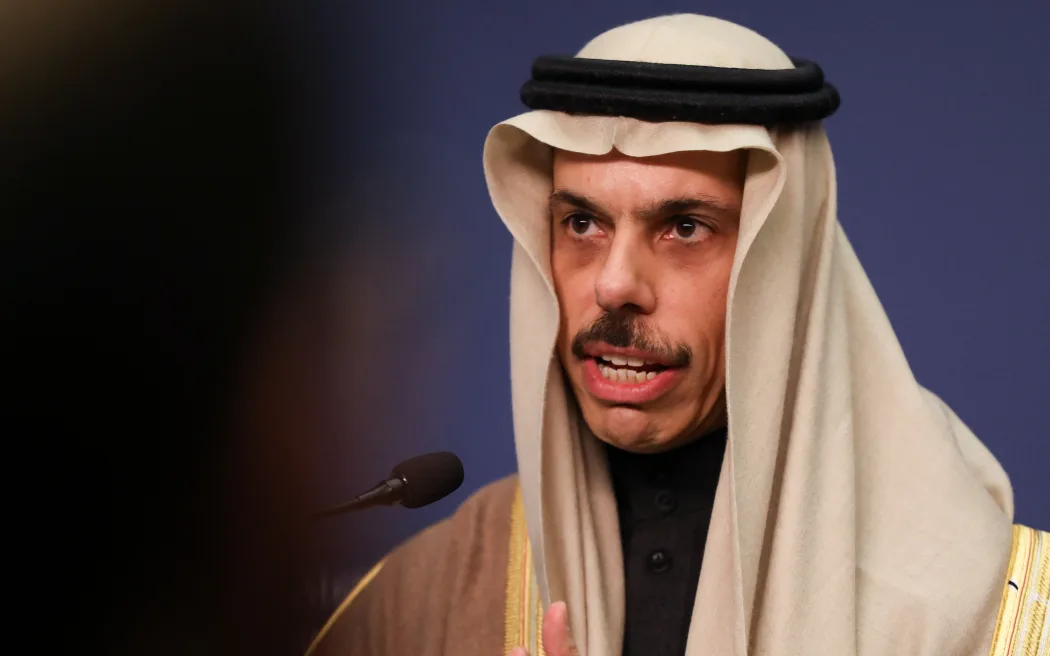
Two days earlier, Saudi Foreign Minister Prince Faisal bin Farhan held a phone call with Iranian Foreign Minister Abbas Araqchi, outlining Riyadh’s position in unusually direct terms.
During the conversation, Prince Faisal emphasised that Saudi Arabia supports diplomatic efforts to de-escalate tensions and is prepared to facilitate mediation aimed at reducing the conflict. However, he also warned that continued attacks on Saudi territory or energy facilities would leave the kingdom with no choice but to respond.
According to sources familiar with the discussions, Riyadh told Tehran that if Iranian strikes persist, Saudi Arabia could allow US forces to use its military bases for operations against Iranian targets and would also retaliate directly.
The message reflects the delicate balancing act Gulf states are attempting as they try to avoid being drawn into a wider war while defending their territory and strategic infrastructure.
The Gulf region has experienced a sharp escalation in hostilities since the outbreak of direct confrontation between Iran and US-Israeli forces earlier this month. Iranian missile and drone attacks have targeted several locations across the Gulf, while US and Israeli airstrikes have struck Iranian military and nuclear facilities.
The United Arab Emirates, Saudi Arabia and Bahrain have activated heightened defence protocols after a wave of Iranian drone and missile launches over the past week. Air defence systems across the region have intercepted several incoming projectiles, although some strikes have reportedly hit energy and civilian sites.
Iran has insisted that its attacks are not directed at Gulf governments themselves but rather at US military installations and strategic assets located within those countries.
However, the distinction has done little to reassure Gulf leaders, many of whom fear that their territories could become battlegrounds in a confrontation between Iran and Western allies.
Iran’s Armed Forces Central Command has warned that US and Israeli bases across the Middle East — as well as any facilities supporting their operations — will remain targets of Iranian attacks.
The escalating conflict is already having significant economic and geopolitical consequences.
Energy markets have been shaken by the risk of supply disruptions in the Gulf, particularly after Iran threatened shipping routes in the Strait of Hormuz, a narrow waterway through which roughly 20 per cent of the world’s oil supply passes.
Oil prices have surged sharply since the conflict intensified, with Brent crude approaching $120 per barrel and US benchmark West Texas Intermediate climbing above $110. Analysts say any sustained disruption to Gulf energy infrastructure could send prices even higher.
Shipping insurance premiums and tanker rates have also risen dramatically, reflecting growing risks for vessels operating in Gulf waters.
Regional governments are increasingly concerned that the conflict could undermine economic stability and disrupt global energy markets if hostilities continue to escalate.
Diplomatic efforts to contain the crisis are continuing, with several countries including Oman, Qatar and Turkey reportedly exploring mediation channels between Tehran and Washington.
However, with missile exchanges continuing and military operations expanding across the region, the prospects for a rapid de-escalation remain uncertain.
For Gulf states such as Saudi Arabia and the UAE, the immediate priority remains preventing the conflict from spreading further across the region while safeguarding critical energy infrastructure and maintaining stability in one of the world’s most strategically important energy corridors.
