
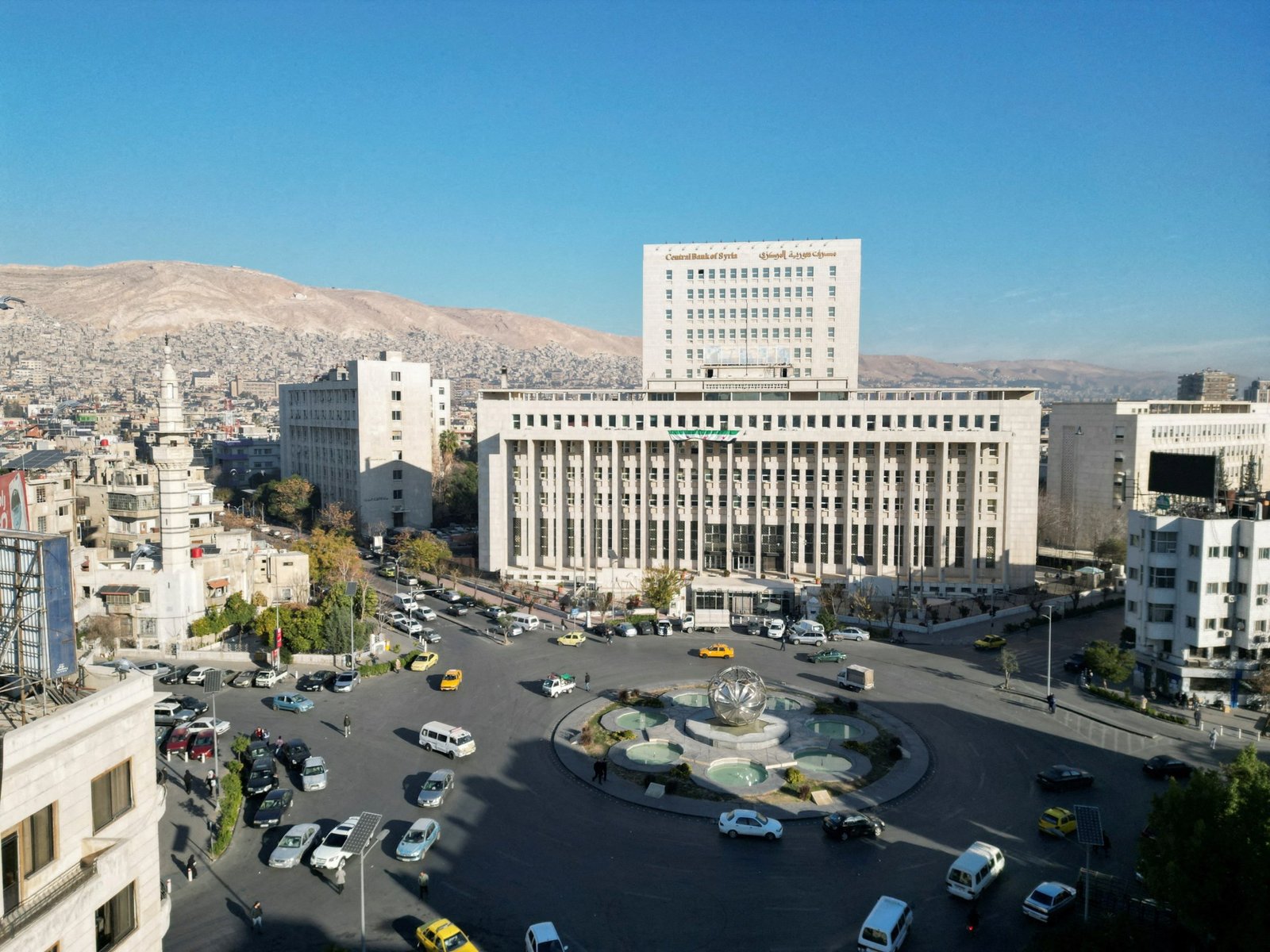
The country needs a comprehensive justice and accountability process to address past crimes.
In early August, the Kurdish-led Syrian Democratic Forces (SDF) exchanged fire with Syrian government forces near Manbij in Kurdish-majority northeastern Syria. The tensions in the north came just weeks after bloodshed in the south’s Suwayda governorate killed more than 1,400 people and displaced nearly 175,000. The violence between Druze and Sunni Bedouin groups continued for more than a week and has still not fully abated.
In March, groups loyal to former President Bashar al-Assad clashed with government forces and allied armed factions in the coastal governorates of Latakia and Tartus, dominated by the Alawite community. From 1,400 to 1,700 people were killed in the bloodshed, most of them civilians; 128,500 people were displaced.
The recurring violence has exposed the raw sectarianism that al-Assad once manipulated to maintain power. Now, in his absence, those divisions are metastasising, fuelled by a decade of unresolved grievances, land disputes and the proliferation of armed groups.
President Ahmad al-Sharaa, who took power after al-Assad’s ouster, has so far failed to build trust across all factions, as his main focus has been international normalisation and economic development. His Islamist leanings are causing alarm among minorities, including the Druze, Alawites, Christians and Kurds, who fear that his inability to rein in the various armed factions may result in more violence.
September’s elections may offer procedural legitimacy to al-Sharaa’s government, but without genuine security and reconciliation, they risk deepening the existing divides and reinforcing a power structure that benefits a select few at the expense of a truly unified nation.
Reconstruction and international recognition
Since coming to power, al-Sharaa has signalled that his national strategy is overwhelmingly focused on reconstruction and economic development. This is where his provisional government has concentrated its efforts.
In May, al-Sharaa spoke at an event in the country’s second biggest city, Aleppo, urging Syrians to join in the reconstruction effort. “Our war with the tyrants has ended, and our battle against poverty has begun,” he declared in his speech.
To unlock the economic potential of the country, al-Sharaa has sought to gain international recognition. With the help of Gulf states, the Syrian president has been able to achieve a major diplomatic victory: the lifting of sanctions and the removal of the armed group he headed, Hayat Tahrir al-Sham, from the list of “foreign terrorist organisations” by the United States government.
US President Donald Trump’s administration also backed the potential integration of the SDF into the new security apparatus. From Washington’s perspective, engaging with the new authorities in Damascus can help reduce Iranian influence and prevent Syria from becoming a corridor for Hezbollah and other proxies. From al-Sharaa’s perspective this is a chance to secure international recognition and legitimacy.
Syria’s neighbour Turkiye is also an important player in al-Sharaa’s national strategy. It is providing noncombat military support – training, advice and technical assistance – to help rebuild Syria’s security infrastructure. It also is looking at a major role in the reconstruction effort.
This month, Turkiye began supplying Syria with natural gas, helping to address the country’s energy crisis in the north.
Meanwhile, Gulf states have pledged to invest heavily in Syria to help stabilise its economy. In July, Saudi Arabia announced $6.4bn in investments in real estate and infrastructure projects. Two weeks later, the Syrian government signed deals worth $14bn with Qatar, the United Arab Emirates and other countries in the fields of public transport and real estate.
However, many critics would argue that while economic support is essential for rebuilding, it cannot alone guarantee stability. The danger is that money and development may paper over deep-seated resentments and divisions that could reignite into future conflicts. The real challenge for the new Syrian government is to find a way to balance the urgent need for economic recovery with the equally crucial need to address people’s grievances.
Legislative elections
One way to address tensions is to gain public trust through a democratic electoral process. Al-Sharaa has called for national elections in September, but ordinary Syrians will not be able to cast their votes. That is because 140 of the 210 seats will be chosen by local electoral committees while 70 will be appointed directly by the president. There will be no seats filled by popular vote.
This format is a straightforward political calculation. It provides the new leadership with the assurance of a controlled outcome and avoids the challenges of organising a nationwide vote at a time when Damascus does not have full control over all territories and security cannot be guaranteed.
But this electoral process is likely to be met with mistrust from some Syrians, especially from minority communities, as they will see it as favouring the Sunni majority. Some may choose to boycott the elections, declare them illegitimate or find alternative ways to express their profound displeasure with a system that denies them a meaningful voice.
The US and the European Union will monitor the election carefully and will likely take a critical stance if it fails to establish a truly inclusive and representative parliament. This will likely complicate the new regime’s budding international relations and hinder its efforts to gain full diplomatic recognition and support.
The more pressing problem for Damascus will be that the elections will not help heal the country’s deep wounds at a time of continuing sectarian tensions. That is why Syria needs a nation-wide reconciliation process.
Justice and accountability
Syria’s interim government has yet to articulate a compelling vision for justice and accountability. War crimes under al-Assad – which include mass detentions, torture and chemical attacks – remain unaddressed. There have been promises to hold people accountable for sectarian massacres, but no concrete steps have been taken.
The absence of accountability is not just a moral failure. It’s a strategic one. Without a legal framework to hold perpetrators accountable, Syria’s wounds will fester.
Syria needs a new social contract, and the people will no longer tolerate the old foundations of impunity that defined the past regime.
The process of justice and accountability must be impartial and transparent. Given the deep-seated sectarian divisions and the decades of one-family rule by the al-Assad regime, which drew heavily on the Alawite minority, the new government cannot be the sole arbiter of justice. A national, state-led process could easily be accused of being a form of retribution against a particular sect or those associated with the old regime. To counter this perception and ensure fairness, Syria would greatly benefit from the assistance of the international community, particularly the United Nations.
An entity like the South African Truth and Reconciliation Commission (TRC) could be a powerful tool. Instead of focusing solely on punishment, a TRC would prioritise uncovering the truth about past crimes, including mass killings, torture and embezzlement.
This process could help Syria move away from a solely punitive justice system that purges rather than reconciles. It could help the new regime build public trust and establish a new social contract based on a shared vision rather than competing narratives. It could also help dampen demands for federalism, which risk weakening the country and undermining its security, stability and economic development.
Syria’s transition was never going to be easy. But the current trajectory – economic development undermined by potential sectarian fragmentation and militarised politics – risks turning post-Assad Syria into a failed state.
The international community can play a critical role, but its approach must evolve beyond merely applauding procedural milestones. It must support civil society and demand accountability for crimes past and present. Otherwise, Syria’s future will look hauntingly like its past with new leaders but the same old cycles of violence and instability.
The views expressed in this article are the author’s own and do not necessarily reflect media’s editorial stance.
