Close Menu
    What's Hot

    The Take: How Asia became ground zero for the oil crisis

    April 6, 2026

    Dubai real estate steadies as fundamentals stay strong

    April 6, 2026

    UAE eyes top five exporter rank by 2031 as Cepas fuel trade surge

    April 6, 2026
    Facebook X (Twitter) Instagram
    • Politics
    • Economy
    Facebook X (Twitter) Instagram
    Gulf News Week
    Subscribe
    Monday, April 6
    • Home
    • Politics
      • Europe
      • Middle East
      • Russia
      • Social
      • Ukraine Conflict
      • US Politics
      • World
    • Region
      • Middle East News
    • World
    • Economy
      • Banking
      • Business
      • Markets
    • Real Estate
    • Science & Tech
      • AI & Tech
      • Climate
      • Computing
      • Science
      • Space Science
      • Tech
    • Sports

      Dubai Basketball U-18 Elite Crowned Basket Cup Sarajevo 2026 Champions in Historic Debut

      April 6, 2026

      Saudi boxing crowns 20 champions as Kingdom’s Elite Belt concludes in Riyadh

      April 4, 2026

      “He Signed for a Real Fight”: Pacquiao Contradicts Mayweather Over Rematch Status

      April 3, 2026

      Arsenal Hold Off Chelsea Fightback to Reach Women’s Champions League Semi-Finals

      April 2, 2026

      Iraq End 40-Year World Cup Drought with Gritty Playoff Victory Over Bolivia

      April 1, 2026
    • Health
    • Travel
    • Contact
    Gulf News Week
    Home»Featured Science & Tech»The US plans to begin breeding billions of flies to fight a pest. Here is how it will work
    Featured Science & Tech

    The US plans to begin breeding billions of flies to fight a pest. Here is how it will work

    Gulf News WeekBy Gulf News WeekJuly 2, 2025No Comments3 Mins Read
    Share Facebook Twitter Pinterest Copy Link LinkedIn Tumblr Email VKontakte Telegram
    The US plans to begin breeding billions of flies to fight a pest. Here is how it will work
    Share
    Facebook Twitter Pinterest Email Copy Link

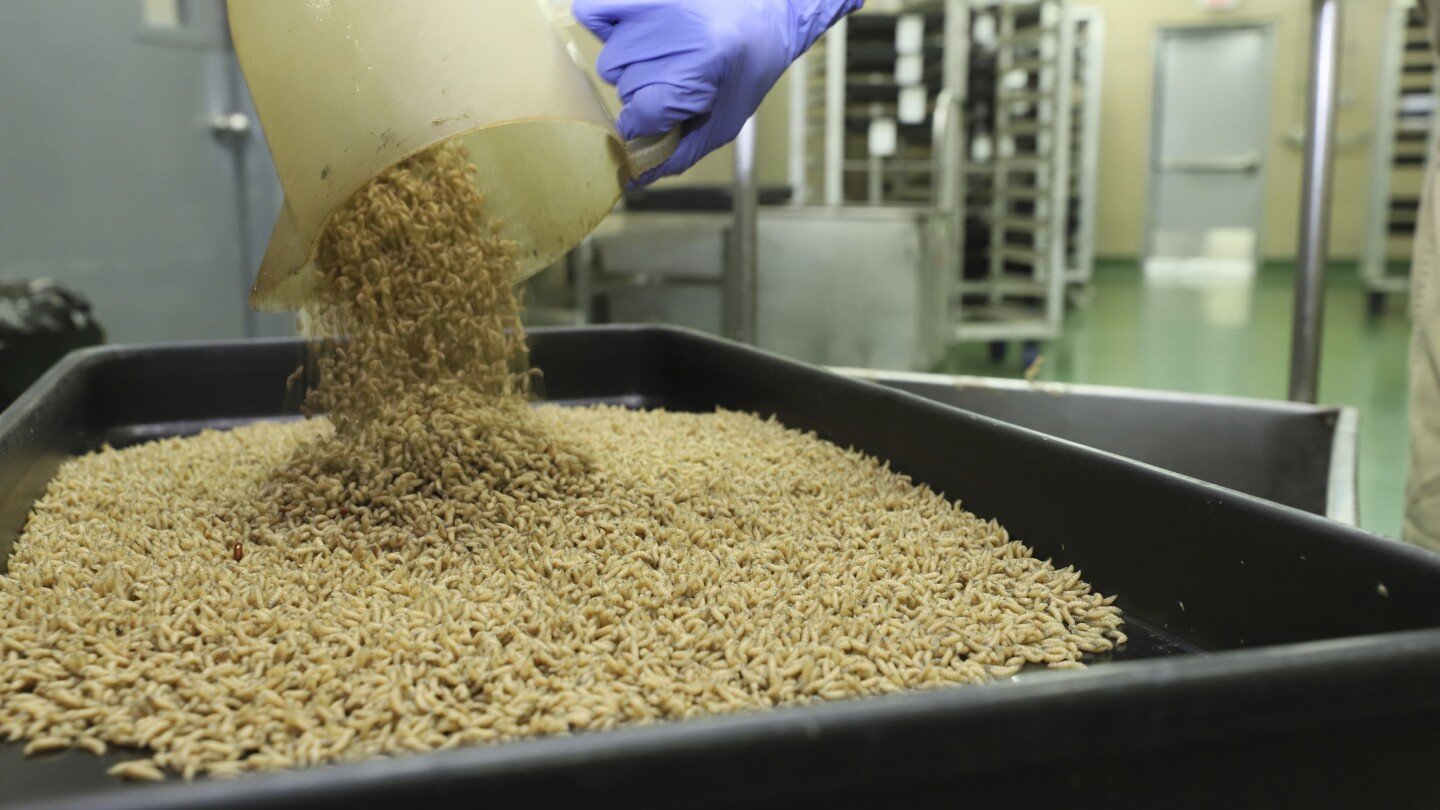
    TOPEKA, Kan. (news agencies) — The U.S. government is preparing to breed billions of flies and dump them out of airplanes over Mexico and southern Texas to fight a flesh-eating maggot.

    That sounds like the plot of a horror movie, but it is part of the government’s plans for protecting the U.S. from a bug that could devastate its beef industry, decimate wildlife and even kill household pets. This weird science has worked well before.

    “It’s an exceptionally good technology,” said Edwin Burgess, an assistant professor at the University of Florida who studies parasites in animals, particularly livestock. “It’s an all-time great in terms of translating science to solve some kind of large problem.”

    The targeted pest is the flesh-eating larva of the New World Screwworm fly. The U.S. Department of Agriculture plans to ramp up the breeding and distribution of adult male flies — sterilizing them with radiation before releasing them. They mate with females in the wild, and the eggs laid by the female aren’t fertilized and don’t hatch. There are fewer larvae, and over time, the fly population dies out.

    It is more effective and environmentally friendly than spraying the pest into oblivion, and it is how the U.S. and other nations north of Panama eradicated the same pest decades ago. Sterile flies from a factory in Panama kept the flies contained there for years, but the pest appeared in southern Mexico late last year.

    The USDA expects a new screwworm fly factory to be up and running in southern Mexico by July 2026. It plans to open a fly distribution center in southern Texas by the end of the year so that it can import and distribute flies from Panama if necessary.

    Most fly larvae feed on dead flesh, making the New World screwworm fly and its Old World counterpart in Asia and Africa outliers — and for the American beef industry, a serious threat. Females lay their eggs in wounds and, sometimes, exposed mucus.

    “A thousand-pound bovine can be dead from this in two weeks,” said Michael Bailey, president elect of the American Veterinary Medicine Association.

    Veterinarians have effective treatments for infested animals, but an infestation can still be unpleasant — and cripple an animal with pain.

    Don Hineman, a retired western Kansas rancher, recalled infected cattle as a youngster on his family’s farm.

    “It smelled nasty,” he said. “Like rotting meat.”

    The New World screwworm fly is a tropical species, unable to survive Midwestern or Great Plains winters, so it was a seasonal scourge. Still, the U.S. and Mexico bred and released more than 94 billion sterile flies from 1962 through 1975 to eradicate the pest, according to the USDA.

    The numbers need to be large enough that females in the wild can’t help but hook up with sterile males for mating.

    One biological trait gives fly fighters a crucial wing up: Females mate only once in their weekslong adult lives.

    Alarmed about the fly’s migration north, the U.S. temporarily closed its southern border in May to imports of live cattle, horses and bison and it won’t be fully open again at least until mid-September.

    Animals Business Cassandra Olds Climate Climate and environment Don Hineman Edwin Burgess General news Infertility Insects Kansas KS State Wire Latin America Mexico Michael Bailey Science Sonja Swiger Texas TX State Wire U.S. news
    Share. Facebook Twitter Pinterest LinkedIn Tumblr Email Telegram Copy Link
    Gulf News Week

    Related Posts

    Tech

    Apple at 50: The Products That Redefined How We Use Technology

    April 1, 2026
    Featured Health

    FDA flags misleading claims for cancer drug by biotech billionaire Patrick Soon-Shiong

    March 24, 2026
    Featured Health

    As demand for GLP-1 pills and shots surges, healthy habits are still key

    March 23, 2026
    Featured Science & Tech

    Newly discovered photos show astronaut Neil Armstrong after the Gemini 8 emergency

    March 21, 2026
    Featured Health

    It’s not just vaccines — parents are refusing other routine preventive care for newborns

    March 21, 2026
    Featured Science & Tech

    NASA hauls its repaired moon rocket from the hangar back to the pad for an early April launch

    March 20, 2026
    Add A Comment

    Comments are closed.

    Editors Picks

    The Take: How Asia became ground zero for the oil crisis

    April 6, 2026

    Dubai real estate steadies as fundamentals stay strong

    April 6, 2026

    UAE eyes top five exporter rank by 2031 as Cepas fuel trade surge

    April 6, 2026

    Abu Dhabi tourism surges to record high as Indian visitor numbers jump

    April 6, 2026
    Latest Posts

    Apple at 50: The Products That Redefined How We Use Technology

    April 1, 2026

    FDA flags misleading claims for cancer drug by biotech billionaire Patrick Soon-Shiong

    March 24, 2026

    As demand for GLP-1 pills and shots surges, healthy habits are still key

    March 23, 2026

    Subscribe to News

    Get the latest sports news from NewsSite about world, sports and politics.

    Advertisement
    Demo
    Gulf News Week

    Your source for the serious news. This demo is crafted specifically to exhibit the use of the theme as a news site. Visit our main page for more demos.

    We're social. Connect with us:

    Facebook X (Twitter) Instagram Pinterest YouTube
    Latest Posts

    The Take: How Asia became ground zero for the oil crisis

    April 6, 2026

    Dubai real estate steadies as fundamentals stay strong

    April 6, 2026

    UAE eyes top five exporter rank by 2031 as Cepas fuel trade surge

    April 6, 2026

    Subscribe to Updates

    Get the latest creative news from FooBar about art, design and business.

    © 2026 Gulf News Week. Designed by HAM Digital Media.
    • Home
    • Politics
    • Economy
    • Sports

    Type above and press Enter to search. Press Esc to cancel.