
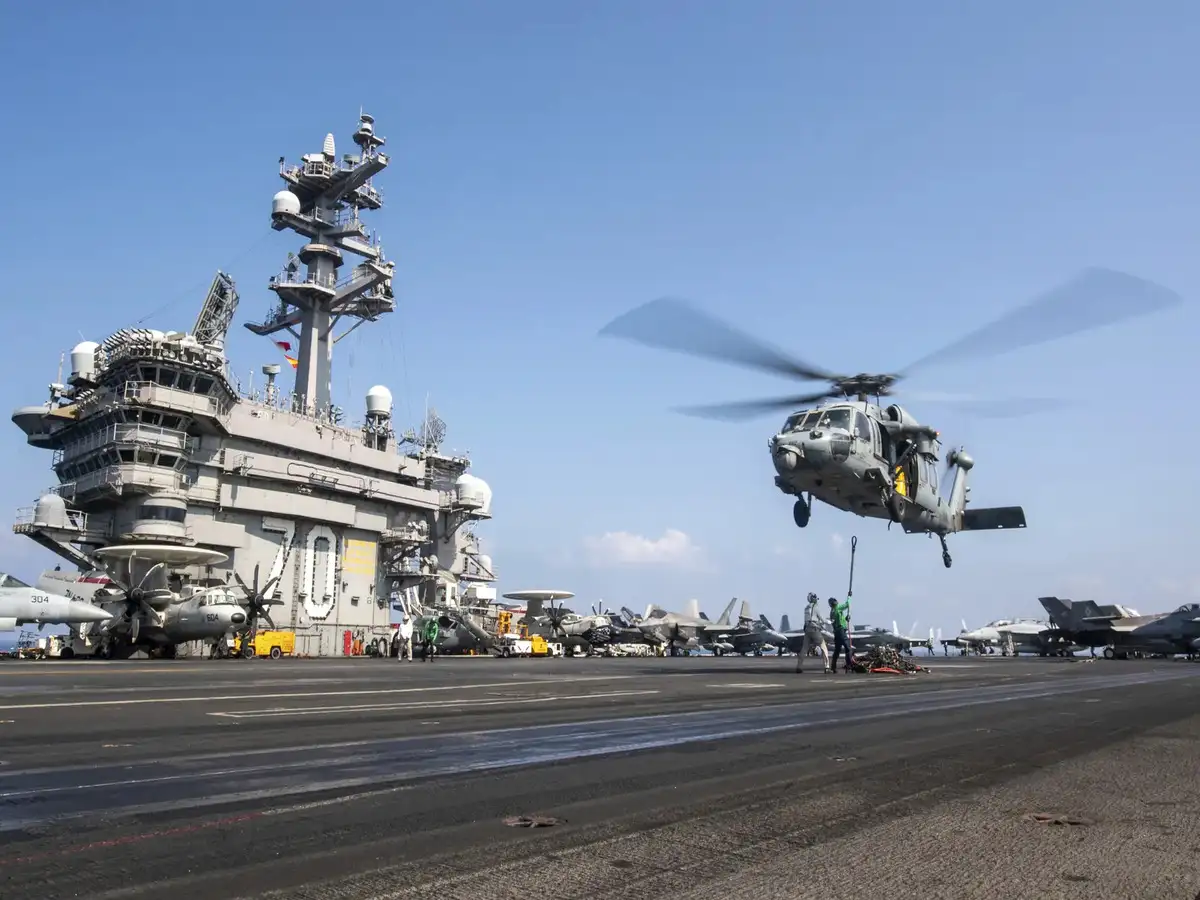
USS Gerald R. Ford rerouted from Caribbean to join USS Abraham Lincoln as Trump warns Tehran of ‘traumatic’ consequences without nuclear deal
WASHINGTON – The United States has ordered the USS Gerald R. Ford, the world’s largest aircraft carrier, to sail from the Caribbean Sea to the Middle East—positioning two carrier strike groups in the region as President Donald Trump intensifies pressure on Iran to reach a nuclear agreement.
The move, confirmed by a person familiar with the plans speaking on condition of anonymity, follows Trump’s warning Thursday that failure to strike a deal with his administration would be “very traumatic” for Tehran. The USS Abraham Lincoln and three guided-missile destroyers arrived in the Middle East more than two weeks ago.
Dual-carrier deployments in the region are rare and carry significant strategic signaling.
Rapid Pivot from Western Hemisphere
The Ford’s redeployment marks a sharp operational turnaround. Trump sent the carrier from the Mediterranean to the Caribbean last October as part of a military buildup that preceded the surprise raid capturing then-Venezuelan President Nicolás Maduro last month.
The pivot to the Middle East appears at odds with Trump’s stated national security strategy, which has prioritized the Western Hemisphere over other global hotspots.
The carrier set out on deployment in late June 2025. Its crew will have served eight months by late February. The Middle East mission sets the stage for an unusually prolonged deployment; the duration of its regional stay remains unclear.
Diplomacy Backed by Firepower
Trump told Axios earlier this week he was considering sending a second carrier group to the Middle East. The Ford’s orders formalize that option.
The president held lengthy talks with Israeli Prime Minister Benjamin Netanyahu on Wednesday, insisting negotiations with Iran must continue. Netanyahu is urging Washington to press Tehran to scale back its ballistic missile program and end support for militant groups including Hamas and Hezbollah as part of any prospective deal.
Iran and the United States held indirect talks in Oman last week. Trump offered a rough timeline Thursday for a potential agreement.
“I guess over the next month, something like that,” he said. “It should happen quickly. They should agree very quickly.”
The White House did not immediately respond to a request for comment.
