
Unconditional US support for Israel will come to an end but this policy shift may take years.
The Zionist narrative has been a dominating force in the United States for more than seven decades. Promoted by powerful lobbies, nurtured by Christian evangelicals, and echoed by mainstream media, it remained largely unchallenged until the outbreak of the genocide in Gaza.
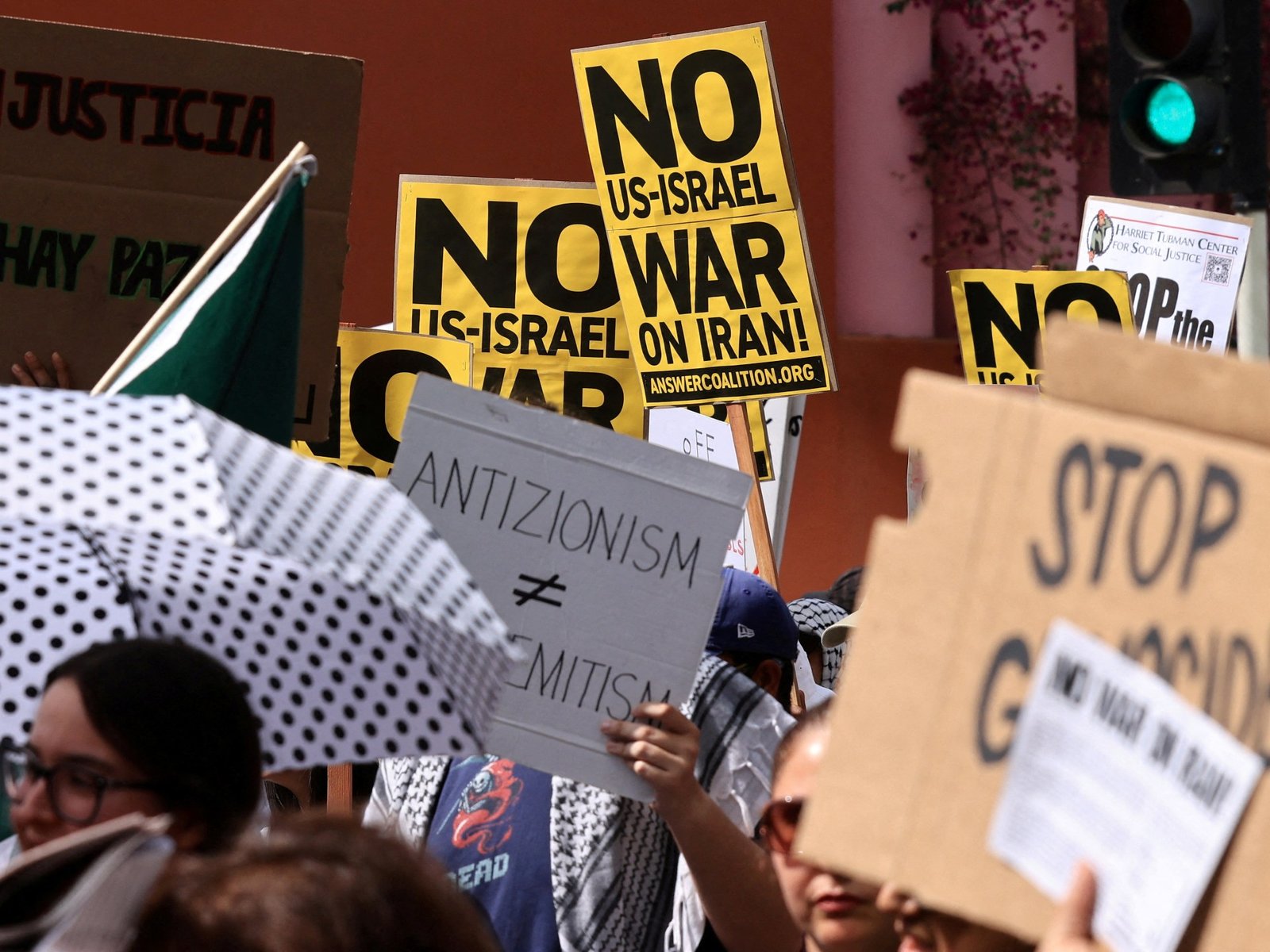
In nearly two years, the unyielding images of horror, the scale of devastation, and the shocking loss of human lives have created an indomitable record of horror that has challenged the Zionist narrative. Poll after poll is registering a shift in public opinion vis-a-vis Israel. On both sides of the political divide, Americans are growing less enthusiastic about blanket support for the longstanding US ally. So what does this mean for US-Israeli relations?
In the short and medium term, not much. US arms, aid, security cooperation, and diplomatic backing for Israel will barely be affected. The support structure built up over almost eight decades cannot be expected to evaporate overnight.
But in the long term, US backing will be reduced. This means Israel will be forced to reconsider its aggressive posture in the region and roll back its plans to rule over all of historic Palestine.
What the polls say
Polls started picking up a shift in US public opinion, especially among young Democrats, even before the October 7, 2023 attacks. But afterwards, this change appeared to accelerate dramatically.
A poll conducted by Pew Research in March this year suggests that negative attitudes towards Israel have risen from 42 percent to 53 percent of all US adults since 2022. The shift is more pronounced among Democrats, from 53 percent to 69 percent for the same period.
What is remarkable about this change is that it is cross-generational. Among Democrats 50 and older – people who are usually moderate on foreign policy issues – negative attitudes towards Israel increased from 43 percent to 66 percent.
Expressions of sympathy have also changed. According to an August poll (PDF) by The Economist and YouGov, 44 percent of Democrats sympathise more with Palestinians, compared with 15 percent with Israelis; among Independents, these figures are 30 and 21 percent.
The same poll suggests that a plurality of Americans now believes Israel’s continuing bombing of Gaza is unwarranted, and some 78 percent want an immediate ceasefire, including 75 percent of Republicans. The percentage of respondents who said Israel is committing genocide against the Palestinians was 43 percent; those who disagreed were just 28 percent.
More significantly, a plurality – 42 percent – favour decreasing support for Israel; among Republicans this number stands at 24 percent.
A Harvard-Harris poll (PDF) from July reveals perhaps the most concerning trend for Israel’s advocates: 40 percent of young Americans now favour Hamas, not Israel. While this is likely a reflection of general sympathy for the Palestinians, it shows significant cracks in the dominance of Israel’s “Palestinian terrorism” narrative among the American youth.
The same poll suggested that only 27 percent support Israeli Prime Minister Benjamin Netanyahu, a disastrous vote of no confidence that is far removed from the welcome he has enjoyed at the White House and Congress.
How policy may change
As older voters – Israel’s last electoral stronghold – make way for younger voters more sympathetic to the cause of Palestinian rights, the political math will shift towards profound political change. The question is no longer if the US will rethink its special relationship with Israel, but when.
The special relationship with Israel is one of those rare issues for which there is bipartisan support. Changing that would take a long time.
Of course, in the short term, there are some possible changes. If there is a sudden rift between Netanyahu and US President Donald Trump – perhaps even on a personal level – the latter will have the polls to justify a move away from Israel. The clear shift in public opinion would provide him with the political cover that he is listening to the American people. However, such a dramatic change is not likely.
What is more likely is that, under pressure from the public, members of Congress will increasingly start shifting on Israel-Palestine. Those who stubbornly refuse may be challenged by younger, more energetic candidates who rebuff funding by pro-Israel organisations like AIPAC.
The shift in Congress, however, would take a lot of time, not least because there will be stiff resistance to it. Pro-Israel lobby groups regard this as a pivotal moment in US-Israeli history. They will employ their vast resources to eliminate any candidate expressing sympathy for the Palestinians or questioning automatic support for Israel.
Furthermore, other issues, such as the economy and various social ills, will continue to dominate political agendas; foreign policy rarely shapes US elections.
The transition will not be bipartisan in the near term. Republican support for Israel is more consistent. The Democratic establishment has been under mounting pressure from its base since Joe Biden’s presidency. As younger members gain political ascendancy – as exemplified by the spectacular victory of New York mayoral candidate Zohran Mamdani in the Democratic primary – the Democratic leadership will be forced to change tack.
With more pro-Palestinian officials elected into office, especially in Congress, the progressive bloc will grow and intensify the pressure to change policy from within.
This process, however, will not be quick enough to immediately improve the situation in Palestine or even stop the looming ethnic cleansing of Gaza. Relief is more likely to come due to international pressure and developments on the ground rather than a change in US policy.
Nevertheless, in the longer term, lessened support for Israel from Congress or even a US president would mean the Israeli government would have to change its overly aggressive posture in the region and rein in its adventurous militarism. It will likely also be forced to make concessions on the Palestinian question. Whether this would be enough to establish a Palestinian state remains to be seen.
The views expressed in this article are the author’s own and do not necessarily reflect media’s editorial stance.
