
This media shorthand is increasingly used to conflate violence with acts of solidarity and protest against mass murder.
A July 5 CNN article reported on three incidents in Melbourne, Australia: attempted arson at a synagogue, a confrontation at a restaurant and three cars set on fire near a business. The piece was scant on the details of the alleged crimes and the identities of the perpetrators, but it did clarify that the business “has been targeted by pro-Palestine protesters in the past”.
That the author chose to conflate activism in support of the Palestinian cause with violent acts that are low on facts and high on conjecture is indicative of how Western media have come to operate. Media reports are increasingly linking by default acts of aggression to activism they call “pro-Palestinian”.
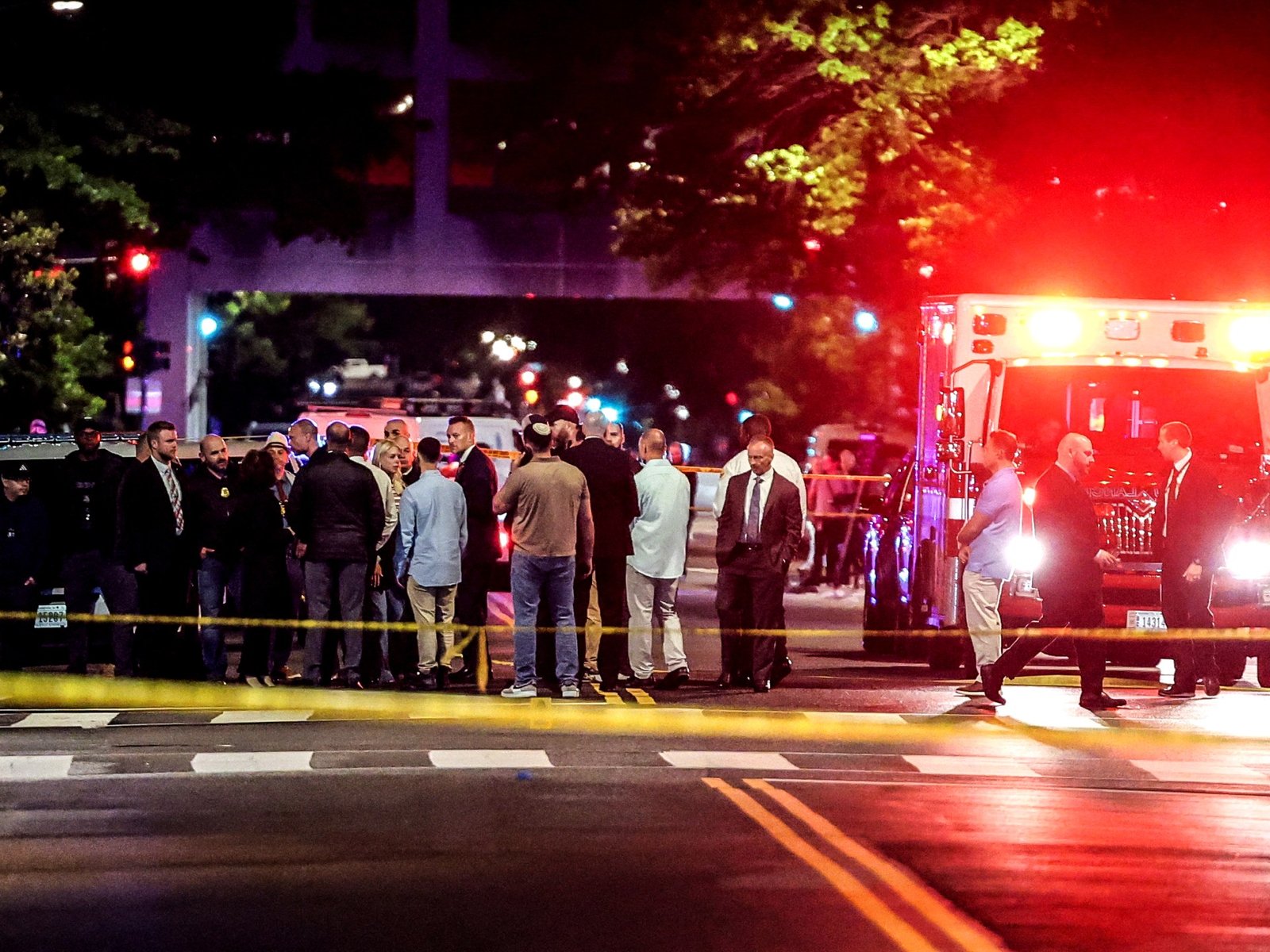
Here are more examples: Before his name was released, we learned that a gunman shouted, “Free, free Palestine,” in a shooting rampage that killed two Israeli embassy staff members outside the Capital Jewish Museum in Washington, DC, on May 21. Reports linked the suspect to what news outlets described as “pro-Palestinian” advocacy.
When on June 1 an Egyptian national attacked demonstrators voicing support of Israel in Colorado, the media also linked the incident to “pro-Palestinian protests”.
Softly landing on the term “pro-Palestinian” allows reporters to meet editorial standards for brevity. But brevity is not a fixed journalistic value. Accurately informing the public is.
The word “pro-Palestinian” has become political shorthand for a well-worn and misleading coupling: Palestinian advocacy and violence. Stripped of critical context, the term offers news consumers a reductive explanation – a violent act distilled and opaquely linked to “Palestinian” entities as imagined and understood through a narrow and distorted lens.
A failure to engage with contexts is not neutral omission. Rather, it is an affront to knowledge processes and a bow to power structures that govern mainstream journalistic storytelling.
What historical, cultural and religious claims do Palestinians make? Most news consumers in the West are unprepared to answer this question. In a closed information ecology, they rarely encounter these claims in full – or at all.
Like many who have followed the historical arc of all things Palestine or reported on it, I’ve used the term pro-Palestinian myself. It felt functional at the time: concise and seemingly understood.
Now, however, that shorthand misleads. Any word that is prefaced by “pro-” demands honest re-examination. When circumstances shift and new meanings emerge, the hyphenation clanks as anachronistic. We’re in one of those moments – a circumstance that is the epicentre of global opprobrium, humanitarian collapse and spectacular moral failure.
To describe activism and peaceful protests against the genocidal violence in Gaza as “pro-Palestinian” is disparaging. Opposing the strategic starvation of a trapped population is hardly pro-Palestinian. It is pro-humanity.
Is it “pro-Palestinian” to call for the end of violence that has claimed the lives of more than 18,000 children? Is it “pro-Palestinian” to call for the end of starvation that has killed dozens of children and elderly? Is it “pro-Palestinian” to express outrage at Gaza parents forced to carry body parts of their children in plastic bags?
The term “pro-Palestinian” operates within a false linguistic economy. It flattens a grossly unequal reality into a story of competing sides as if an occupied, bombarded and displaced people were an equal side to one of the most advanced armies in the world.
Gaza is not a side. Gaza is, as one UNICEF official put it, a “graveyard for children”. It is a place where journalists are killed for bearing witness, where hospitals are obliterated and universities reduced to rubble, where the international community is failing to uphold minimal standards of human rights.
In an era of impatience with rigour, “pro-Palestinian” is the rhetorical crutch that satisfies the manufactured need for immediate alignment (fandom) without critical thought. It permits bad-faith actors to stigmatise dissent, dismiss moral clarity and delegitimise outrage.
To call Elias Rodriguez, who carried out the shooting in Washington, DC, a “pro-Palestinian” shooter is a framing device that invites readers to interpret words of Palestinian solidarity as potential precursors to violence. It encourages institutions, including universities, to conflate advocacy with extremism and put a chill on free expression on campus.
Obfuscations in the conventions of reportage, euphemism or rhetorical hedging are the last things we need in this catastrophic moment. What’s needed is clarity and precision.
Let us try something radical: Let us say what we mean. When people protest the destruction of lineage and tillage in Gaza, they are not “taking a side” in some abstract pro-and-con debate. They are affirming the value of life. They are rejecting the idea that one people’s suffering must remain invisible for another’s comfort.
If people are advocating for human rights, then say so. If they believe that Palestinian life is worthy of dignity, safety and memory, say so.
And if they are calling for the “liberation” of Palestine and use phrases like “free Palestine” – phrases charged with decades of political, historical and emotional weight – that too deserves clarity and context. Liberation and freedom in most of these calls do not imply violence but a demand for freedom from occupation, siege, starvation, statelessness, and killing and imprisonment with impunity.
Collapsing these diverse expressions into a vague label like “pro-Palestinian” blurs reality and deepens public misunderstanding.
The views expressed in this article are the author’s own and do not necessarily reflect media’s editorial stance.
