
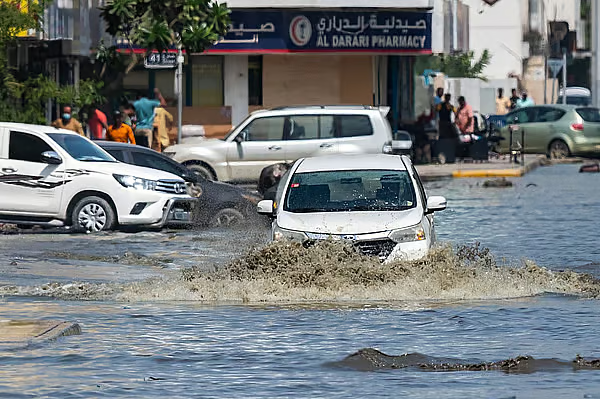
Following severe weather events, firms are strictly interpreting policies; growing consumer awareness drives shift to comprehensive coverage.
Insurance companies across the UAE are increasingly declining claims for vehicles damaged in floods, citing policyholder negligence as the key reason, senior industry executives have confirmed.
The tightening of claims assessment follows the heavy rainfall events of April 2024 and December 2025, which caused widespread flooding. Insurers are now strictly applying policy clauses that exclude coverage for deliberate or negligent driving into known hazards.
“A growing number of claims are being declined on grounds of negligence—such as driving into known flooded wadis, designated high-risk zones, or heavily flooded roads where exclusions apply,” said Ralph Kabban, CEO of United Insurance Brokers.
This stricter stance coincides with a maturing insurance market and rising operational costs. Higher repair bills, advanced automotive technologies, and the growing number of electric vehicles are pushing up premiums, leading insurers to carefully scrutinize claims.
The industry has simultaneously strengthened its response mechanisms. “Insurers have reinforced catastrophe-response frameworks, including surge capacity for claims assessment and clearer customer communication during peak events,” noted Anas Mistareehi, CEO of eSanad.
Improved public awareness and official warnings have also shaped the landscape. Hitesh Motwani, Deputy CEO of InsuranceMarket.ae, highlighted how timely government alerts during the December rains helped reduce risk exposure and limit losses.
Consumers are responding by opting for more robust coverage. There has been a noticeable rise in motorists upgrading from third-party to comprehensive policies, as well as increased uptake of home contents insurance, reflecting greater awareness of climate-related risks.
Regulatory oversight from the Central Bank of the UAE has further emphasized the need for timely settlement of valid claims, ensuring balance in the market.
Industry leaders describe the recent severe weather as a “stress test” that underscored the importance of preparedness, data-driven underwriting, and continuous customer education in an evolving risk environment.
