
The US will always prioritise Israel over the Arab world. Arab unity is the only way to establish security for all.
For decades, Gulf states operated under the assumption that their most important strategic partner was the United States. They built an extensive and multidimensional partnership with Washington, one that spanned security, energy, finance, and diplomacy.
In launching its war alongside Israel against Iran, however, the US sidelined its Gulf partners, ignoring their appeals and concerns. Now, as the Trump administration attempts to negotiate with Iran, it again appears to have the interests of Israel as its top priority; the concerns of its Arab allies are once again overlooked.
No matter how much these countries have done or how much more they are willing to offer, their interests will remain expendable in Washington whenever they collide with those of Israel.
An alliance of stability
Few alliances in modern history have been as deep or as mutually reinforcing as the one between the Gulf and the US, with with Gulf countries effectively opening their territory to a near-unconditional American military presence. Trade between the two sides exceeded $120bn in 2024, underpinned by Gulf investments in the US economy. This has been matched by a significant US presence in Gulf markets across technology, energy and infrastructure.
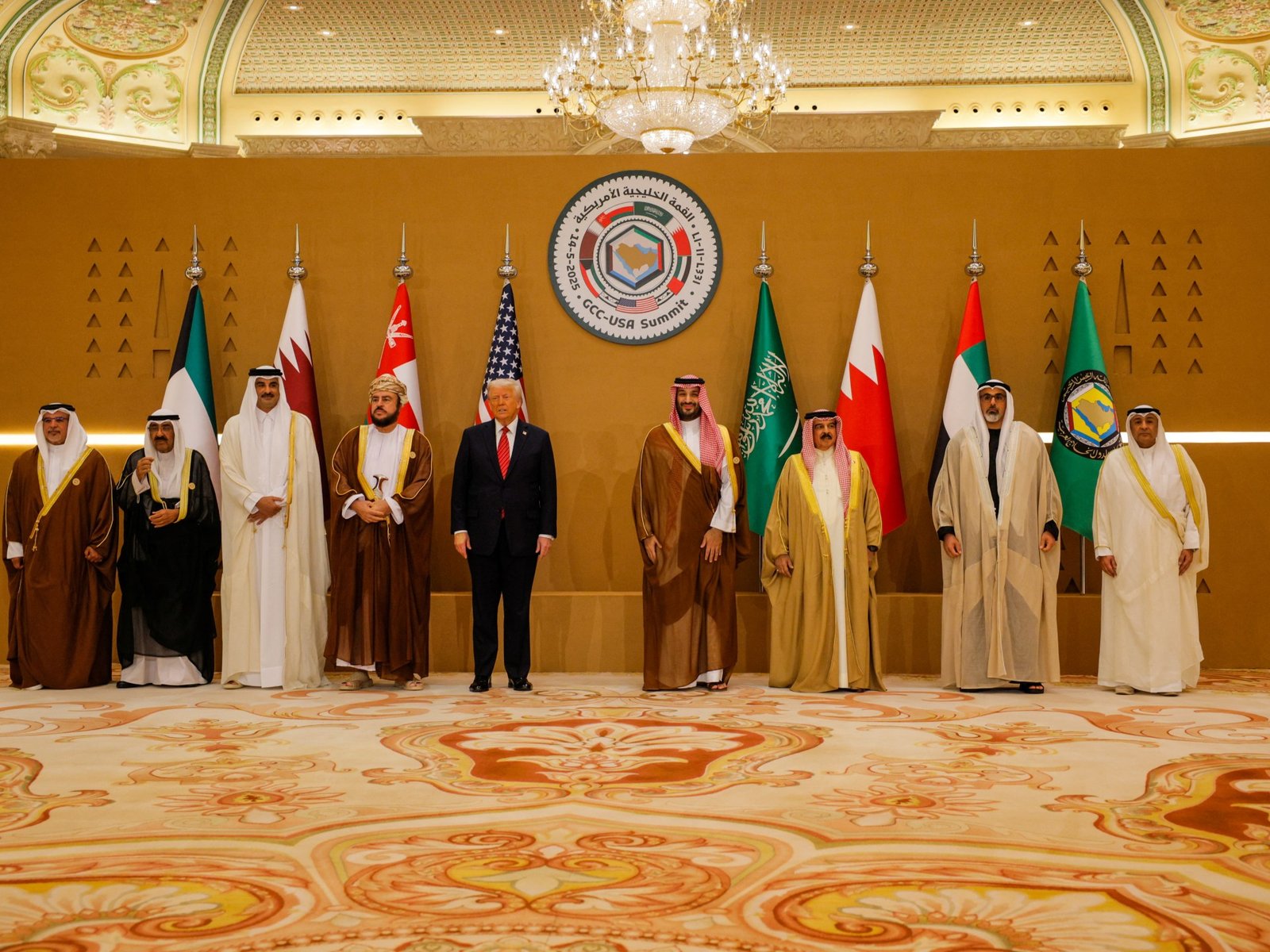
The scale of this interdependence was further underscored at the 2025 Riyadh summit, which yielded trade and investment agreements surpassing $2 trillion. In the same year, Gulf sovereign wealth funds channelled nearly $70bn into US assets.
Beyond headline figures, the Gulf has played a longstanding role in financing the US by recycling its Treasury bonds, helping sustain low borrowing costs and reinforcing the dollar’s global dominance, while supporting hundreds of thousands of US jobs across manufacturing, defence and technology sectors.
In return, Gulf governments expected something fundamental, that their core interests would be recognised, if not prioritised.
These interests had been remarkably aligned with US policy. They can be distilled into three pillars: first, economic diversification, a strategic shift away from dependence on hydrocarbons towards sustainable and resilient economic models; second, regional stability, a prerequisite for attracting investment, enabling growth, and sustaining long-term development; third, energy security, the uninterrupted flow of oil and gas, which was a pillar of global economic stability.
In pursuit of these goals, Gulf states invested heavily – financially and politically – in building a more stable regional order, actively pursuing diplomacy over confrontation. Saudi Arabia, for example, moved to end the war in Yemen, opened channels with Iran and Turkiye and deepened ties with countries such as Pakistan. These steps were not tactical gestures; they were part of a broader strategy to construct a flexible, cooperative regional architecture.
All this appeared to overlap with US interests. Washington had long claimed that its priorities in the Middle East included securing energy supply chains, stabilising oil markets, and ensuring regional stability so it could pivot towards Asia. And yet, the Trump administration chose to go against what it claimed to stand for.
Choosing chaos over stability
By now, it is clear that Washington has chosen to support Israeli Prime Minister Benjamin Netanyahu’s agenda of pursuing regional instability and domination.
By opting to advance Netanyahu’s expansionist objectives, even at the cost of its own interests, Washington has effectively placed the Strait of Hormuz and Bab al-Mandeb – the world’s most critical energy chokepoints – at risk, exposing global oil and gas markets to extreme volatility.
These US choices have placed the entire region, with the Gulf states at the forefront, into a state of chaos. We are likely to live with its aftershocks for years to come, driven by the fears of all states and compounded by growing power imbalances.
Here, Gulf and Arab states must recognise a fundamental reality: there can be no durable regional stability built on dependence on the US. Americans are not the sons of this land nor of this region. No matter how much the international system evolves, and the world becomes interconnected through globalisation and technological change, geography and demography will remain decisive in shaping interests. A power located thousands of kilometres away, rooted in a different demographic and geographic reality, cannot be depended upon to defend Arab interests.
Still, some states continue to hedge their bets on a “special relationship” with the US, turning their back on unity. The United Arab Emirates, for example, recently decided to leave OPEC, which had long given leverage to oil-producing Arab states over the US and the rest of the world. This move signals withdrawal rather than deepening cooperation and working through disputes. In the short term, this may look like the right decision to preserve national interest, but in the long term, it plays into the hands of those who want to divide and rule the Arab world – something that is ultimately not in the Emirati interest.
Instead of investing more resources in an alliance with Washington, Arab states should focus on intra-regional development aimed at economic, security and military self-sufficiency, akin in some respects to the Turkish and Iranian projects. They should focus on internal dialogue and greater cohesion and pursue a broader strategic framework that secures balances of power based on political partnership and constructive competition, rather than reliance on external patrons.
The views expressed in this article are the author’s own and do not necessarily reflect media’s editorial stance.
