
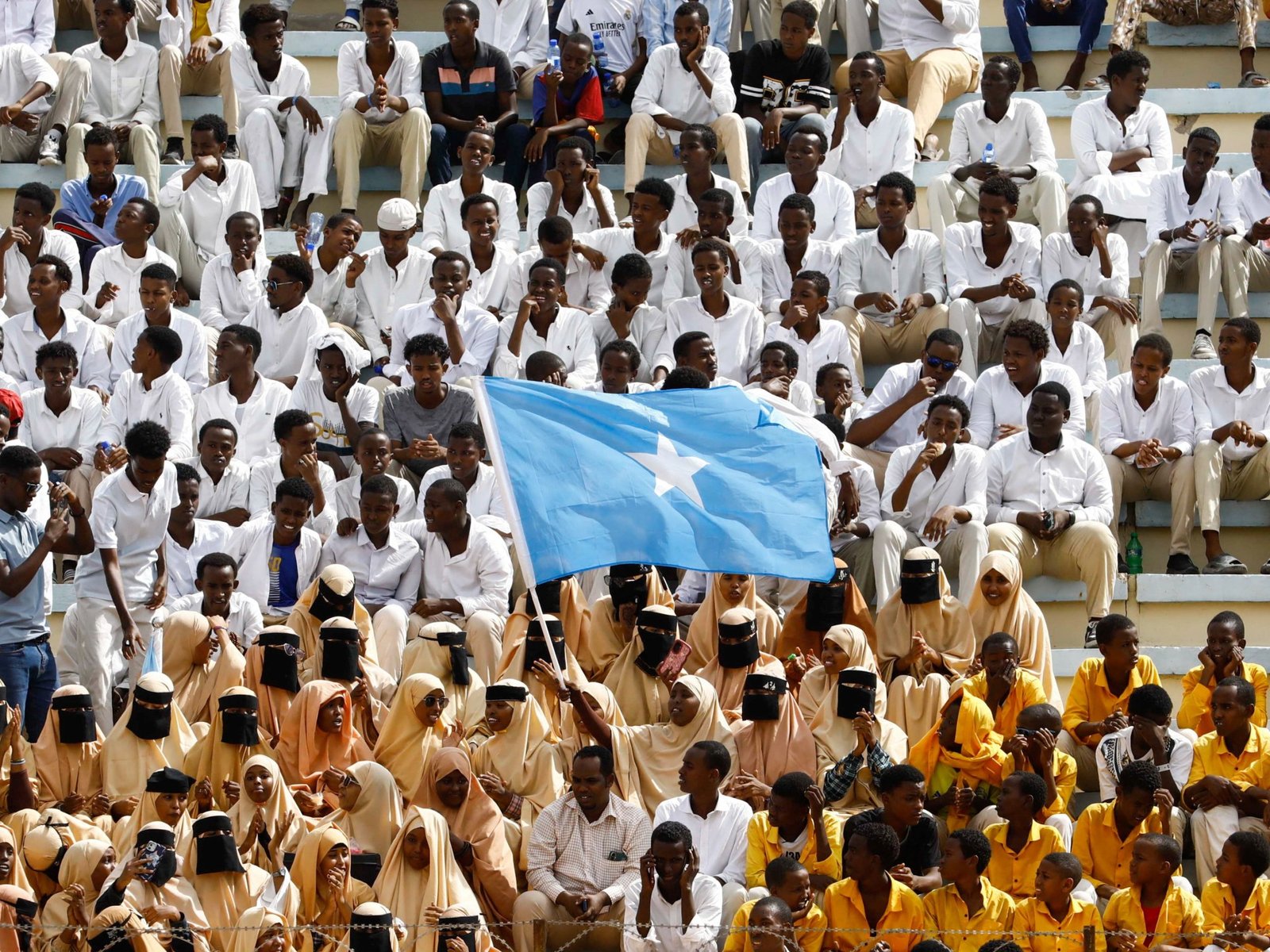
Somalia cuts UAE ties after Yemeni separatist’s illegal entry through Somaliland, exposing federal divisions.
Somalia tore up its agreements with the United Arab Emirates after UAE-backed Yemeni separatist leader Aidarous al-Zubaidi illegally entered the Gulf Arab country through the breakaway region of Somaliland, a top minister has said.
Ali Omar, Somalia’s state minister for foreign affairs, told media that the entry of al-Zubaidi, leader of the now-defunct Southern Transitional Council (STC), into Somali territory on January 8 was “the last straw” that prompted Mogadishu to cancel all deals with Abu Dhabi.
Recommended Stories
list of 2 items
- list 1 of 2Somali minister says Israel plans to expel Gaza Palestinians to Somaliland
- list 2 of 2Somalia cancels all agreements with UAE over alleged sovereignty violations
end of list
The move also comes in the wake of Israel’s world-first recognition of Somaliland, which has been roundly condemned across Africa and the Arab world and beyond.
The decision, announced by Somalia’s Council of Ministers on Monday, annuls agreements spanning port operations, security cooperation and defence.
“Using Somalia’s airspace, Somalia’s airfields to smuggle a fugitive is not something that Somalia condones,” Omar said, describing how al-Zubaidi allegedly travelled on a UAE-registered cargo plane from Berbera port to Mogadishu.
He said Somali authorities received the plane’s manifest, but al-Zubaidi’s name was not listed, suggesting he was hiding aboard.
Omar emphasised that while the incident triggered the decision, it reflected deeper frustrations with the UAE’s conduct in Somalia.
“It was one of the reasons we took this action. Not the reason, but one of the reasons,” he said. “We tried to deal with them diplomatically, but now we have decided to take action. Diplomacy didn’t work, and so now the constitution has to work.”
The announcement has exposed deep fractures in Somalia’s federal system, which grants member states significant autonomy over their affairs.
Within hours of the decision, two regions with close commercial and security ties with the UAE rejected Mogadishu’s authority to cancel the agreements.
Somaliland, which declared independence from Somalia in 1991 but lacks international recognition, also closely aligned with Abu Dhabi, rejected it too.
The minister said Somalia had exhausted diplomatic channels before taking action.
“We were hoping things would change, but it did not change,” Omar told media, adding that the country is “claiming its sovereignty again, and we are asking people to respect that.”
He drew parallels between Somalia’s situation and Yemen’s conflict, praising Saudi efforts to stabilise the country and noting that “a stable Yemen helps stabilise Somalia and vice versa”.
A broader regional convergence of interests with Riyadh forms the backdrop to this decision, following Saudi Arabia’s move to push the UAE-backed STC out of Yemen and its adoption of a more assertive posture against Abu Dhabi.
Somalia’s Information Minister Daud Aweis insisted the decision wasn’t taken under Saudi pressure in an interview with media.
The UAE has not commented on the allegations or Somalia’s decision to cancel agreements.
Somalia’s move comes amid anger in Mogadishu over what officials view as the UAE’s significant influence through large infrastructure investments in breakaway and autonomous regions.
According to the Africa Center for Strategic Studies, a Washington-based research institution, Emirati investments in East Africa total approximately $47bn, accounting for more than half of Gulf funding flowing into the area.
“There was a time that Somalia accepted any help that it could get, regardless of how it came through. But that has created challenges,” Omar said.
“Today we have an established government system that needs to be respected,” he added.
“Somalia is trying to reclaim its sovereignty and asking the international community and other partners to deal with state-to-state, rather than state-to-non-state actors.”
Israeli recognition fuels tensions
The breakdown in relations also follows Israel’s recognition of Somaliland in December, a move many Somalis believe the UAE facilitated. The UAE has not commented on that allegation.
While the UAE declined to sign a joint Arab-Islamic statement in December condemning Israel’s recognition of Somaliland, on January 7, it released a joint statement with the African Union pledging “support for Somalia’s sovereignty, territorial integrity, security and stability”.
Omar expressed confidence that no other countries would follow Israel’s lead, citing diplomatic outreach and continental concerns.
“I don’t think so. And I hope that will not happen. I think we have done enough diplomatic outreach throughout the world,” he said.
Dozens of countries and international bodies have condemned the move, and while Trump said he would not follow Israel’s decision, he added that the matter was under review.
He said other countries shared challenges with separatist movements and warned that it could open “a Pandora’s box”.
“I don’t think the world is ready to make that kind of action,” he said.
Omar also pointed to internal divisions within Somaliland on the issue of whether separate statehood in the north is the right move.
Somaliland, which declared independence in 1991, has been one of the most stable parts of Somalia and boasts its own currency, flag, central bank, and distinct political identity.
After Somaliland’s President Abdirahman Mohamed Abdullahi, known as Cirro, announced Israel’s recognition in December, he said that the existence of a separate state did not mean that the cultural, ethnic, and religious bonds among Somalis had been severed.
Omar, the Somali minister, explained that the region comprises five major clans, with two eastern clans having already separated from Somaliland to form the Northeast State, while similar dynamics are emerging in the west.
“There isn’t sufficient momentum for separatism,” he said.
The minister warned that reports of a potential Israeli military base in Somaliland pose broader regional security risks.
“The region has enough mess, enough trouble, enough insecurity. To bring Israel into the region will only create more challenges,” he said, cautioning that such a presence would attract armed fighters to an area where ISIL (ISIS) and al-Shabab already operate.
“This will only destabilise an already stable part of Somalia.”
