
The economic fallout from the Middle East conflict is already weighing on global growth and could intensify sharply even if a ceasefire holds, according to senior officials at the World Bank, who warned that emerging markets, Gulf economies and trade-dependent regions face the greatest risks from prolonged instability.
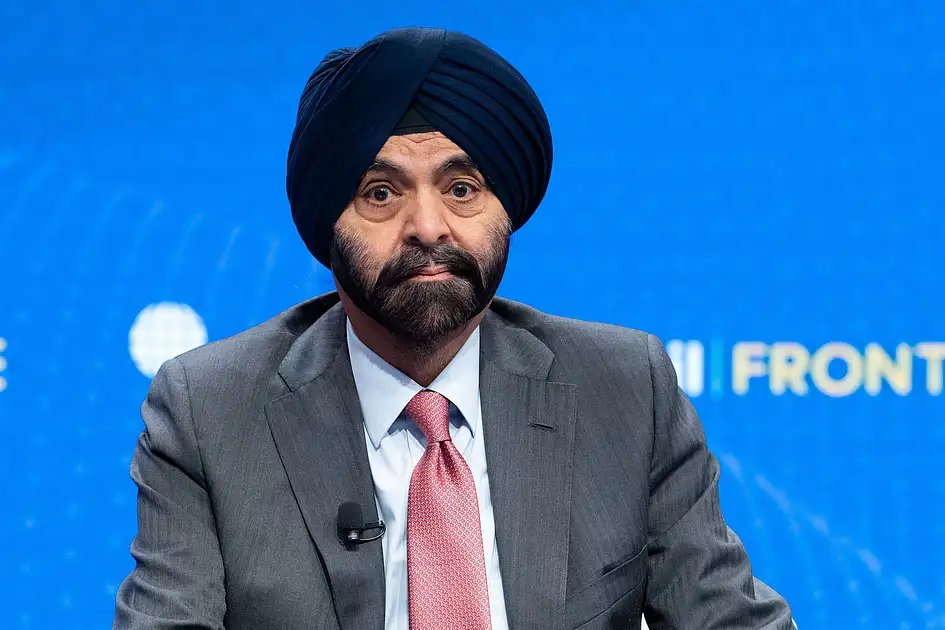
World Bank President Ajay Banga said the war is likely to shave between 0.3 and 0.4 percentage points off global growth under a baseline scenario that assumes hostilities ease following the ceasefire initiative announced by US President Donald Trump.
However, if the conflict persists or escalates, global growth could fall by as much as one percentage point — a significant setback for an already fragile recovery shaped by high inflation, tighter financial conditions and supply-chain disruptions.
The warning underscores how quickly geopolitical tensions in the Middle East can transmit shocks across energy markets, trade corridors and investor sentiment worldwide.
Emerging markets and developing economies are expected to bear a disproportionate share of the slowdown. The World Bank now projects their growth at 3.65 per cent in 2026, down from an earlier estimate of 4 per cent made in October. In a prolonged conflict scenario, growth could weaken sharply to 2.6 per cent as higher energy prices, weaker capital flows and rising borrowing costs strain fiscal balances.
Inflation pressures are also intensifying. Consumer price growth across developing economies is now forecast at 4.9 per cent in 2026, compared with an earlier estimate of 3 per cent. In a worst-case scenario linked to sustained supply disruptions and shipping bottlenecks, inflation could climb to 6.7 per cent.
“The cascading economic impact of the war is already underway,” Banga cautioned, noting that uncertainty alone is sufficient to delay investment decisions and weaken business confidence globally.
The regional outlook is even more fragile. According to the latest World Bank Economic Update for the Middle East, North Africa, Afghanistan and Pakistan (Menaap), the conflict has already disrupted energy infrastructure, trade routes and financial stability across several economies.
Excluding Iran, regional growth is now projected to slow sharply from 4.0 per cent in 2025 to just 1.8 per cent in 2026 — a downgrade of 2.4 percentage points from forecasts issued earlier this year. Gulf Cooperation Council economies and Iraq account for much of the revision, reflecting their exposure to energy markets, shipping risks and regional trade flows.
Growth across the GCC alone has been cut by 3.1 percentage points since January and is expected to moderate from 4.4 per cent in 2025 to about 1.3 per cent in 2026 if current conditions persist.
The closure risks surrounding the Strait of Hormuz — through which roughly a fifth of global oil supplies pass — have amplified volatility in energy markets, insurance premiums for shipping and logistics costs, adding to inflationary pressures worldwide. Tourism flows, remittances and cross-border investments are also expected to soften if uncertainty continues.
“The current crisis is a stark reminder of the work ahead for the region: not only to weather shocks, but to rebuild more resilient economies with stronger macroeconomic fundamentals, innovate and improve governance, invest in infrastructure, and boost employment-creating sectors,” said Ousmane Dione, World Bank vice president for the Middle East, North Africa, Afghanistan and Pakistan. “Peace and stability are preconditions for the region’s durable development.”
Despite the deteriorating short-term outlook, policymakers across the region are being urged to accelerate structural reforms, diversify growth engines and strengthen institutions to cushion future shocks.
Industrial policy is emerging as a central tool in that strategy. Governments across the region have increasingly relied on sovereign wealth funds and state-owned enterprises to expand strategic sectors, although the World Bank notes that outcomes have been mixed and depend heavily on governance quality and policy targeting.
“As countries face the heavy toll of the present conflict, it is important to also not lose sight of the work needed for long-lasting peace and prosperity,” said Roberta Gatti, chief economist for the Middle East, North Africa, Afghanistan and Pakistan at the World Bank.
For Gulf economies such as the UAE, strong fiscal buffers, diversified non-oil trade exceeding $1 trillion and expanding logistics and financial hubs are expected to help absorb part of the shock. However, analysts warn that sustained regional instability could still weigh on trade flows, tourism activity and investor sentiment if tensions persist beyond the near term.
The broader message from global institutions is clear: even a limited conflict in the Middle East now carries outsized consequences for the world economy — and the longer uncertainty lasts, the deeper those consequences are likely to become.
