
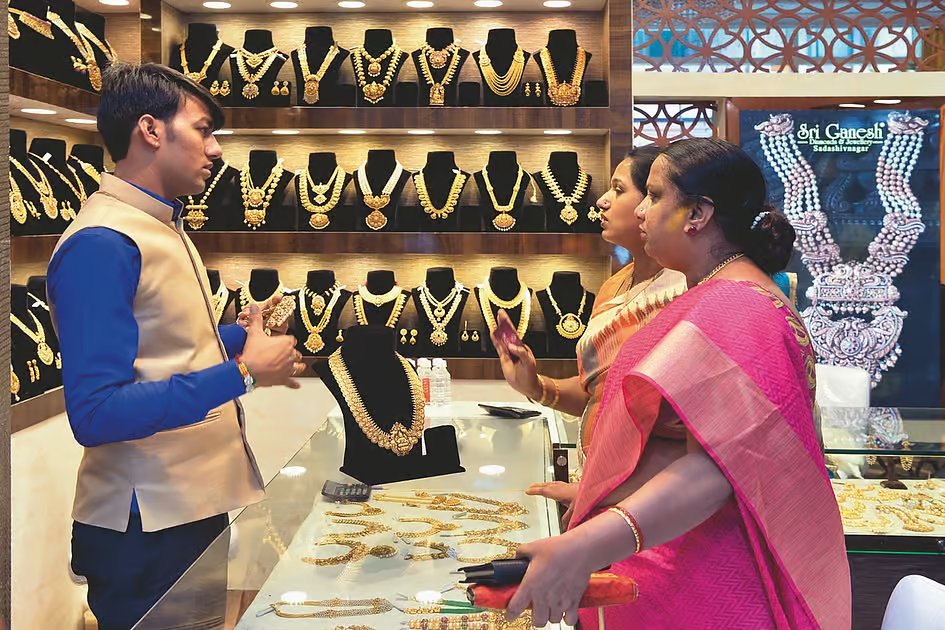
India’s gold jewellery industry is facing one of its sharpest demand shocks in recent years as record-high bullion prices collide with Prime Minister Narendra Modi’s appeal for citizens to defer gold purchases for a year to conserve foreign exchange reserves amid mounting geopolitical and oil market pressures.
Demand shock
The twin developments have triggered panic selling in jewellery stocks, dampened consumer sentiment ahead of the wedding season, and raised concerns about spillover effects across Gulf markets, especially in the UAE, a major trading and retail hub for Indian gold buyers.
Patriotic appeal
The pressure on the sector intensified after Modi urged Indians to avoid non-essential gold purchases, overseas travel, and luxury spending as India grapples with rising crude import costs linked to the Iran conflict and instability in the Strait of Hormuz.
India is the world’s second-largest consumer of gold, after China, and imports nearly all its bullion requirements. Gold is also India’s second-largest import item after crude oil, making the sector highly sensitive during periods of external account stress.
The appeal came when global gold prices were already near historic highs due to safe-haven demand, geopolitical tensions, and fears of prolonged energy market disruption. Retail gold prices in India have surged above Rs100,000 per 10 grams in several cities, severely hurting affordability.
Stocks sink
The combination of soaring prices and the Prime Minister’s call for restraint has created what traders describe as a “double whammy” for the jewellery industry.
Shares of major listed jewellers tumbled immediately after the announcement. Titan Company fell more than 5 per cent, Kalyan Jewellers dropped over 7 per cent, and Senco Gold plunged nearly 9 per cent amid fears of weakening sales and lower consumer footfall.
Industry bodies warned that the slowdown could severely affect employment across the labour-intensive gems and jewellery sector, which supports more than 10 million workers, including artisans, polishers, traders and small retailers.
Livelihood fears
Jewellery associations across India reacted cautiously, arguing that gold is not merely a discretionary luxury purchase but a deeply embedded social and cultural asset linked to savings, weddings, and household security. Singh Rajput, national president of the Akhil Bharatiya Swarnkar Sangh, said the burden of economic adjustment should not fall disproportionately on ordinary citizens and small jewellers.
“Gold is social security for millions of Indian families, especially in rural areas where households save for years to buy jewellery for weddings and emergencies,” he said.
Smaller jewellers are particularly vulnerable because they are already struggling with declining affordability due to elevated prices. Many traders reported a visible slowdown in customer footfall over the past few days despite the traditional resilience of Indian gold demand.
Oil pressure
Analysts said the Prime Minister’s appeal reflects the seriousness of India’s macroeconomic concerns, as crude prices remain elevated amid geopolitical tensions in West Asia.
Ajay Bagga, banking and market expert, said India was facing mounting energy import pressures and rising risks to its current account balance.
“India’s economy is highly exposed to elevated oil prices. The government is trying to reduce pressure on foreign exchange reserves by discouraging imports that are not immediately essential,” Bagga said.
Higher oil prices have increased inflation concerns and raised fears of fuel price hikes across India. Analysts estimate that every sustained increase in crude prices widens India’s import bill and adds pressure on the rupee.
Economists say the government’s message highlights growing anxiety over the country’s external vulnerability as shipping disruptions and war-risk premiums push up transportation and energy costs globally.
Cultural resilience
However, analysts believe the long-term cultural attachment to gold in India is unlikely to disappear completely.
India’s wedding industry, which accounts for a major share of annual gold jewellery demand, remains structurally strong. Rural buying, festival demand, and gold’s role as a hedge against inflation are expected to support consumption over time, although growth could weaken in the near term.
Gulf spillover
The bigger question for Gulf markets is whether India’s slowdown could spill over into the GCC, especially the UAE, which has long benefited from Indian tourist and expatriate gold buyers.
Dubai’s famed gold souks and jewellery retailers depend heavily on Indian shoppers, tourists, and wedding-related purchases. Any sustained decline in Indian buying sentiment could soften retail sales volumes in the UAE, especially in the mass-market jewellery segment.
However, analysts say the GCC impact may be moderate rather than severe.
Unlike India, Gulf gold markets are driven by a broader mix of international tourists, regional investors, and affluent residents. High oil prices tend to strengthen Gulf liquidity and consumer spending power, partially offsetting weaker Indian demand.
Dubai could continue attracting investors seeking safe-haven assets during geopolitical uncertainty. In recent months, bullion demand in the UAE has shifted from jewellery consumption toward investment bars, coins, and wealth-preservation products.
Some analysts believe Indian consumers may redirect part of their purchases to the Gulf if domestic restrictions tighten or import bottlenecks emerge in India.
Uncertain outlook
Industry executives say the immediate outlook nevertheless remains challenging.
The World Gold Council has previously warned that prolonged periods of elevated prices and economic uncertainty could suppress jewellery consumption, even if global investment demand for gold remains robust.
For India’s jewellery industry, the coming months may test the resilience of a sector already squeezed between record bullion prices, weakening affordability, and an extraordinary patriotic appeal to postpone one of the country’s most culturally entrenched purchases.
- India
