
The UAE has consolidated its position as the Middle East’s largest electric vehicle market for the second consecutive year, underlining the country’s rapid transition toward sustainable mobility and clean transportation as it accelerates efforts to build a low-carbon economy.
According to the latest Global EV Outlook 2026 report by the International Energy Agency, the UAE accounted for nearly 50 per cent of all electric vehicle sales in the Middle East in 2025, reflecting strong consumer demand, supportive government policies and massive investments in charging infrastructure.
The milestone comes as the UAE intensifies its drive to become a regional hub for future mobility technologies under the UAE Energy Strategy 2050 and the Net Zero by 2050 Strategic Initiative.
Industry analysts say the UAE’s leadership in EV adoption highlights how Gulf economies are increasingly leveraging clean technologies, smart mobility and digital infrastructure to diversify away from oil dependence while building globally competitive green economies.
The rapid market expansion has been driven largely by the National Electric Vehicles Policy launched by the Ministry of Energy and Infrastructure in 2023. The policy framework aims to accelerate EV adoption, expand charging networks and stimulate investments in sustainable transport solutions.
Sharif Al Olama, Undersecretary for Energy and Petroleum Affairs at the Ministry of Energy and Infrastructure, said the UAE’s leadership reflected a long-term national vision to position the country as a global centre for sustainable mobility and innovation.
He said advanced legislation and world-class infrastructure had created an attractive ecosystem for manufacturers and investors while supporting the country’s broader clean energy ambitions.
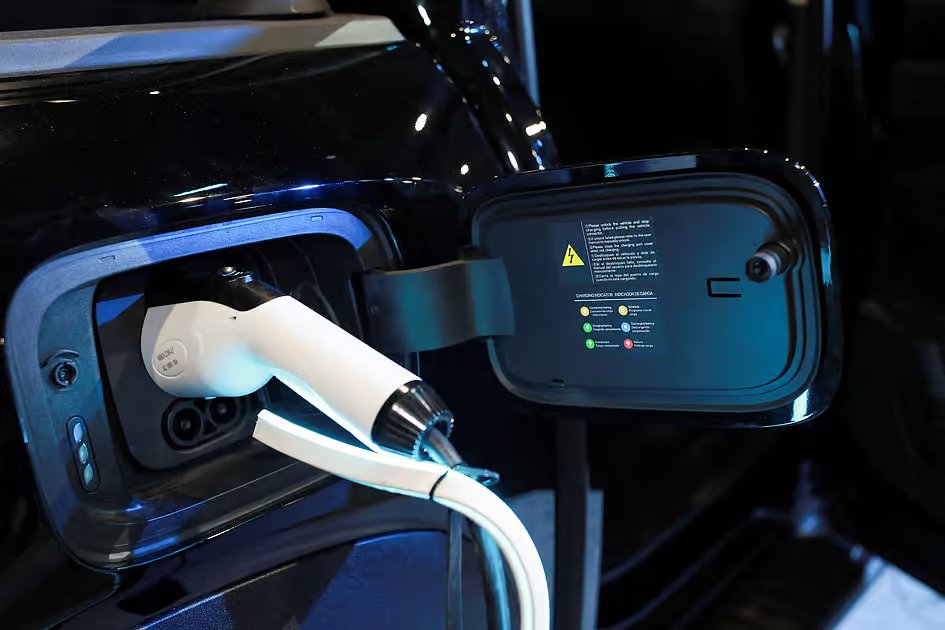
The UAE’s EV ecosystem has expanded rapidly over the past three years, with public and private sector investments transforming the charging landscape across major cities and highways.
Dubai alone had more than 1,270 public charging stations by mid-2025, while the Adnic-Taqa joint venture has committed to installing 500 additional charging points by 2028 as part of a wider national target to deploy 70,000 chargers by 2030.
Experts say the rapid charging build-out has significantly reduced “range anxiety”, one of the biggest barriers to EV adoption in he region, especially during the Gulf’s extreme summer temperatures.
A report by Mordor Intelligence projected that the UAE hybrid and electric vehicle market will grow from $3.84 billion in 2026 to more than $10.2 billion by 2031, representing a compound annual growth rate of over 21 per cent.
The report noted that the UAE’s EV transformation is being powered by strong government incentives, falling battery costs, transparent charging tariffs and the growing entry of Chinese electric vehicle manufacturers offering competitively priced models tailored to Gulf conditions.
Chinese brands are rapidly expanding their footprint in the UAE market through local partnerships, battery-swap technologies and diversified product offerings, intensifying competition for established European, American and Japanese manufacturers.
SUVs and crossover vehicles currently dominate the UAE EV market, accounting for nearly 47 per cent of total sales, reflecting consumer preference for larger vehicles suited to regional driving conditions.
At the same time, commercial fleet electrification is gathering momentum as logistics operators, taxi fleets and ride-hailing companies increasingly shift toward zero-emission vehicles to reduce fuel costs and meet sustainability targets.
Dubai’s Road 2.0 initiative has further accelerated the transition by requiring major fleet operators to publish zero-emission procurement plans, providing greater confidence for infrastructure investors and EV manufacturers.
The market is also benefiting from advances in battery technologies and ultra-fast charging systems. New-generation 800-volt platforms are now capable of reducing charging times to nearly 10 minutes, improving efficiency for commercial operators and long-distance drivers.
Industry experts believe the UAE’s favourable regulatory framework, modern infrastructure and strong purchasing power are positioning the country as a testing ground for next-generation mobility solutions in the Middle East.
The country has also emerged as a regional launchpad for smart mobility technologies, autonomous transport systems and AI-powered charging infrastructure, particularly in Dubai and Abu Dhabi.
Analysts say the UAE’s growing dominance in electric mobility could eventually reshape transport trends across the wider Gulf region as neighbouring countries intensify investments in sustainable infrastructure and green transport ecosystems.
With EV adoption accelerating and infrastructure expanding at a rapid pace, the UAE is increasingly emerging as one of the world’s most dynamic and future-ready mobility markets.
