
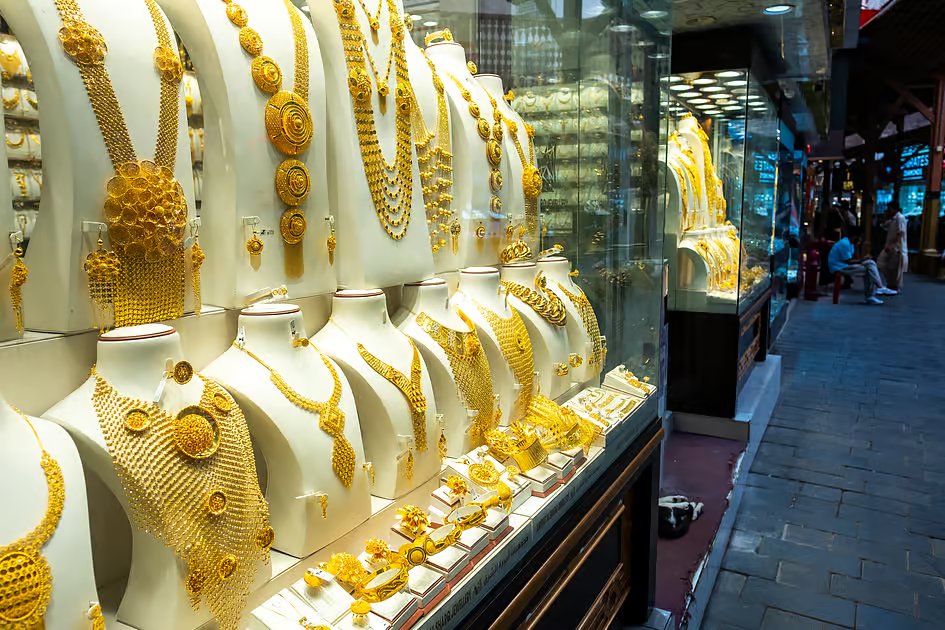
Gold may have lost some of its glitter in recent weeks, but analysts believe the world’s favourite safe-haven asset remains firmly on track for another record-breaking year, supported by relentless central bank buying, geopolitical uncertainty, a weakening faith in fiat currencies and surging investment demand.
After touching historic highs above $4,700 an ounce earlier this year amid the Middle East conflict and fears of global economic fragmentation, spot gold has entered a phase of consolidation. The metal was trading around $4,365 an ounce on Friday, pressured by stronger-than-expected US employment data that boosted the dollar and pushed Treasury yields higher.
The pullback has prompted some profit-taking, but most analysts view it as a temporary pause rather than the end of the bull market that has propelled gold to unprecedented levels over the past two years.
“The current correction appears to be driven more by short-term macroeconomic factors than any deterioration in gold’s long-term fundamentals,” market analysts say.
The immediate trigger was the stronger US Non-Farm Payrolls report, which reduced expectations of imminent Federal Reserve rate cuts. As a result, the dollar index climbed above the psychologically important 100 mark, making gold more expensive for holders of other currencies and weighing on investor sentiment.
Technically, gold is testing a critical support zone between $4,300 and $4,350. A sustained break below this range could trigger a deeper correction toward $4,200. However, analysts note that the longer-term uptrend remains intact as long as the metal holds above major support levels.
The broader outlook remains overwhelmingly positive.
Analysts at JPMorgan Chase expect gold prices to approach $5,000 an ounce by the end of 2026, with quarterly averages exceeding $5,050 and potentially rising toward $5,400 by late 2027. Several other institutions have also upgraded their forecasts this year as structural demand continues to outpace supply growth.
The latest annual Gold Focus report by Metals Focus forecasts an average gold price of $4,920 an ounce in 2026, representing a 43 per cent increase from last year’s average and another all-time high.
According to Matthew Piggott, director of Gold and Silver at Metals Focus, gold’s 44 per cent rally in 2025 was its strongest annual performance since 1980. While central bank purchases moderated from the record levels seen during the previous three years, official-sector demand remained significantly above historical averages and continued to provide a powerful floor for prices.
One of the most important shifts reshaping the market is the changing nature of demand.
For the first time on record, investment demand for bars and coins is expected to overtake jewellery as the largest component of global gold consumption. Demand for physical investment products rose sharply in both China and India last year as households sought protection against inflation, currency volatility and geopolitical risks.
According to Metals Focus, bar and coin demand in China rose 28 per cent in 2025, while India recorded a 17 per cent increase despite elevated prices.
The latest findings from the World Gold Council point to the same trend. The council recently reported that central banks purchased 244 tonnes of gold during the first quarter of 2026, extending a multi-year buying spree as countries diversify reserves away from the US dollar and strengthen financial resilience amid rising geopolitical tensions.
The World Gold Council has noted that central bank demand remains one of the most powerful structural supports for gold prices, with reserve managers continuing to view the metal as a strategic hedge against currency risk, sanctions and financial instability.
This official-sector buying has become increasingly important as the global economy enters a period marked by trade fragmentation, rising debt levels and geopolitical realignments.
While demand remains robust, supply growth continues to lag.
Metals Focus expects global mine production and recycling volumes to increase only modestly this year. Years of underinvestment, declining ore grades and rising production costs have limited the industry’s ability to respond quickly to higher prices.
The resulting supply-demand imbalance continues to support a bullish long-term outlook.
For investors in the UAE and India, the outlook is even more compelling because local prices are being supported by currency movements.
A weaker Indian rupee against the dollar has kept domestic gold prices elevated despite recent corrections in international markets. Analysts expect 24-carat gold in India to remain on a long-term upward trajectory, with projections ranging from Rs135,000 to Rs147,000 per 10 grams over the coming years.
In the UAE, gold continues to attract strong interest from both residents and tourists. Dubai’s status as one of the world’s largest physical gold trading hubs has helped sustain retail demand even as prices remain near record levels. Recent Dubai Gold and Jewellery Group rates have seen 24K gold trading above Dh520 per gram, compared with less than Dh300 just three years ago.
Market strategists remain divided on the timing of the next major rally but agree on the direction.
Ole Hansen, head of commodity strategy at Saxo Bank, has repeatedly highlighted central bank buying and geopolitical risks as key drivers underpinning the precious metal. Meanwhile, analysts at JPMorgan argue that a combination of lower real interest rates, continued reserve diversification and rising fiscal deficits could create the conditions for another powerful advance.
For now, gold appears to be taking a well-earned pause after an extraordinary run. Yet with central banks still buying aggressively, investors increasingly favouring physical bullion over jewellery, and geopolitical risks showing little sign of easing, the metal’s long-term bull story remains firmly intact.
If the current correction deepens, many analysts believe it may ultimately be remembered not as the end of the rally, but as the consolidation phase before gold’s next attempt to breach the $5,000 milestone.
