
[Editor’s Note: Follow media’ live blog for the latest regional developments with the US-Israel-Iran ceasefire now in effect.]
The closure of the Strait of Hormuz may have triggered one of the most severe energy supply disruptions in modern history, but the global oil market is already looking beyond the crisis, with analysts forecasting a return to oversupply and lower prices once the vital waterway reopens.
According to Fitch Ratings, the current oil price surge reflects a temporary logistical shock rather than a permanent loss of production capacity. The ratings agency expects Brent crude to average $87 a barrel in 2026, assuming the Strait of Hormuz reopens by the end of July after an effective five-month closure.
“The disruption has created a major supply-chain shock, but it does not fundamentally alter the long-term direction of the market,” Fitch said in a report. The agency expects rapid recovery in Middle East production, strong growth from non-Opec producers and potentially more aggressive Opec+ output policies to restore market surplus conditions in the final quarter of 2026.
Fitch projects global oil supply to be around 2.9 million barrels per day lower on average in 2026 than in 2025 due to the prolonged closure. However, the market could quickly swing back into surplus once exports normalise, with oversupply reaching as much as 4 million barrels per day in the fourth quarter, depending on Opec+ production decisions.
The agency believes global supply will exceed demand on average this year, creating a significant overhang that could drive prices sharply lower after the reopening of Hormuz.
The forecast comes as oil exporters across the Gulf accelerate efforts to diversify export routes and reduce dependence on one of the world’s most strategically vulnerable maritime chokepoints.
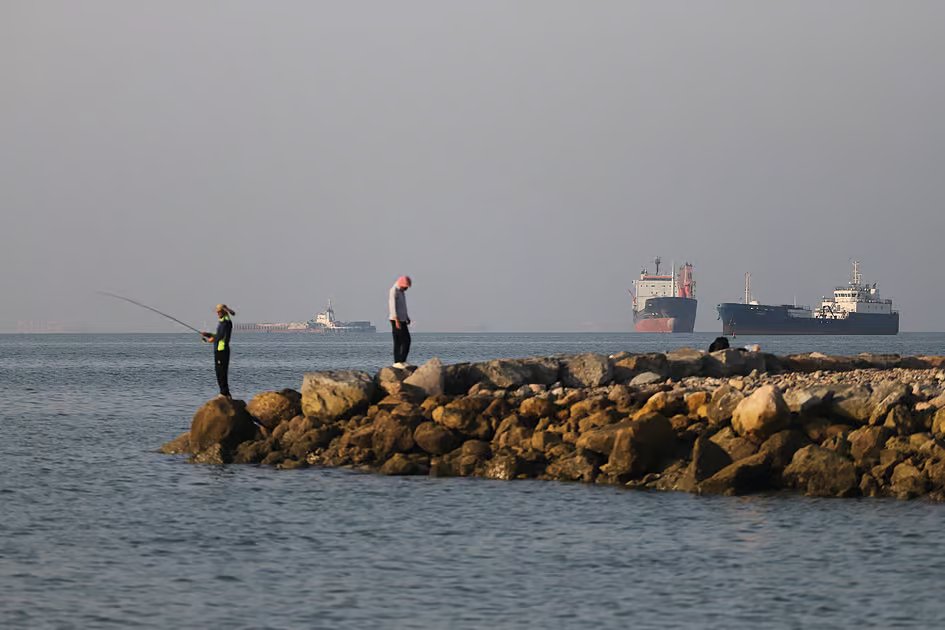
The prolonged closure has fundamentally altered energy security calculations throughout the region. When hostilities involving the US, Israel and Iran erupted earlier this year, many analysts assumed that even if Iran disrupted shipping through Hormuz, the interruption would be brief. Instead, the months-long closure forced oil-producing nations to activate contingency plans and fast-track alternative infrastructure projects.
The UAE has emerged as one of the most proactive players in this transformation. The country is pressing ahead with plans to expand pipeline connectivity to the emirate of Fujairah on the Gulf of Oman, strengthening its ability to bypass Hormuz and maintain uninterrupted exports.
The strategic urgency aligns with the UAE’s broader ambition to raise crude production capacity to 5 million barrels per day by 2027. Even before the conflict, Abu Dhabi had consistently argued for higher production allowances within Opec+ to utilise its expanding capacity. Alongside Saudi Arabia, the UAE remains one of the few producers globally with substantial spare production capacity.
Saudi Arabia has also demonstrated the value of infrastructure diversification. The kingdom’s East-West Pipeline has enabled it to continue exporting significant volumes through the Red Sea, reducing dependence on the Gulf route.
Iraq, by contrast, has emerged as one of the conflict’s biggest casualties. Production from its southern oilfields has reportedly plunged by nearly 70 per cent since the outbreak of hostilities, dropping to around 1.3 million barrels per day from 4.3 million barrels previously. With most of its export infrastructure tied directly to Hormuz, Iraq has been particularly vulnerable to disruptions.
The crisis is already reshaping investment priorities across the energy sector. Analysts increasingly believe that even after the conflict ends, Gulf producers will continue investing heavily in alternative export corridors, storage facilities and pipeline networks.
Hamad Hussain, commodities economist at Capital Economics, said the long-term impact of the crisis would extend far beyond temporary price spikes.
“The legacy of the crisis will result in the construction of infrastructure to bypass the Strait of Hormuz,” Hussain said. “The genie is out of the bottle given that the longstanding threat of Iran effectively closing the strait has now materialised.”
That view is echoed by industry leaders who argue that energy security now encompasses far more than production volumes alone. As Dr. Sultan Ahmed Al Jaber, Minister of Industry and Advanced Technology and Group CEO of Adnoc, recently observed, energy security is increasingly about routes, access, storage capacity and redundancy.
Meanwhile, signs are emerging that additional supply could return to the market from outside the Gulf. Venezuela’s oil production has climbed to around 1.25 million barrels per day following sanctions relief measures, while analysts also see potential for increased exports from Iran and Russia over time.
For oil markets, the immediate focus remains on the reopening of Hormuz. Yet the larger story may be the emergence of a new energy order in which resilience, diversification and multiple export routes become as important as production itself. Once the crisis subsides, analysts say, the world could face not a shortage of oil, but a renewed glut — and a fundamentally transformed map of global energy flows.
