
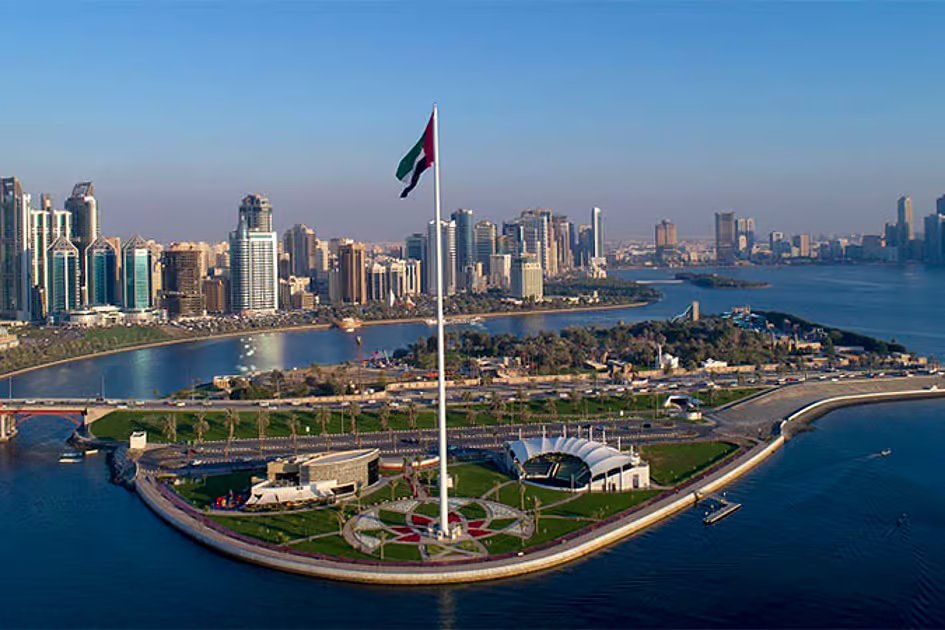
Sharjah’s property market is scaling new heights, posting record sales of Dh65.6 billion in 2025 while gearing up for the delivery of nearly 34,000 new homes over the next five years.
The combination of strong investor demand, rising foreign participation, major infrastructure upgrades and a growing population is creating one of the UAE’s most compelling real estate growth stories, according to a new report by Cavendish Maxwell. The market’s momentum has extended into 2026, with first-quarter transaction values jumping 41 per cent to Dh18.5 billion, signalling continued confidence in the emirate’s long-term prospects.
Nearly 9,980 properties changed hands during the first quarter of 2026, up 23 per cent year-on-year, underscoring the strength of demand despite regional geopolitical uncertainty. Analysts say Sharjah is increasingly benefiting from its position as a more affordable alternative to Dubai, attracting both end-users and investors seeking value, strong rental yields and long-term capital appreciation.
Ali Siddiqui, research manager at Cavendish Maxwell, said Sharjah is entering a new phase of economic and real estate expansion.
“Sharjah is entering a new phase of economic ambition. Foreign direct investment reached Dh7.7 billion last year, with the first half alone recording a 361 per cent surge to Dh5.5 billion. GDP grew 4.4 per cent, business licences climbed nearly 9 per cent to more than 77,500, and annual real estate transactions reached a record Dh65.6 billion,” Siddiqui said.
“All this signals an emirate at an inflection point. Foreign ownership reforms, major infrastructure investment and Sharjah’s relatively low living costs are driving unprecedented demand for property.”
The emirate’s transformation has accelerated since the introduction of freehold ownership reforms in 2022, which opened the market to a broader range of international investors. According to Cavendish Maxwell, buyers from nearly 130 nationalities acquired property in Sharjah last year, highlighting the growing diversity of its investor base.
While UAE nationals remain the largest buyer group, foreign investors are increasingly attracted by Sharjah’s affordability and the availability of integrated master-planned communities that offer lifestyle amenities, green spaces and family-friendly environments.
Residential demand continues to be supported by a large expatriate population, which accounts for more than 85 per cent of Sharjah’s residents. Many professionals working in Dubai are relocating to Sharjah in search of larger homes and lower housing costs while maintaining access to employment opportunities in the neighbouring emirate.
The affordability gap remains substantial. According to the report, residential rents in Sharjah are typically between 20 per cent and 30 per cent lower than in Dubai, reinforcing demand for both ownership and rental properties.
A key pillar of Sharjah’s growth story is the scale of future housing supply.
Around 33,700 residential units are scheduled for delivery by 2030, including 24,800 apartments and 9,900 villas and townhouses. The pipeline represents one of the most significant residential expansion programmes in the emirate’s history and reflects growing confidence among developers in long-term demand.
Major projects are being developed by leading players including Arada, Alef Group, BEEAH Group, Shurooq and Eagle Hills. Many of these projects are focused on integrated communities that combine residential, retail, leisure and educational facilities, mirroring trends that have reshaped residential development across the UAE.
Approximately 2,600 residential units were delivered during 2025, while another 1,100 apartments entered the market during the first quarter of this year.
Infrastructure investment is also strengthening Sharjah’s appeal.
The Dh40 billion Etihad Rail network is expected to enhance connectivity between Sharjah and other emirates, creating new demand drivers for residential and mixed-use developments. Meanwhile, the widening of Emirates Road (E611) is projected to reduce peak-hour travel times to Dubai by up to 45 per cent.
Sharjah is also investing heavily in aviation infrastructure. A Dh2.4 billion expansion of Sharjah International Airport aims to raise annual passenger capacity to 20 million by 2027, supporting tourism growth and economic diversification.
The tourism sector is already showing strong momentum. Sharjah Airport handled 19.5 million passengers in 2025, an increase of 14 per cent year-on-year. Hotel guest arrivals climbed 22 per cent to 2.1 million, while hospitality revenues rose 20 per cent to Dh780 million. Hotel occupancy reached 78 per cent, highlighting the strength of visitor demand.
With Sharjah’s population projected to increase from 1.98 million today to around 2.1 million by 2030, industry experts expect housing demand to remain robust.
While the arrival of substantial new supply will test the market’s absorption capacity, analysts believe Sharjah’s combination of affordability, infrastructure investment, economic growth and regulatory reforms will continue to underpin one of the UAE’s strongest real estate growth trajectories over the remainder of the decade.
