
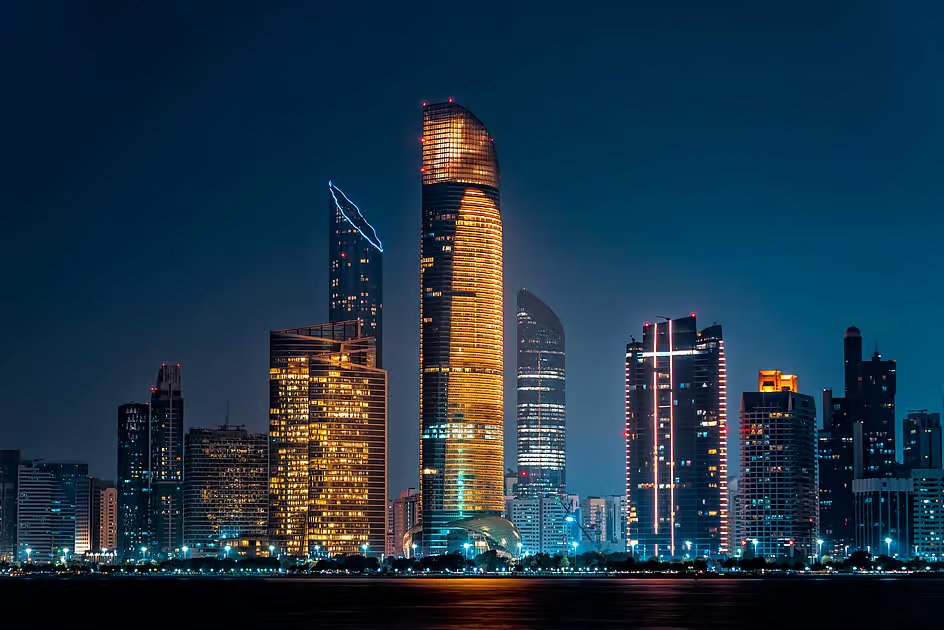
Abu Dhabi has reinforced its position as one of the world’s fastest-growing technology and innovation hubs after entering the global top 50 startup ecosystems for the first time, with the emirate’s startup ecosystem now valued at an impressive $73.4 billion, according to the latest Global Startup Ecosystem Report (GSER) 2026.
The achievement marks a major milestone in Abu Dhabi’s transformation from an oil-dependent economy into a knowledge-driven innovation powerhouse. The emirate ranked between 41st and 50th globally in the report, climbing more than 10 places in a single year, while its ecosystem value surged by an extraordinary 3,057 per cent over the past five years.
The GSER data shows Abu Dhabi’s startup ecosystem is now nearly three times larger than the global average ecosystem valuation of $25 billion, underscoring the effectiveness of a long-term strategy centred on technology, entrepreneurship, venture capital and advanced industries.
Industry experts say the emirate’s rapid ascent has been driven by a combination of government support, deep-pocketed investors, world-class infrastructure and a growing ability to attract global talent.
“Abu Dhabi’s rise is not accidental. It reflects years of deliberate investment in innovation, digital infrastructure, venture capital and regulatory frameworks designed to help startups scale globally,” said startup ecosystem analysts at Startup Genome, which compiles the annual report.
A key pillar of this growth story has been the success of Hub71, Abu Dhabi’s flagship global technology ecosystem, which has emerged as a major catalyst for startup creation and expansion. Since its launch in 2019, Hub71 has supported hundreds of startups and facilitated more than $2.7 billion in funding through its ecosystem partners and programmes.
The ecosystem today hosts companies spanning artificial intelligence, fintech, climate technology, digital assets, cybersecurity, healthtech and advanced manufacturing — sectors that align closely with the UAE’s broader economic diversification agenda.
According to Hub71 Chief Executive Officer Ahmad Ali Alwan, Abu Dhabi’s competitive advantage lies in its ability to offer founders access to capital, customers and regulators within a single integrated ecosystem.
The emirate has increasingly positioned itself as a real-world testing ground for emerging technologies. Regulatory sandboxes, government procurement programmes and industry partnerships allow startups to pilot innovations more quickly than in many traditional technology centres.
Artificial intelligence has emerged as one of Abu Dhabi’s strongest growth sectors. The presence of G42, one of the region’s leading AI and cloud computing companies, together with the activities of MGX and other technology investors, has helped establish the emirate as a focal point for AI investment and research.
The startup boom is also benefiting from Abu Dhabi’s broader economic momentum. The emirate’s non-oil economy has expanded rapidly over the past several years, supported by major investments in digital transformation, advanced manufacturing, financial services and renewable energy.
The growth of the ecosystem has been reinforced by the emergence of Abu Dhabi Global Market (ADGM) as a leading international financial centre. ADGM reported record growth in assets under management and active business licences in 2026, helping attract venture capital firms, fintech companies and family offices seeking exposure to emerging technologies.
Venture capital activity across the UAE has also remained among the strongest in the Middle East and North Africa. According to multiple industry studies, the UAE consistently attracts the largest share of startup funding in the region, with Abu Dhabi and Dubai accounting for the bulk of investment activity.
Experts note that Abu Dhabi’s appeal extends beyond capital. Long-term residency programmes, including the UAE’s Golden Visa initiative, competitive operating costs, modern infrastructure and a high quality of life have made the emirate increasingly attractive to entrepreneurs relocating from Europe, Asia and North America.
The GSER report highlighted Abu Dhabi’s particular strengths in AI, fintech, climate technology, Web3 and research and development capabilities. These sectors are expected to benefit further from growing public and private investment as governments and corporations accelerate digital transformation efforts.
Analysts believe the emirate’s next challenge will be converting startup growth into globally recognised scale-ups and unicorns. However, they say the foundations are already in place.
“Abu Dhabi has successfully moved beyond ecosystem-building to ecosystem-scaling,” said J.F. Gauthier in previous comments on emerging innovation hubs.
“The cities that will lead the next generation of innovation are those that combine capital, talent, regulation and market access. Abu Dhabi is increasingly demonstrating all four.”
With billions of dollars flowing into technology, a rapidly expanding venture capital landscape and a strategic focus on future industries, Abu Dhabi’s entry into the world’s top startup ecosystems signals that the emirate is no longer merely participating in the global innovation race — it is becoming one of its emerging leaders.
