
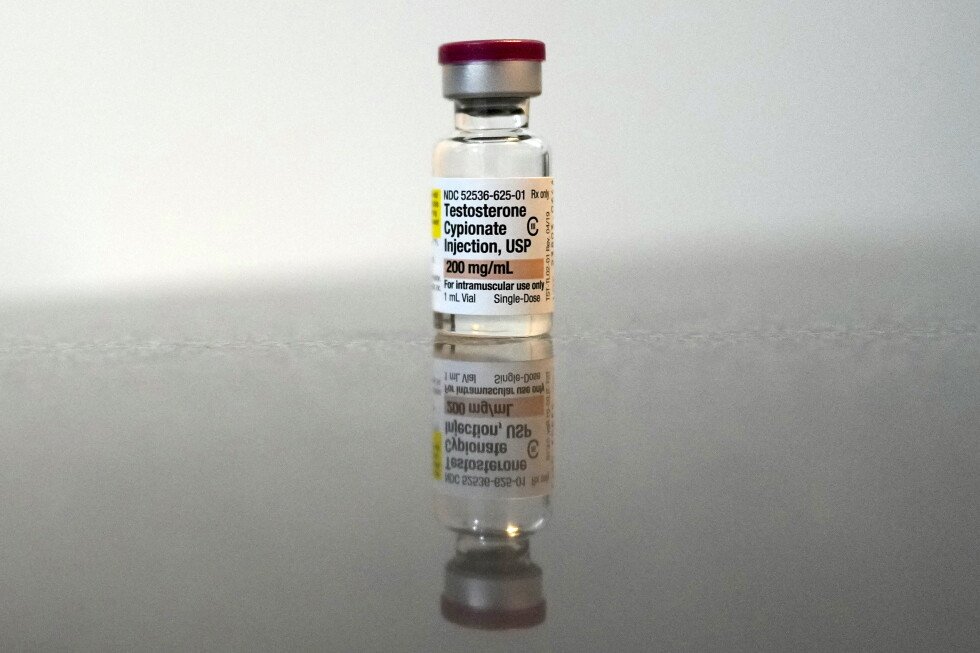
WASHINGTON (news agencies) — Officials under President Donald Trump want to make it easier for men to get a prescription for testosterone, the latest shift in a decades-long debate over the benefits and risks of replacing the hormone that affects sex drive, mood and other health factors.
The move, backed by Health Secretary Robert F. Kennedy Jr. and other top officials, aligns with the advice of many online influencers and podcasters, including men’s health gurus who tout the hormone as a way to boost muscle and energy. On Tuesday, Defense Secretary Pete Hegseth said the military would begin screening for low testosterone and offering the hormone as a way to help troops operate at their “absolute best.”
The notion of testosterone as an all-purpose elixir for strength and vitality is not supported by the science. But medical experts say a decade of new research has bolstered the case for testosterone’s benefits for sexual health while allaying concerns about its impact on the heart.
“Many providers have been trained for years that these were real issues, and they were scared to get a testosterone reading from a patient or offer them testosterone therapy,” said Dr. Justin Dubin, a urologist at Baptist Health Miami Cancer Institute.
Last year, the Food and Drug Administration removed a bold safety warning about possible heart risks with testosterone pills, gels, injections and patches, based on recent data that showed no increase in those problems.
Last month, the agency proposed rewriting prescribing instructions to clear the way for using testosterone against age-related symptoms, such as low libido and erectile dysfunction. Currently the label emphasizes that the hormone is only approved for abnormally low testosterone levels caused by serious medical conditions or injury.
But experts who prescribe the drug say those patients are a small segment of people seeking help.
“The majority of people we see in our office are regular men complaining of these common symptoms because they’re dramatically affecting their quality of life,” said Dr. Helen Bernie, a urologist and director of sexual health at Indiana University.
Testosterone was first approved in the 1950s to treat hypogonadism, a condition defined by low testosterone levels caused by medical problems affecting the testes or other organs.
Testosterone declines naturally with age and can effect sexual function, mood, bone density and other measures. The question of how to diagnose and treat men with those issues has long been debated by researchers.
“These symptoms overlap with symptoms of human aging in men, so there’s a high risk of misdiagnosis and that’s led to the controversy” said Dr. Shalender Bhasin, of Harvard Medical School, who has co-authored several recent testosterone studies and guidelines.
Bhasin says increased willingness to prescribe testosterone reflects growing acceptance of the seriousness of men’s sexual health problems, beginning with the introduction of Viagra for erectile dysfunction in the 1990s.
Bhasin helped write the Endocrine Society’s current guidelines for testosterone, which recommend discussing testosterone with men who have documented symptoms and two blood test results confirming low hormone levels. One recent study by Michigan researchers found that just 12% of men getting a prescription met that criteria.
The potential for overprescribing testosterone is real and helped lead to current restrictions.
In the early 2010s, drugmakers spent millions on TV ads for gels, patches and other products promising relief from “low T,” including a laundry list of symptoms like fatigue, muscle loss, brain fog and weight gain.
