
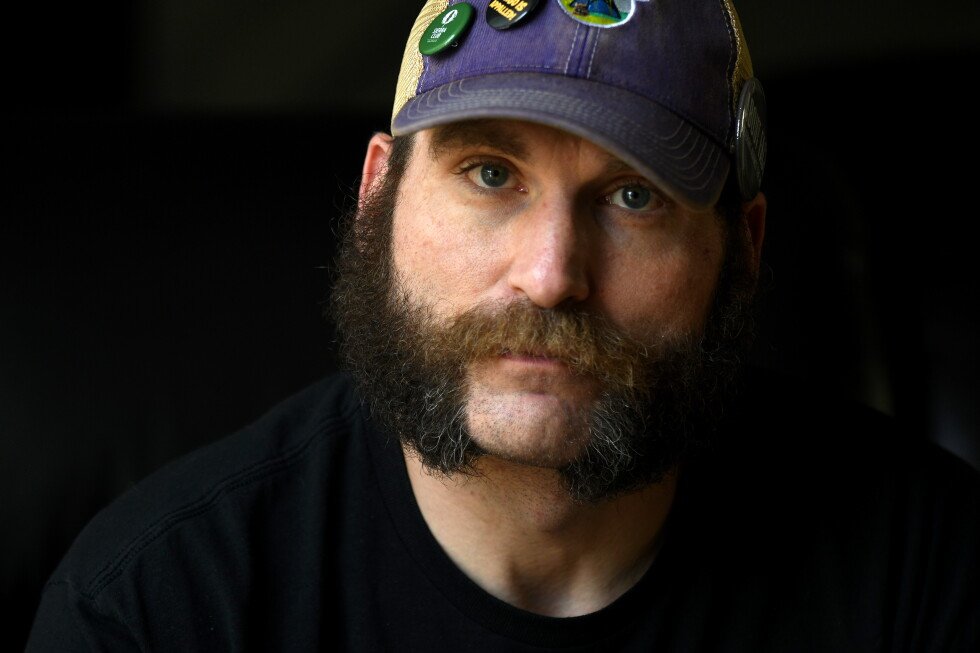
WASHINGTON (news agencies) — When Joe Shearer was a Marine fighting in Iraq, a blast from an enemy mortar round knocked him down and made him vomit. He got up and kept going despite a searing headache.
When a roadside bomb struck his Humvee convoy months later, the explosion’s shock wave swept through his body before headaches and sleeplessness set in for days.
“As long as you got back up and could go back on patrol, that’s kind of what you did,” he said.
Shearer, 40, of Colorado Springs, Colorado, links both events in 2005 to traumatic brain injuries, which were only recently diagnosed. He’s still plagued with symptoms ranging from dizziness and migraines to forgetting daily tasks and responsibilities to his wife and children.
___
EDITOR’S NOTE — This story includes discussion of suicide. If you or someone you know needs help, the national suicide and crisis lifeline in the U.S. is available by calling or texting 988. There is also an online chat at 988lifeline.org.
___
The lasting effects of traumatic brain injuries are raising fresh concerns about the toll of the Iran war on American troops who are suffering those wounds during a conflict without a clear end. Nearly 700 U.S. service members have been wounded by drone and missile attacks on bases in the Middle East and other fighting. Most have experienced traumatic brain injuries and returned to duty, according to public statements from military officials.
The Pentagon’s chief spokesman, Sean Parnell, last month called the vast majority of injuries over a two-week period “minor concussions.”
Concussions often are termed “mild” TBIs, and many people recover within weeks. But sometimes those with seemingly mild initial symptoms go on to have problems persisting for months or years, such as headaches, dizziness or difficulties with memory or attention that’s sometimes called “brain fog.”
Doctors have no way to predict who will suffer lasting problems, a vexing enough question that there’s medical debate over whether to retire the term “mild TBI.” Repeated blows are known to increase the chances of lasting problems, including a degenerative brain disease called chronic traumatic encephalopathy, or CTE. It has gained attention for links to deaths in the National Football League and other sports.
It’s imperative that people recover from a concussion before doing activities that put them at increased risk of another, said Dr. David Okonkwo, a University of Pittsburgh brain trauma specialist.
Doctors also are still learning how explosive blasts injure the brain versus a physical blow.
“The blast wave itself can be injurious,” said Dr. James Kelly, an emeritus professor of neurology at the University of Colorado School of Medicine and chief medical scientist at the Invisible Wounds Foundation, which is focused on military brain injuries. “It’s a different cellular injury. Blast is a different thing than a blunt injury to the head.”
Troops have been facing a new type of warfare with Iran in which drones may explode closer to their heads, as opposed to the ground-level roadside bombs and improvised explosives that were more common in the wars in Iraq and Afghanistan.
