
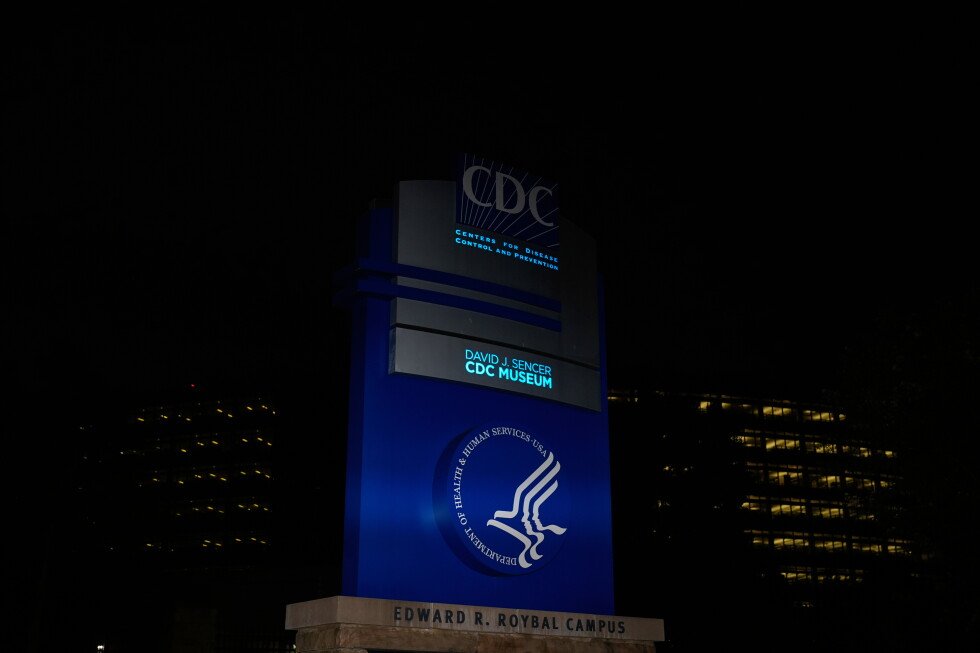
NEW YORK (news agencies) — The Centers for Disease Control and Prevention still has an Alzheimer’s disease program. Congress appropriated $41 million to it this year. There’s just no one staffing it.
Then there’s the agency’s Office on Smoking and Health. Congress allocated $246 million for that. Its staffers were cut, too.
Same for the epilepsy program. Its sickle cell disease data collection operation. Its rape prevention unit.
Think of them as the CDC’s zombie programs — they appear to be alive, at least according to legislation and congressional appropriations. But functionally they are dead or nearly dead, because the CDC experts who did the work were laid off by President Donald Trump’s administration or remain on leave — paid but not allowed to do their jobs.
The Atlanta-based CDC is charged with protecting Americans from preventable health threats. When Dr. Erica Schwartz became the agency’s latest director last week, she inherited these zombie programs and congressional pressure to bring some of them back to life.
In Schwartz’s confirmation hearing, U.S. Sen. Tim Kaine pressed her to restart the smoking office’s dormant activities.
“This is an office that is in statute, and it’s an office that receives congressional appropriations,” said Kaine, a Virginia Democrat. “Will you follow the law if we appropriate money for this mission and the CDC?”
“I will always follow the law,” Schwartz replied.
The decision to freeze the programs came from Schwartz’s political bosses.
In April 2025, Trump’s Republican administration sent layoff notices to thousands of employees at the CDC and other federal health agencies. It was part of a sweeping effort to remake the U.S. Department of Health and Human Services and consolidate some of its programs under a new subagency called the Administration for a Healthy America. That reorganization hasn’t happened, amid congressional pushback.
But the layoffs did. Led by then-adviser Elon Musk and the Department of Government Efficiency, the cuts affected researchers, scientists, doctors, support staffers and senior leaders, leaving the government without many of the key experts who long guided U.S. decisions on medical research, drug approvals and other issues.
The cuts were challenged in lawsuits and through pleas to legislators.
Some were reversed. Drastic cuts to the CDC’s National Institute for Occupational Safety and Health, for example, were rescinded. Other reinstatements included staffers at labs that test for sexually transmitted diseases and support lead poisoning control.
But many of the cuts endured. As a result of litigation, staffers who initially were laid off have been placed on administrative leave while the fight moves through the legal system, paid to not do their jobs.
Not all public health efforts associated with every impacted program stopped. Most of the CDC’s budget is passed on to state and local programs, and much of grant processing has continued.
