
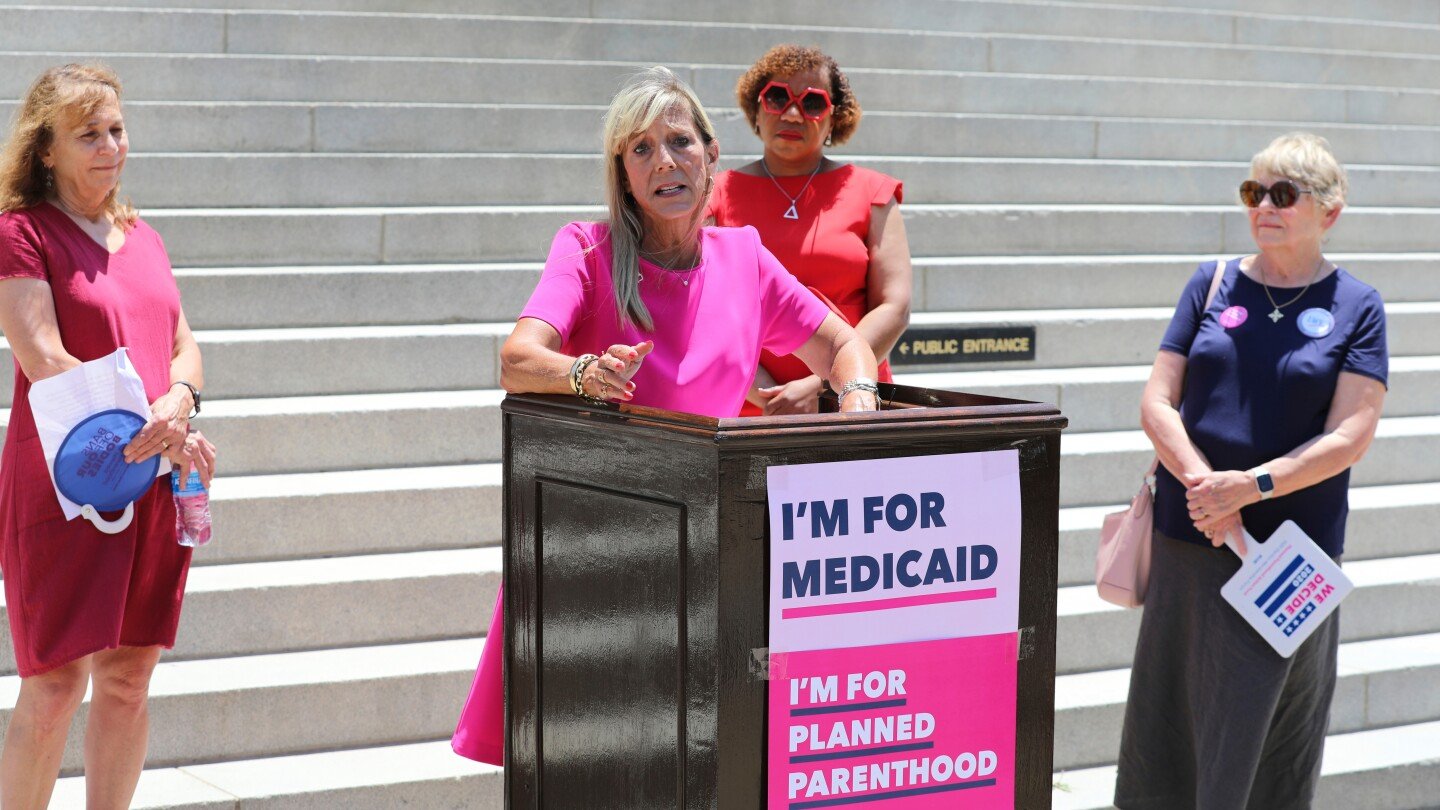
The U.S. Supreme Court ruled Thursday that states can bar Medicaid payments to Planned Parenthood, the nation’s largest abortion provider.
The federal government and many states already block using Medicaid funds to cover abortion. But the state-federal health insurance program for lower-income people does pay for other services from Planned Parenthood, including birth control, cancer screenings and testing and treatment for sexually transmitted infections.
The ruling comes at a moment when Congress is considering blocking Planned Parenthood from receiving any federal Medicaid funding, a move that the group says would force hundreds of clinic closings — most of them in states where abortion remains legal.
Here are things to know about the situation:
This legal dispute goes back to a 2018 executive order from South Carolina Gov. Henry McMaster that barred abortion providers from receiving Medicaid money in the state, even for services unrelated to abortion.
In its 6-3 ruling, the Supreme Court overruled lower courts and said that patients don’t necessarily have the right to sue for Medicaid to cover their health care from specific providers.
Abortion opponents hail it as a victory on principle.
“No one should be forced to subsidize abortion,” CatholicVote President Kelsey Reinhardt said in a statement.
Supporters of Planned Parenthood see the ruling as an obstacle to health care aside from abortion.
Planned Parenthood “provides services for highly disadvantaged populations and this will mean not only that many women in the state will lose their right to choose providers, but it will also mean that many women will lose services altogether,” said Lawrence Gostin, who specializes in public health law at Georgetown Law.
For many people with Medicaid, Gostin said, Planned Parenthood is a trusted service provider, and it’s often the closest one.
Others emphasize that the people who could be most impacted are women who already face the greatest obstacles to getting health care.
“People enrolled in Medicaid, including young people and people of color, already face too many barriers to getting health care,” Kimberly Inez McGuire, the executive director of Unite for Reproductive & Gender Equality, said in a statement. “This decision makes a difficult situation worse.”
Planned Parenthood has two clinics in South Carolina, one in Charleston and one in Columbia.
Combined, they’ve been receiving about $90,000 a year from Medicaid out of nearly $9 billion a year the program spends in the state.
