
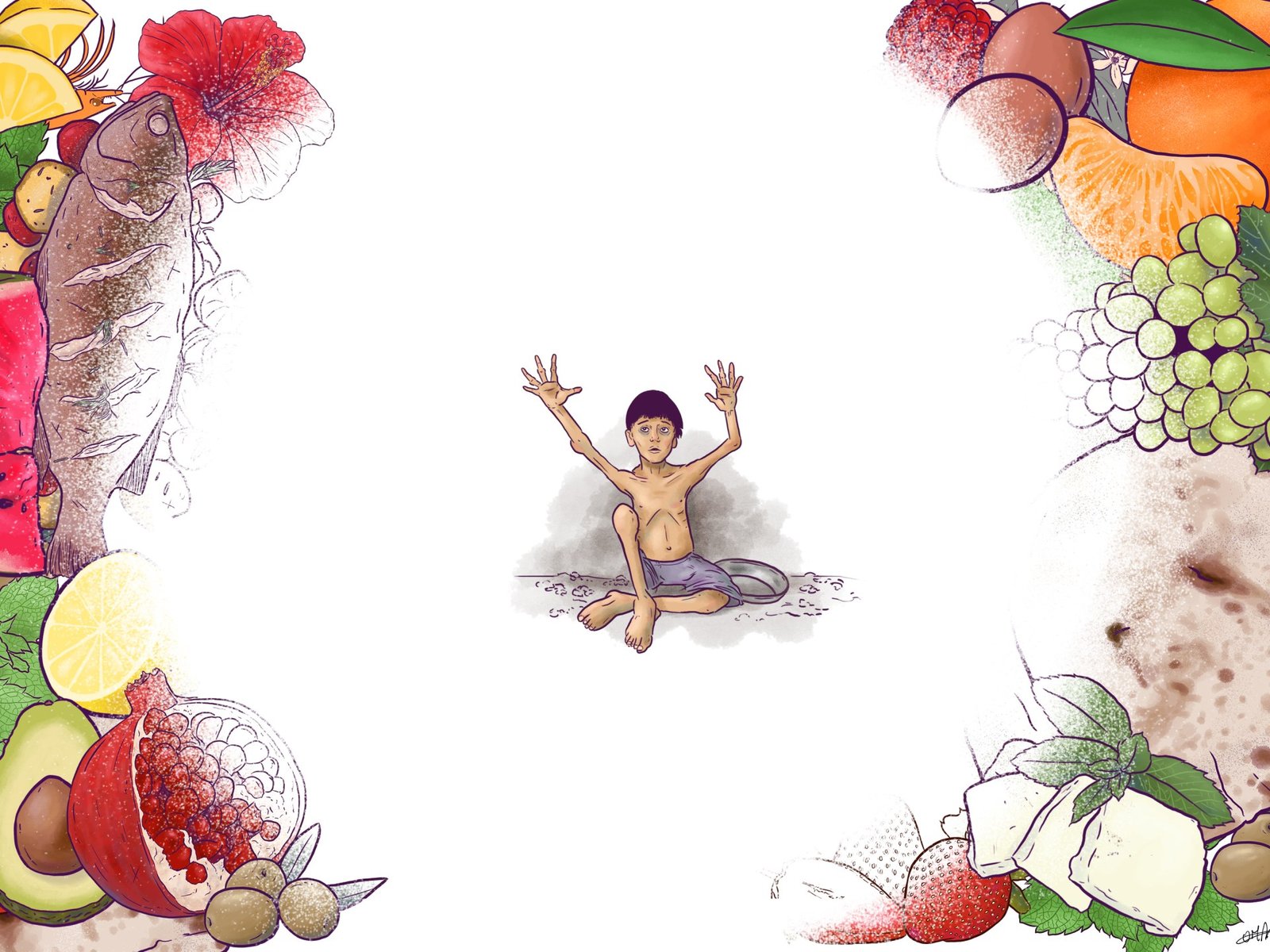
‘We are starved by the Israeli occupation,’ says Taqwa al-Wawi in Gaza, where all she thinks about is how hungry she is.
This is not a warning.
Famine has already arrived in Gaza. It is not a metaphor, nor is it a prediction. It is daily.
It is the child who wakes up asking for biscuits that no longer exist. The student who studies for exams while faint from hunger.
It is the mother who cannot explain to her son why there is no bread.
And it is the silence of the world that makes this horror possible.
Children of the famine
Noor, my eldest sister Tasneem’s daughter, is three; she was born on May 11, 2021. My sister’s son, Ezz Aldin, was born on December 25, 2023 – in the early months of the war.
One morning, Tasneem walked into our space carrying them in her arms. I looked at her and asked the question that wouldn’t leave my mind: “Tasneem, do Noor and Ezz Aldin understand hunger? Do they know we’re in a famine?”
“Yes,” she said immediately. “Even Ezz, who’s only known war and ruins, understands. He’s never seen real food in his life. He doesn’t know what ‘options’ are. The only thing he ever asks for is bread.”
She imitated his baby voice: “Obz! Obza! Obza!” – his way of saying “khobza” (a piece of bread).
She had to tell him, “There’s no flour, darling. Your dad went out to look for some.”
Ezz Aldin doesn’t know about ceasefires, borders, or politics. He doesn’t care about military operations or diplomatic statements.
He just wants one small piece of bread. And the world gives him nothing.
Noor has learned to count and recite the alphabet from her mother. Before the war, she loved chocolate, biscuits. She was the first grandchild in our family, showered with toys, snacks, and little dresses.
Now, every morning, she wakes up and turns to her mother with wide, excited eyes. “Go buy me 15 chocolates and biscuits,” she says.
She says 15 because it’s the biggest number she knows. It sounds like enough; enough to fill her stomach, enough to bring back the world she knew. But there’s nothing to buy. There’s nothing left.
Where is your humanity? Look at her. Then tell me what justice looks like.
Killed after five days of hunger
I watched a video that broke my heart. A man mourned over the shrouded bodies of seven of his family. In despair, he cried, “We’re hungry.”
They had been starving for days, then an Israeli surveillance drone struck their tent near al-Tabin School in Daraj, northern Gaza.
“This is the young man I was raising,” the man in the video wept. “Look what became of them,” as he touched their heads one last time.
Some people still don’t understand. This isn’t about whether we have money. It’s about the total absence of food. Even if you’re a millionaire in Gaza right now, you won’t find bread. You won’t find a bag of rice or a can of milk. Markets are empty. Shops are destroyed. Malls have been flattened. The shelves are not bare – they are gone.
We used to grow our own food. Gaza once exported fruits and vegetables; we sent strawberries to Europe. Our prices were the cheapest in the region.
A kilo (2.2 pounds) of grapes or apples? Three shekels ($0.90). A kilo of chicken from Gaza’s farms? Nine shekels ($2.70). Now, we can’t find a single egg.
Before: A massive watermelon from Khan Younis weighed 21 kilos (46 pounds) and cost 18 shekels ($5). Today: The same watermelon would cost $250 – if you can find it.
Avocados, once considered a luxury fruit, were grown by the tonne in al-Mawasi, Khan Younis and Rafah. They used to cost a dollar a kilo. We had self-sufficiency in dairy, too – cheeses and yoghurts made in Shujayea by local hands.
Our children were not spoiled – they just had basic rights. Breakfast meant milk. A sandwich with cheese. A boiled egg. Now, everything is cut off.
And no matter how I explain it to the children, they cannot grasp the words “famine” or “price hike”. They just know their bellies are empty.
Even seafood – once a staple of Gaza’s diet – has disappeared. Despite strict fishing restrictions, we used to send fish to the West Bank. Now, even our sea is silent.
And with all due respect to Turkish coffee, you haven’t tasted coffee until you’ve tried Mazaj Coffee from Gaza.
It had a strength you could feel in your bones.
This is not a forecast. Famine is now. Most of us are displaced. Unemployed. Mourning.
If we manage one meal a day, we eat it at night. It’s not a feast. It’s rice. Pasta. Maybe soup. Canned beans.
Things you keep as backup in your pantries. Here, they are luxury.
Most days, we drink water and nothing more. When hunger becomes too much, we scroll through old photos, pictures of meals from the past, just to remember what life once tasted like.
Starving while taking exams
As always, our university exams are online, because the campus is rubble.
We are living a genocide. And yet, we are trying to study.
I’m a second-year student.
We just finished our final exams for the first semester. We studied surrounded by hunger, by drones, by constant fear. This isn’t what people think university is.
We took exams on empty stomachs, under the scream of warplanes. We tried to remember dates while forgetting the last time we tasted bread.
Every day, I talk with my friends – Huda, Mariam, and Esraa – on WhatsApp. We check on each other, asking the same questions over and over:
“What did you eat today?”
“Can you even concentrate?”
These are our conversations – not about lectures or assignments, but about hunger, headaches, dizziness, and how we’re still standing. One says, “My stomach hurts too much to think.” Another says, “I nearly collapsed when I stood up.”
And still, we keep going. Our last exam was on July 15. We held on, not because we were strong, but because we had no choice. We didn’t want to lose a semester. But even saying that feels so small compared to the truth.
Studying while starving chips away at your soul.
One day, during exams, an air strike hit our neighbours. The explosion shook the walls.
A moment before, I was thinking about how hungry I felt. A moment after, I felt nothing.
I didn’t run.
I stayed at my desk and kept studying. Not because I was OK, but because there is no other choice.
They starve us, then blame us
Let me be clear: The people of Gaza are being starved on purpose. We are not unlucky – we are victims of war crimes.
Open the crossings. Let aid enter. Let food enter. Let medicine enter.
Gaza doesn’t need sympathy. We can rebuild. We can recover. But first, stop starving us.
Killing, starving, and besieging are not just conditions – they are actions forced upon us. Language reveals those who try to hide who is responsible.
So we will keep saying: We were killed by the Israeli occupation. We were starved by the Israeli occupation. We were besieged by the Israeli occupation.
