
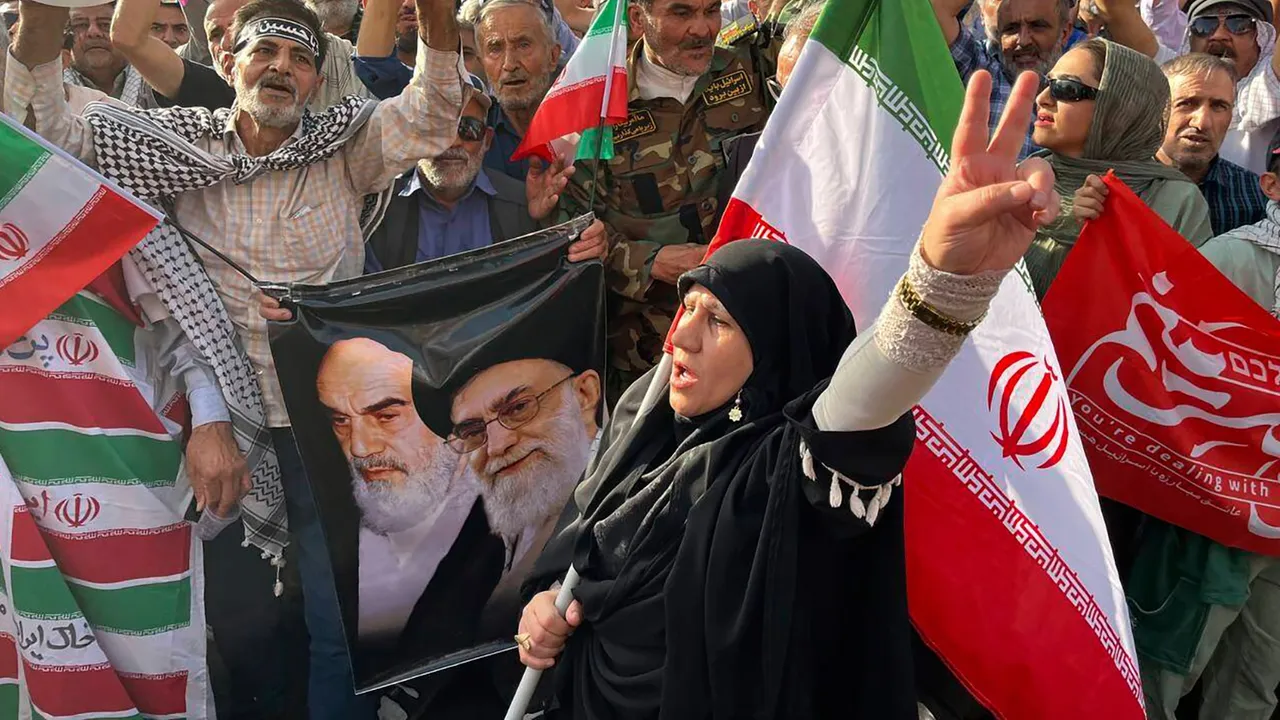
From hopes of freedom to fears of a power vacuum, the international community is split as it grapples with the fallout of the unprecedented attack.
TEHRAN, Iran – Global reaction poured in on Sunday following the confirmation of Iranian Supreme Leader Ayatollah Ali Khamenei’s death in coordinated U.S. and Israeli strikes, exposing a deep geopolitical fault line between expressions of hope for Iran’s future and fierce condemnation of the attacks.
State media confirmed the 86-year-old cleric was killed in the initial wave of strikes, as further attacks hit the country. The dramatic escalation has left the Middle East on a knife-edge, prompting world leaders to navigate a precarious moment between the promise of change and the threat of wider conflict.
Western Leaders: A Chance for a ‘Different Iran’
Western capitals responded with a blend of caution and optimism, framing Khamenei’s death as a potential turning point for a nation long ruled under his hardline grip.
European Commissioner Ursula Von Der Leyen acknowledged the dual nature of the crisis. “With Khamenei gone, there is renewed hope for the people of Iran. We must ensure that the future is theirs to claim and shape,” she said. “At the same time, this moment carries a real risk of instability that could push the region into a spiral of violence.”
In Paris, French government spokesperson Maud Bregeon was more blunt, stating, “He was responsible for the deaths of thousands of civilians in his country and in the region, so one can only welcome his disappearance. It is now up to the Iranian people to choose their own destiny.”
EU foreign policy chief Kaja Kallas called the event “a defining moment in Iran’s history.” While admitting the future is uncertain, she stressed that “there is now an open path to a different Iran, one that its people may have greater freedom to shape.”
Swedish foreign minister Maria Stenegard echoed the sentiment of cautious optimism, warning that while this “could open a window of opportunities,” the “risk of a spiral of violence in the Middle East remains great.” Italian foreign minister Antonio Tajani focused on the immediate power vacuum, noting the “loss of Khamenei’s personal authority over the population” will have significant consequences.
Allies Condemn: A ‘Cynical Violation’
The narrative shifted sharply in Moscow and Islamabad, where leaders framed the strikes not as an opportunity for liberation, but as a criminal act of aggression.
Russian President Vladimir Putin expressed “deep condolences” to the Iranian people, condemning what he termed the “murder of the Supreme Leader… committed in cynical violation of all norms of human morality and international law.”
Pakistan’s Prime Minister Shehbaz Sharif similarly denounced the action as a “violation” of international law. In a message on X, he extended “sincere condolences on the martyrdom” of Khamenei, expressing solidarity with the people of Iran.
Regional Voices Question US Role
Adding a powerful religious and regional perspective, Indonesia’s Ulema Muslim Clerical Council (MUI) offered its deepest condolences while using the moment to launch a pointed critique of American foreign policy. The council questioned Washington’s role in the region, specifically regarding the Board of Peace (BoP) and the Palestinian conflict, urging the Indonesian government to “revoke its membership from the BoP.”
As the situation remains volatile, the world watches a deeply divided international community grapple with the fallout of a strike that has eliminated a figure who dominated Iranian politics for decades.
